
Fri Oct 03 19:25:10 UTC 2025: **Summary:**
The Commission for Air Quality Management (CAQM) has issued a new directive empowering local officials to crack down on stubble burning in Punjab, Haryana, Rajasthan, Uttar Pradesh, and Delhi, a major contributor to winter air pollution in Delhi-NCR. The order allows District Collectors and other officials to file complaints against negligent officials, including police officers, before judicial magistrates. While Punjab has seen a decrease in stubble burning incidents this year compared to last, the CAQM is taking a stricter approach ahead of the peak pollution season. This move follows a recent urging from the Supreme Court for tougher measures against stubble burning.
**News Article:**
**Delhi Braces for Winter Air Pollution: CAQM Issues Stricter Stubble Burning Directives**
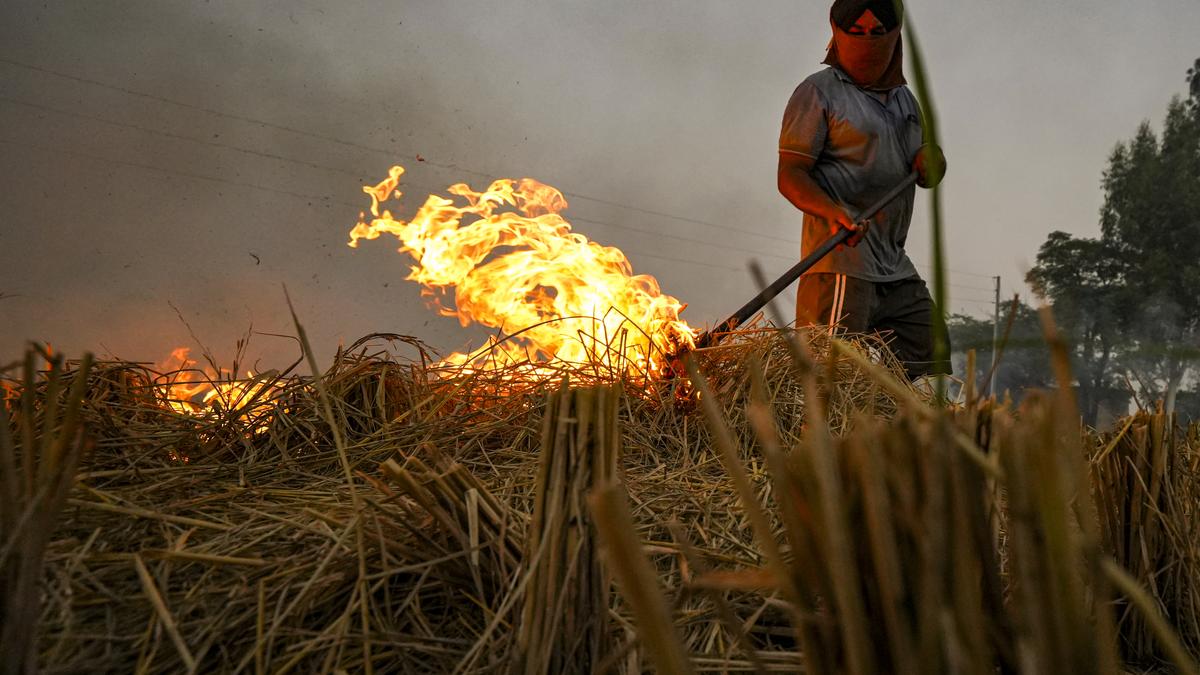
**New Delhi, October 4, 2025:** With the paddy harvest season underway in northern India, the Commission for Air Quality Management (CAQM) is intensifying its efforts to combat stubble burning, a primary source of winter air pollution in the National Capital Region.
A new order issued by the CAQM grants significant authority to local officials in Punjab, Haryana, Rajasthan, Uttar Pradesh, and Delhi to directly prosecute negligent officials responsible for enforcing anti-pollution measures. District Collectors, District Magistrates, and Deputy Commissioners can now file complaints against officials, including Station House Officers, found to be lax in preventing stubble burning.
“District administrations and State governments are expected to maintain constant and strict vigil,” the CAQM stated in its directive. This proactive measure aims to strengthen the enforcement of existing regulations and deter stubble burning practices.
The move comes after the Supreme Court recently called for a stronger stance against the practice, which significantly contributes to the annual deterioration of air quality in Delhi-NCR. Every winter, meteorological conditions combined with stubble burning create a hazardous cocktail of pollutants that blankets the region.
While Punjab, the primary source of stubble burning, has reported a decline in incidents this year – 95 compared to 179 during the same period last year, according to the Indian Agricultural Research Institute (IARI) – the CAQM is taking no chances. The directive signals a commitment to proactively tackling air pollution and ensuring accountability across all levels of governance. The IARI tracks the harvest season from September 15 to November 30.
The CAQM’s order aims to mitigate the impact of stubble burning and protect the health of millions of residents as the region heads into the most polluted months of the year. While Punjab remains the main contributor, incidents in Haryana and Uttar Pradesh also contribute to the worsening of air quality.
 First Piper