
Sun Sep 28 08:00:45 UTC 2025: **Summary:**
The Hindu reports on the rise of multi-messenger astronomy, a method of studying the universe by combining information from various sources like light, gravitational waves, neutrinos, and cosmic rays. Each messenger provides unique information, enabling a more complete understanding of cosmic events. India’s Astrosat mission played a significant role in this field by combining ultraviolet, optical, and X-ray observations to study stellar phenomena.
**News Article:**
**India’s Astrosat Pioneered Multi-Messenger Astronomy, Revolutionizing Cosmic Understanding**
**New Delhi, September 28, 2025 (The Hindu):** A decade after its launch, India’s Astrosat spacecraft is being hailed as a pioneer in the burgeoning field of multi-messenger astronomy. This revolutionary approach to studying the universe involves combining data from various “messengers” beyond traditional light-based observations, offering a more complete and nuanced understanding of cosmic events.
For centuries, astronomers relied primarily on electromagnetic radiation, from radio waves to X-rays, gathered by telescopes. However, other messengers, such as gravitational waves (ripples in spacetime), neutrinos (subatomic particles), and cosmic rays (fast-moving charged particles), provide unique insights.
“Each messenger carries its own set of clues,” explains a leading astrophysicist. “While light can show us the surface of a star, gravitational waves can reveal details about the violent events that led to its formation, and neutrinos can tell us what’s happening deep within its core.”
A landmark example of multi-messenger astronomy occurred in 2017, when scientists observed light from colliding neutron stars simultaneously with the detection of gravitational waves. This combined observation validated theories about the creation of heavy elements like gold.
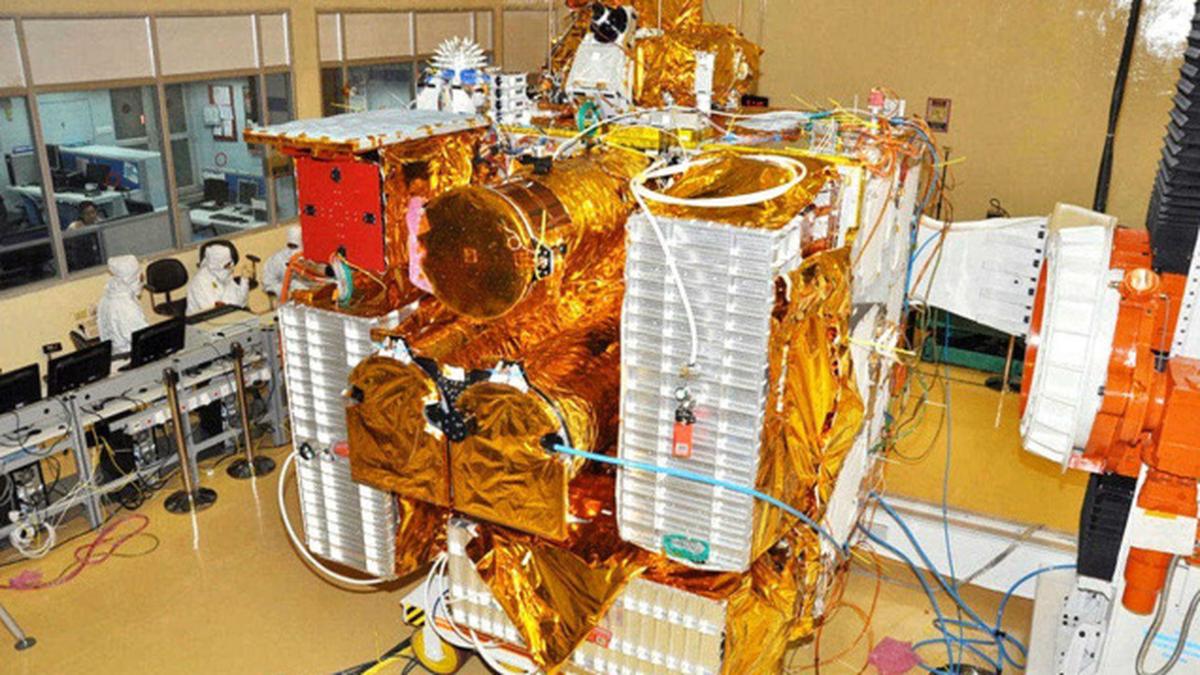
India contributed significantly to this advancement with the launch of Astrosat. The spacecraft’s ability to combine ultraviolet, optical, and X-ray observations allowed scientists to track stellar flares, black hole outbursts, and neutron star activity simultaneously, revealing astrophysical processes previously hidden from single-wavelength observatories.
“Astrosat played a crucial role in establishing India as a key player in the global multi-messenger astronomy community,” the Indian Space Research Organisation (ISRO) said in a statement. “Its contributions continue to shape our understanding of the universe.”
The success of Astrosat underscores the growing importance of multi-messenger astronomy in unraveling the mysteries of the cosmos, offering a far richer and more comprehensive view of the universe than ever before.
 First Piper