
Tue Sep 23 04:59:59 UTC 2025: Okay, here’s a news article summary of the provided text, formatted as you requested:
**Headline: Indian Researchers Develop ‘Smart Walls’ to Boost 5G and 6G Networks**
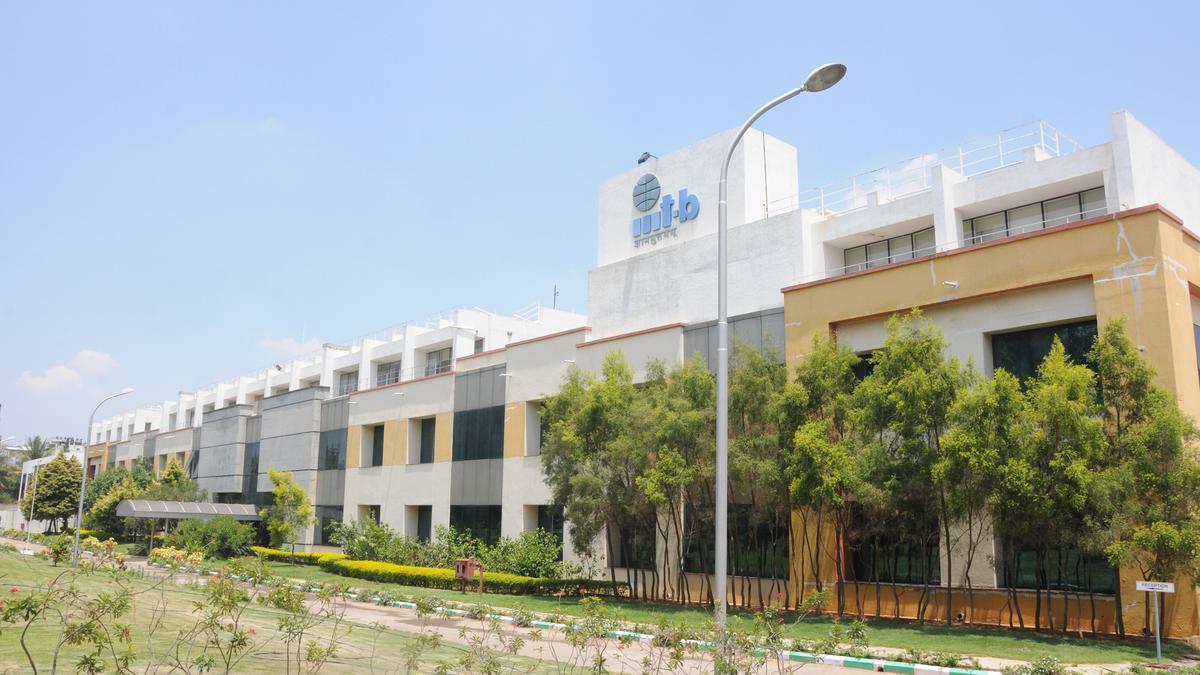
**Bengaluru, September 23, 2025** – Researchers at the International Institute of Information Technology Bangalore (IIIT-B) have developed a novel technology to improve mobile network performance, particularly in areas with poor signal coverage. Called Reconfigurable Intelligent Surfaces (RIS), these panels act like “smart walls,” redirecting and focusing radio signals to enhance network speed and energy efficiency.
Instead of relying on costly infrastructure upgrades like new towers, RIS panels can be easily mounted on existing structures, providing a plug-and-play solution for improving coverage in hotspots. This technology is expected to play a significant role in the upcoming 6G networks, while also enhancing existing 5G-Advanced networks.
“The RIS built at IIIT-B is designed as a ‘passive’ surface, meaning it consumes very little power while shaping signals. This makes it ideal and attractive for urban India, where operators need affordable solutions to improve coverage without adding heavy energy costs,” said Prof. Debabrata Das, Director of IIIT-Bangalore.
According to the researchers, RIS technology can lead to fewer dropped calls and faster internet speeds, particularly in hard-to-reach areas like crowded city blocks and indoor spaces. By strengthening weak links and extending the range of base stations, RIS technology allows operators to reduce the number of towers needed without compromising the quality of service.
While challenges remain, particularly in maintaining signal quality for fast-moving users, IIIT-B is actively developing AI-driven solutions like predictive beamforming and mobility tracking to address these issues. The institute is also working on software-defined RIS with AI-driven control to further boost performance.
IIIT-B’s current RIS panel operates at 3.5 GHz, a key band for 5G, and consists of 256 units controlled by electronic switches that can steer signals in various directions and block unwanted interference.
The technology represents a significant step forward in making mobile networks more efficient, affordable, and accessible, particularly in densely populated urban environments.
 First Piper