
Mon Sep 15 03:25:01 UTC 2025: Here’s a news article summarizing the provided text, written from an Indian perspective, followed by a brief context:
**Headline: Trilateral Naval Drills Spark Tensions in Korean Peninsula; North Korea Warns of “Bad Results”**
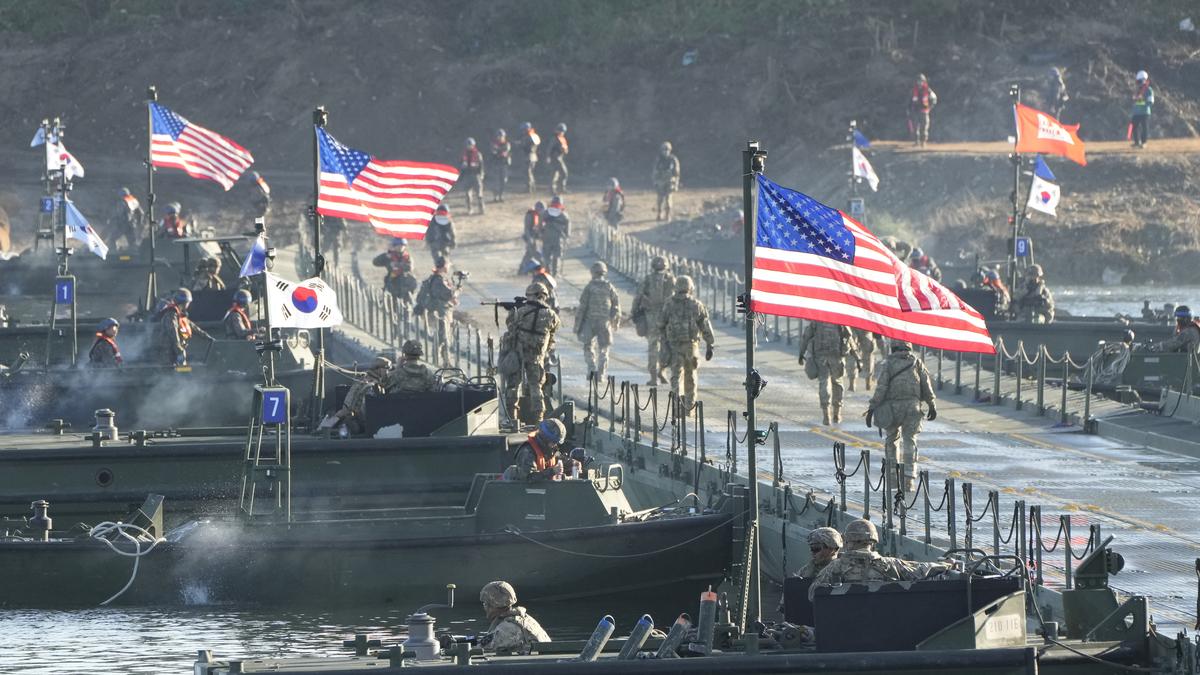
**Seoul, September 15, 2025** – The United States, South Korea, and Japan have commenced a large-scale joint air and naval exercise, dubbed “Freedom Edge,” off the coast of Jeju Island, South Korea. This exercise, slated to run until Friday, aims to bolster the combined operational capabilities of the three nations in sea, air, and cyberspace, in response to what they perceive as escalating nuclear and missile threats from North Korea.
The U.S. Indo-Pacific Command has highlighted that the exercise will feature advanced ballistic-missile and air-defense drills, medical evacuations, and maritime operations training, representing a significant advancement in trilateral defense cooperation.
However, the drills have been met with strong condemnation from North Korea. Kim Yo Jong, the influential sister of North Korean leader Kim Jong Un, issued a statement through state media, characterizing the exercise as a “reckless show of strength” and warning of “bad results.” She also criticized the recent “Iron Mace” tabletop exercise between the U.S. and South Korea, which explored integrating U.S. nuclear capabilities with South Korea’s conventional forces as a deterrence strategy.
While the U.S. and South Korean militaries have remained tight-lipped about the specifics of “Iron Mace,” its coinciding with “Freedom Edge” underscores the growing security concerns in the region.
This development occurs against a backdrop of strained relations, with North Korea prioritizing its ties with Russia and China. Leader Kim Jong Un recently visited China, sharing the stage with Presidents Xi Jinping and Putin at a military parade. Reports indicate that North Korea has also been providing Russia with substantial military assistance in its conflict with Ukraine.
The situation on the Korean Peninsula remains volatile. Whether North Korea will respond to these drills with further military demonstrations or weapons tests remains to be seen. The international community is closely watching these developments, as the Korean Peninsula remains a key flashpoint in the ongoing geopolitical dynamics.
**From an Indian Perspective:**
This situation is viewed with concern. India, committed to a peaceful and stable Indo-Pacific, hopes that all parties exercise restraint and seek dialogue to de-escalate tensions. The increased military activity and tightening alliances in the region inevitably raise anxieties about regional stability, further complicating the strategic environment. It’s crucial for all nations involved to prioritize diplomacy and avoid actions that could provoke further escalation.
 First Piper