
Mon Sep 15 11:07:51 UTC 2025: Okay, here’s a news article based on the provided text, suitable for publication in The Hindu, keeping in mind the target audience and framing:
**The Hindu: Science & Technology**
**European Scientists Deploy Sterile Flies to Combat Invasive Species Threat to Agriculture**
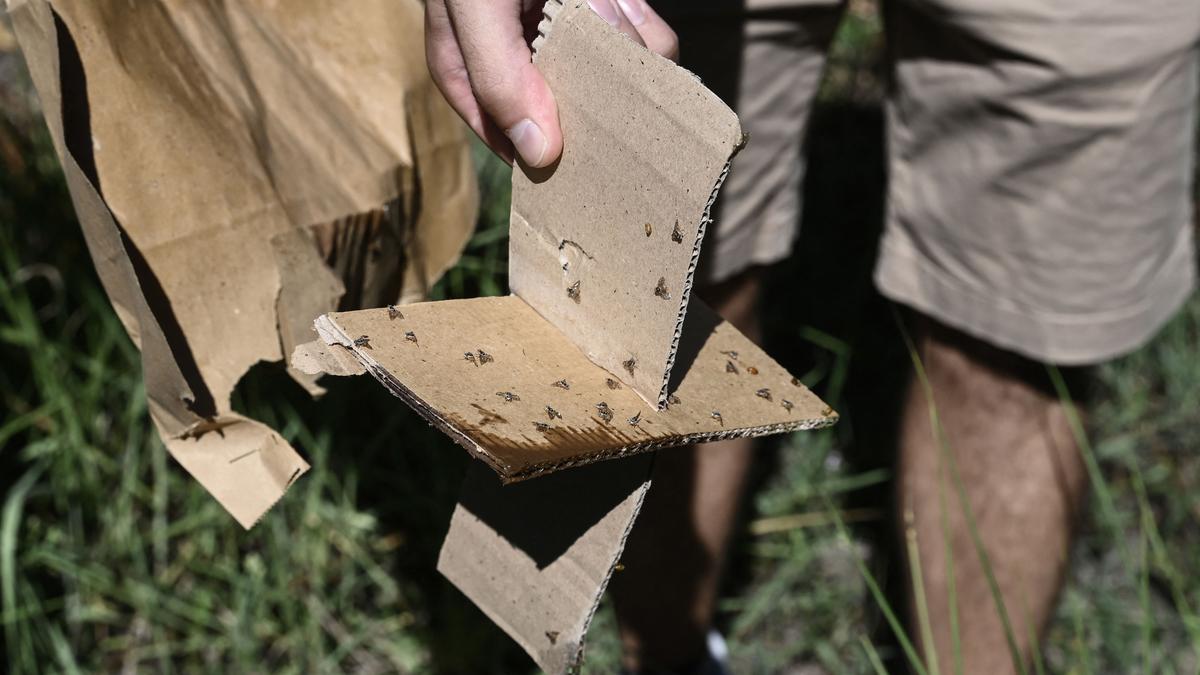
**Naousa, Greece | September 15, 2025:** In a proactive move to safeguard European agriculture, researchers in Naousa, Greece, are releasing sterile male Mediterranean fruit flies as part of a groundbreaking EU-funded project aimed at controlling invasive pest populations. The four year project aims to protect crops in Naousa, where a large proportion of Greece’s prominent export, the peach, is produced.
The project, dubbed REACT, involves scientists from 12 countries and a budget of 6.65 million euros, seeks to develop strategies to combat not only the Mediterranean fruit fly (Ceratitis capitata), a known threat to crops but also the looming danger posed by Asian fruit fly species like the oriental fruit fly (Bactrocera dorsalis) and the peach fruit fly (Bactrocera zonata). These species, native to Southeast Asia, are increasingly appearing in Europe due to rising temperatures linked to climate change.
“Our approach is to locally eradicate Mediterranean fruit fly populations and then apply this knowledge to other species of interest, such as the oriental fruit fly and the peach fruit fly,” stated Nikos Papadopoulos, a professor of Applied Entomology at the University of Thessaly, a key participant in the project.
The Enhanced Sterile Insect Technique (Enhanced-SIT), uses laboratory-raised sterile males, enhanced with a bacterial supplement to improve their vitality, that are released into orchards to mate with wild females, resulting in no viable offspring. This method, deemed pesticide-free and environmentally friendly, has garnered support from local farmers.
“There have been seasons when, due to the Mediterranean fruit fly, we lost our production in just 15 days,” explained Savvas Pastopoulos, an agronomist and orchard owner in Naousa, highlighting the urgency of the situation.
Scientists warn that invasive fruit flies pose a significant threat to global food production. The oriental fruit fly, in particular, has been repeatedly observed in Europe, including occurrences in Naples, France, and Belgium, according to Papadopoulos.
“The threat from these fruit flies is real for Mediterranean countries. We expect implications for nations like Greece, the Croatian coastline, Italy, Spain, and Portugal,” he cautioned.
Climate change exacerbates the problem, with warmer temperatures allowing these invasive species to thrive and potentially establish permanent populations in warmer regions of Europe.
The ongoing field trial in Naousa, is the first European field trial of sterile insect release on such a small, targeted scale using our improved sterile insects, said the project’s coordinator Marc F. Schetelig and serves as a model for localized, sustainable pest control strategies that could be implemented across the continent.
“Our initial findings are very encouraging: the releases have shown a measurable reduction in the local pest population, which we will monitor this year and the next,” Schetelig added.
The project’s success could pave the way for a more environmentally responsible and effective approach to managing invasive species and protecting agricultural livelihoods across Europe.
 First Piper