
Thu Sep 04 23:30:00 UTC 2025: Okay, here’s a summarized news article based on the provided text:
**Headline: Himalayan Disasters: Experts Warn “Unnatural” Development and Climate Change Intensifying Crises**
**CHENNAI, September 5, 2025** – Recent devastating floods and landslides in the Indian Himalayan region, including Punjab, Jammu & Kashmir, Himachal Pradesh, and Uttarakhand, are raising alarm about the intersection of climate change and unsustainable development. Experts are warning that these events, often dismissed as isolated “acts of nature,” are increasingly driven by human activity and require a fundamental shift in policy.
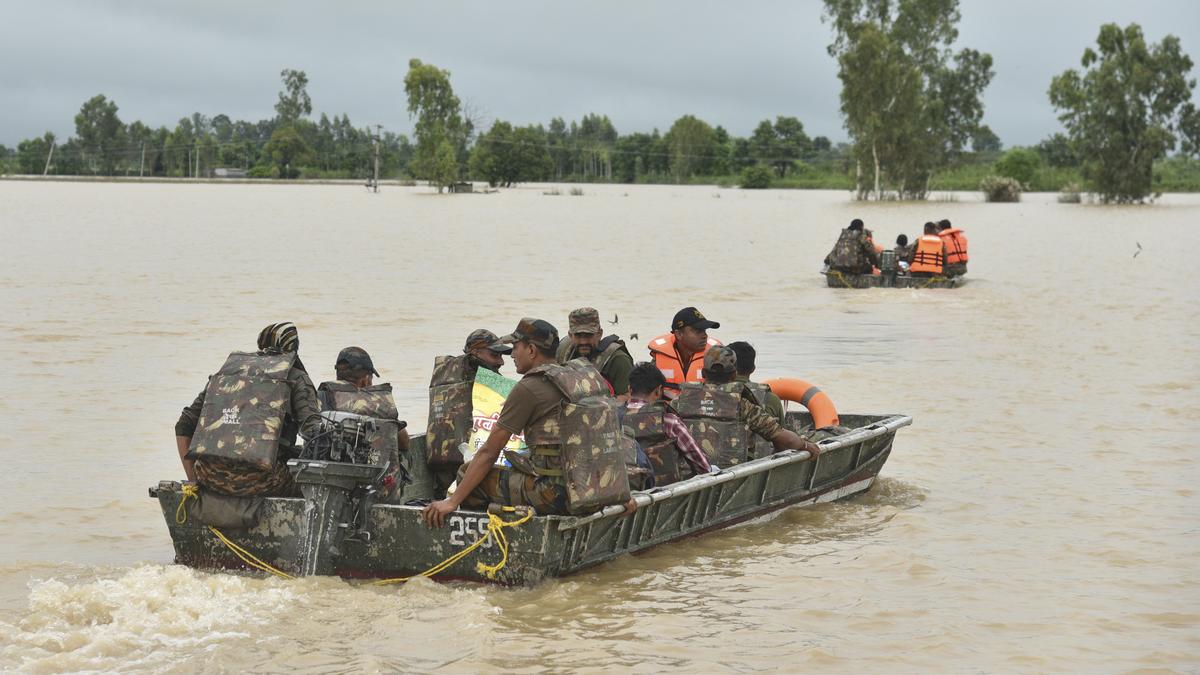
The region has witnessed a series of catastrophic events, including the Punjab floods in August 2025, the Uttarkashi landslide, and echoes of past tragedies like the 2013 Kedarnath floods. While heavy rainfall is a trigger, experts emphasize that deforestation, unchecked infrastructure development, and a lack of comprehensive environmental impact assessments are exacerbating the damage.
Arun B. Shreshta of ICIMOD argues that climate change and development are responsible for most of the disasters in the Himalayas. He stressed that proper climate analysis and impact assessments are not being taken seriously. The Supreme Court has also voiced strong concerns, with Chief Justice Gavai highlighting the devastating impact of deforestation and unchecked construction on the region’s ecological stability. On July 18, the Supreme Court said that Himachal Pradesh may vanish from the map of India if things keep going at the same rate.
Concerns are mounting about the proliferation of hydroelectric projects, road widening, and unregulated tourism, with over a thousand hydropower plants in Himachal Pradesh alone. Experts like Himanshu Thakkar of the South Asia Network on Dams, Rivers, and People, emphasize the need for independent social and disaster impact assessments and democratic public consultation before implementing major projects. Navneet Yadav, lead for Humanitarian Action and Disaster Risk Reduction at Caritas India, stressed the importance of building infrastructure using plans that take into account the impact of climate change and are not based on urban plans.
The rapid melting of glaciers, leading to increased risk of glacial lake outburst floods (GLOFs), further compounds the problem. Experts stress that the Himalayas are at a “tipping point” and call for urgent course correction, emphasizing nature-based solutions, community involvement, and prioritizing ecological sustainability over unchecked economic growth.
“Infrastructure changes have to be done keeping in mind such climatic variations,” stated Shreshta. “We need nature-based solutions with the involvement of the local communities because they know the local landscape and the hazards that come with it.”
Building climate literacy and avoiding construction in unsafe locations are also crucial steps to mitigate future disasters, experts say.
 First Piper