
Thu Sep 04 03:00:00 UTC 2025: **Summary:**
This article discusses the complex issue of reservation policies in India, focusing on recent developments such as the Maharashtra government’s acceptance of Maratha community demands for OBC status, Bihar’s opposition leader’s promise to increase reservation to 85%, and the Supreme Court’s consideration of a “creamy layer” exclusion for Scheduled Castes (SC) and Scheduled Tribes (ST). The article delves into the historical and legal context of reservations, highlighting the tension between formal equality (limiting reservations to 50%) and substantive equality (using reservations to address historical inequalities). It also addresses concerns about the concentration of reservation benefits among a small subset of OBCs, SCs, and STs, and proposes solutions such as sub-categorization and a two-tier system to ensure that benefits reach the most marginalized. The article emphasizes the need for a data-driven, inclusive dialogue on reservation policies following the 2027 census and suggests skill development initiatives to address broader societal aspirations.
**News Article:**
**India Grapples with Reservation Policy Overhaul Amid Growing Demands**
*New Delhi, September 4, 2025* – India’s reservation policies, designed to uplift historically disadvantaged communities, are once again under intense scrutiny following a series of significant developments across the nation.
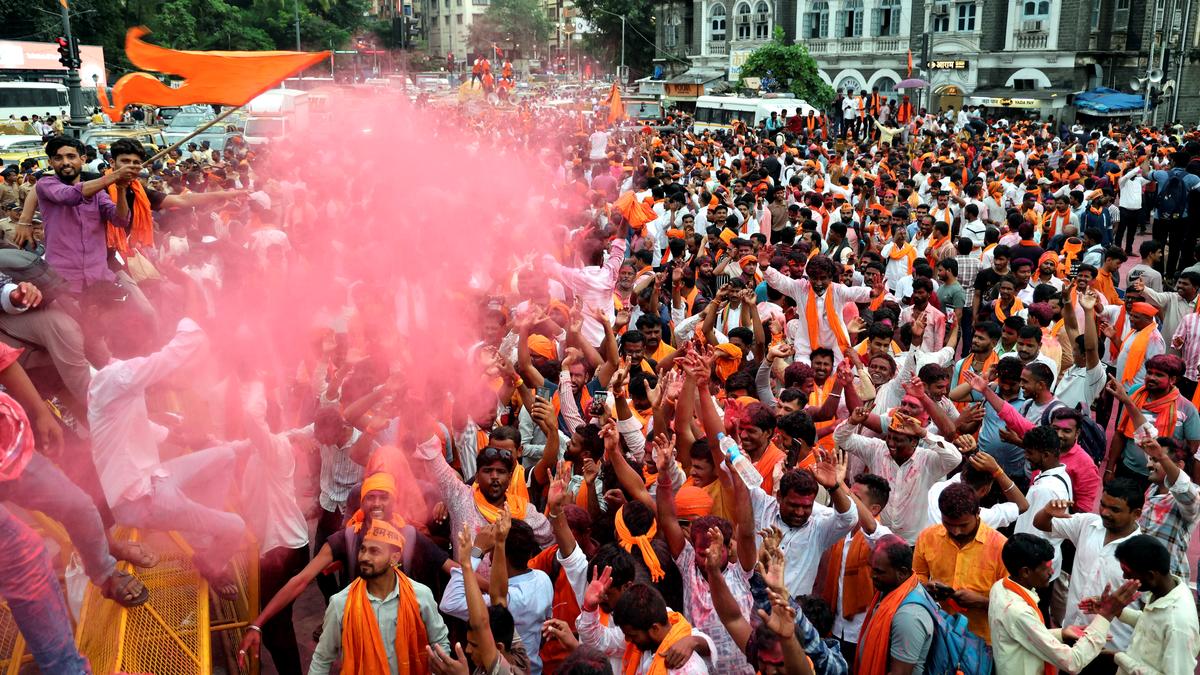
In Maharashtra, celebrations erupted as the state government conceded to demands from the Maratha community, paving the way for eligible members to receive Kunbi caste certificates, thus qualifying them for Other Backward Class (OBC) reservation benefits.
Meanwhile, in Bihar, opposition leader Tejashwi Yadav has pledged a substantial increase in reservation quotas to 85% if his alliance comes to power, reigniting the debate on the upper limit for such affirmative action.
Adding to the complexity, the Supreme Court has issued a notice to the Union government regarding a petition seeking the implementation of a “creamy layer” exclusion for Scheduled Castes (SC) and Scheduled Tribes (ST), a system already in place for OBCs to prevent the most affluent members from monopolizing reservation benefits.
These events have brought to the forefront the inherent tension between formal equality, which advocates for a strict 50% cap on reservations, and substantive equality, which argues for more expansive measures to redress historical injustices. Legal precedents, including the landmark Indra Sawhney case, have affirmed the 50% limit while acknowledging the need for affirmative action.
However, concerns remain that the benefits of reservation are disproportionately concentrated among a small segment of OBCs, SCs, and STs, leaving many marginalized communities behind. Data from the Rohini Commission suggests that a mere 25% of OBC castes have secured the vast majority of reserved jobs and educational seats.
Experts suggest potential solutions, including sub-categorization within OBCs based on the Rohini Commission’s report and the implementation of a “two-tier” reservation system for SCs and STs, prioritizing the most marginalized.
The upcoming 2027 census, which will enumerate backward castes, is expected to provide crucial data for informed policy decisions. Until then experts suggest that “Wide-ranging discussions with all stakeholders” is imperative to arrive at a suitable level of reservation. The article emphasizes the crucial need for suitable skill development mechanisms.
 First Piper