
Tue Sep 02 20:40:39 UTC 2025: **NEWS ARTICLE**
**Justice Delayed, Democracy Denied: Journalist Murder Trials Languish in India**
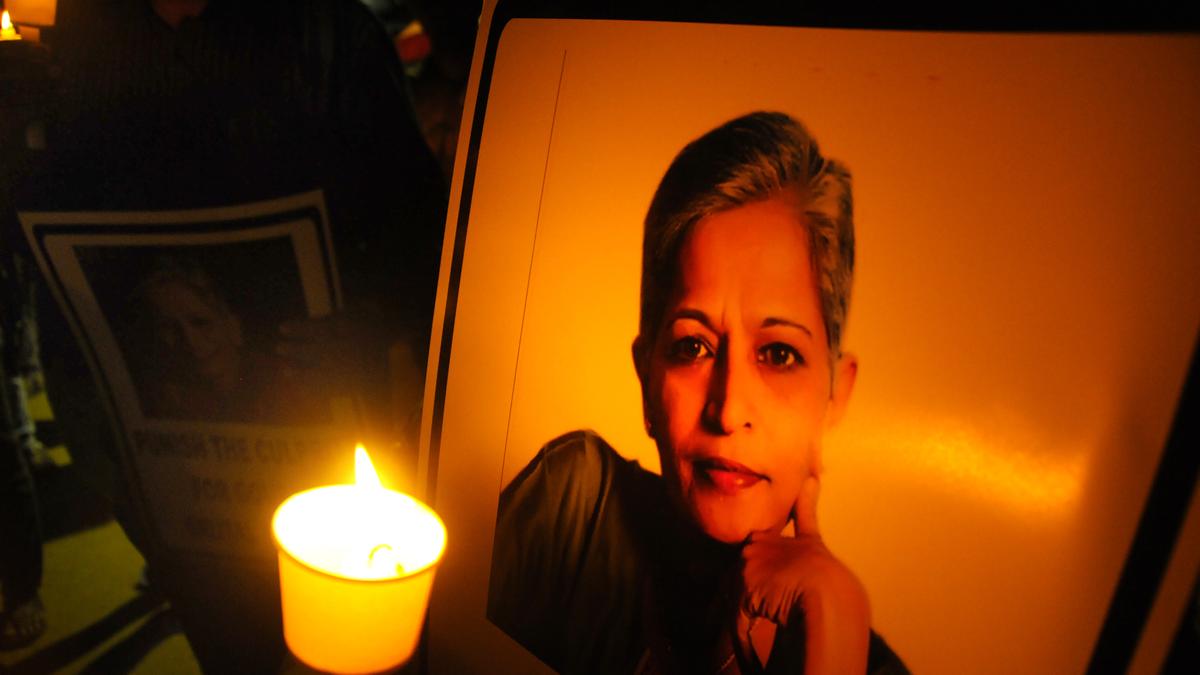
**New Delhi, September 3, 2025** – Eight years after the assassination of journalist Gauri Lankesh, her murder trial remains incomplete, highlighting a disturbing trend of impunity in cases involving the killings of journalists in India. Despite promises from Karnataka Chief Minister Siddaramaiah to deliver justice, the trial has been plagued by delays, adjournments, and a slow pace of proceedings.
Out of the 532 witnesses originally listed, only 193 have been examined since the trial began in March 2022. Seventeen of the 18 accused are out on bail, facilitated by the system’s inefficiency, while one remains absconding.
The Lankesh case is not an isolated incident. According to data from the Committee to Protect Journalists (CPJ), over 61 journalists have been killed in India since 1992 for their work, with at least 19 murders remaining unsolved between 2014 and 2024. India ranked 13th on CPJ’s Global Impunity Index in 2024, which measures unsolved journalist murders as a percentage of a country’s population.
Other cases, such as the 2018 murder of Kashmiri editor Shujaat Bukhari, remain unresolved. The 2016 murder of Hindustan journalist Rajdev Ranjan resulted in convictions for only three men, while the alleged mastermind was never charged. Earlier cases, like the 1999 killing of Outlook cartoonist Irfan Hussain and The Indian Express journalist Shivani Bhatnagar, saw acquittals due to weak investigations and insufficient evidence.
These cases reflect a grim pattern of weak investigations, intimidated witnesses, and justice lost in judicial limbo. Such failures undermine the public’s right to know, guaranteed by Article 19(1)(a) of the Constitution, and silence stories that need to be told.
The Press Council of India (PCI) has previously called for special fast-track courts to handle journalist murder cases. In May 2023, Mr. Siddaramaiah agreed to Gauri’s sister Kavitha’s demand to shift the trial to a fast-track court. However, Kavitha told the CPJ that the Karnataka High Court rejected the request in 2024.
According to Kunal Majumder, the India Representative of the CPJ, the lack of progress in these cases also constitutes a breach of India’s international obligations under the International Covenant on Civil and Political Rights. He argues that if special courts can be created for politicians and crimes against women and children, they can be created for journalists too.
The continued delays and failures in these cases raise serious concerns about the safety and protection of journalists in India and call for urgent action to ensure justice is served.
 First Piper