
Sat Aug 30 07:36:20 UTC 2025: **Summary:**
Prime Minister Narendra Modi concluded a two-day visit to Japan marked by the signing of 13 agreements and the launch of key initiatives aimed at strengthening the India-Japan special strategic and global partnership. The agreements included a Japanese investment target of ₹60,000 crore over a decade, a defense cooperation framework, and a 10-year roadmap for economic partnership. Areas of focus included economic security, technology, and joint projects like the Chandrayaan-5 mission. Following the Japan visit, PM Modi departed for China to attend the Shanghai Cooperation Organisation (SCO) summit, his first visit to China in seven years. The SCO summit is considered important in light of recent trade tensions between India and the U.S.
**News Article:**
**India and Japan Forge Deeper Ties with New Agreements, Modi Heads to China for SCO Summit**
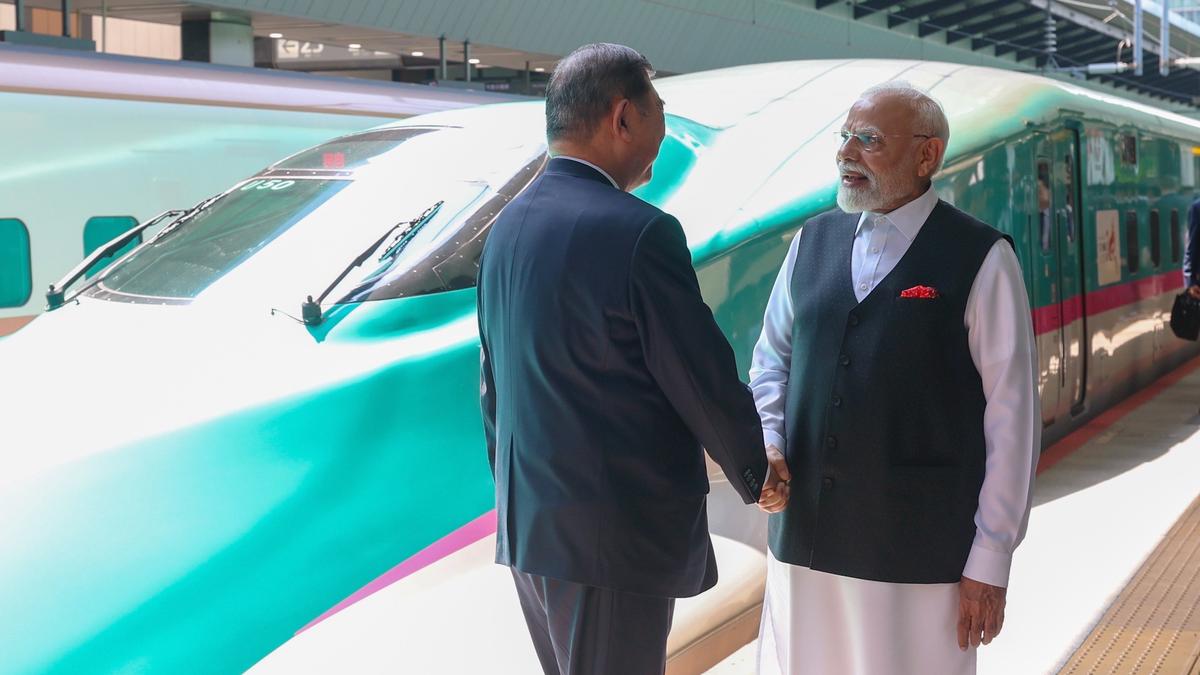
*Tokyo/Tianjin, August 30, 2025* – Prime Minister Narendra Modi wrapped up a highly productive two-day visit to Japan today, solidifying the strategic partnership between the two nations with the signing of 13 key agreements and the unveiling of several new initiatives. The visit culminated in a joint commitment to a significant expansion of economic and security cooperation.
“This visit to Japan will be remembered for the productive outcomes which will benefit the people of our nations,” Modi stated in a post on X (formerly Twitter), thanking Prime Minister Shigeru Ishiba and the Japanese people for their hospitality.
A centerpiece of the agreements is Japan’s commitment to invest 10 trillion yen (approximately ₹60,000 crore) in India over the next decade. The two countries also forged a new framework for defense cooperation and a comprehensive 10-year roadmap aimed at bolstering economic ties. This roadmap prioritizes economic security, mobility, ecological sustainability, technology and innovation, health, people-to-people exchanges, and collaboration between Indian states and Japanese prefectures.
Notable agreements include an economic security architecture designed to promote supply chain resilience in sectors like semiconductors, clean energy, telecom, pharmaceuticals, critical minerals, and emerging technologies. The two nations will also collaborate on the Chandrayaan-5 mission, a joint exploration of the moon’s polar region.
Prior to his departure, Prime Minister Modi met with governors from 16 Japanese prefectures to encourage enhanced cooperation at the state and prefecture level. He also accompanied Prime Minister Ishiba on a visit to a semiconductor plant in Sendai.
Following his visit to Japan, Prime Minister Modi has now departed for Tianjin, China, to attend the annual Shanghai Cooperation Organisation (SCO) summit on August 31 and September 1. This marks Modi’s first visit to China in seven years and comes at a crucial time, given recent trade tensions between India and the United States following the imposition of tariffs on Indian exports by the U.S.
The SCO summit is expected to be a key opportunity for India to engage with China and other member states on regional security and economic cooperation.
 First Piper