
Mon Aug 18 07:10:07 UTC 2025: **Headline: Martian Meteorite Auction Sparks Controversy Over Ownership and Scientific Ethics**
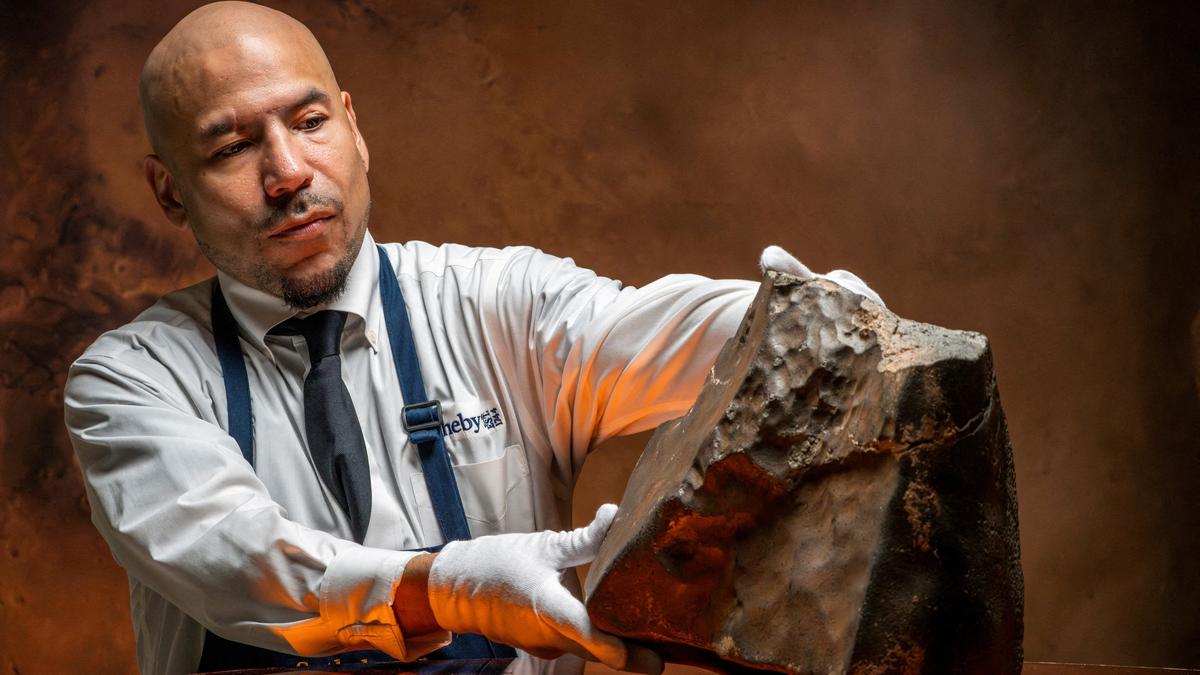
**New York, NY – August 18, 2025** – The recent $5.3 million auction of the largest known Martian meteorite, NWA 16788, at Sotheby’s in New York, has ignited a firestorm of controversy surrounding its provenance, ownership, and ethical implications for scientific research.
The 25-kilogram meteorite, discovered in the Nigerien Sahara Desert in November 2023, is believed to have traveled 140 million miles from Mars. Following its discovery, the stone was sold to an international dealer and exhibited in Italy before being auctioned in New York.
The government of Niger has launched an investigation, suspecting the meteorite’s export involved illicit international trafficking. The government has also suspended exports of precious stones and meteorites. Sotheby’s has denied any wrongdoing, claiming the export and transport adhered to all international procedures, but is reviewing the case.
American paleontologist Paul Sereno, who works with Niger’s authorities, believes the meteorite was illicitly exported, criticizing the anonymity surrounding the stone’s discovery and sale. “It belongs to Niger,” he asserted, highlighting that ownership should reside with the country where it landed.
Legal frameworks for meteorite ownership vary globally. While U.S. law grants ownership to private landowners where meteorites land, Nigerien law, according to experts Matthieu and Max Gounelle, protects rare mineralogical specimens, including meteorites, as national cultural patrimony.
Beyond the legal dispute, the sale raises ethical concerns. Scientists argue NWA 16788, being significantly larger than other Martian meteorites, holds unique scientific value for understanding the red planet’s geological history. Sereno emphasized its status as “nature’s heritage” and a vital source of cosmic information, lamenting the possibility of it disappearing into private hands, inaccessible for scientific study.
The debate underscores the complex intersection of legal rights, national heritage, and the scientific importance of extraterrestrial materials, urging a deeper consideration of who should ultimately control these “gifts from the heavens.”
 First Piper