
Tue Aug 19 23:37:00 UTC 2025: Okay, here’s a summary and a news article based on the provided text:
**Summary:**
The article examines Germany’s shifting stance towards Israel amidst the ongoing conflict in Gaza. Historically a staunch ally due to its past, Germany is now voicing increasing criticism of Israel’s actions, particularly regarding the high civilian death toll and humanitarian crisis. While maintaining its commitment to Israel’s existence and security (“Staatsraison”), Germany has taken steps like halting weapon sales for use in Gaza and airdropping aid (though deemed ineffective). This shift is attributed to the scale of the humanitarian crisis, the policies of the current Israeli government, and growing public pressure within Germany. However, experts believe that Germany’s fundamental relationship with Israel remains intact, although strained. The efficacy of international pressure, especially without unified European and US support, is questioned.
**News Article:**
**Germany Shifts Tone on Israel Amid Gaza Crisis, Halts Weapon Sales**
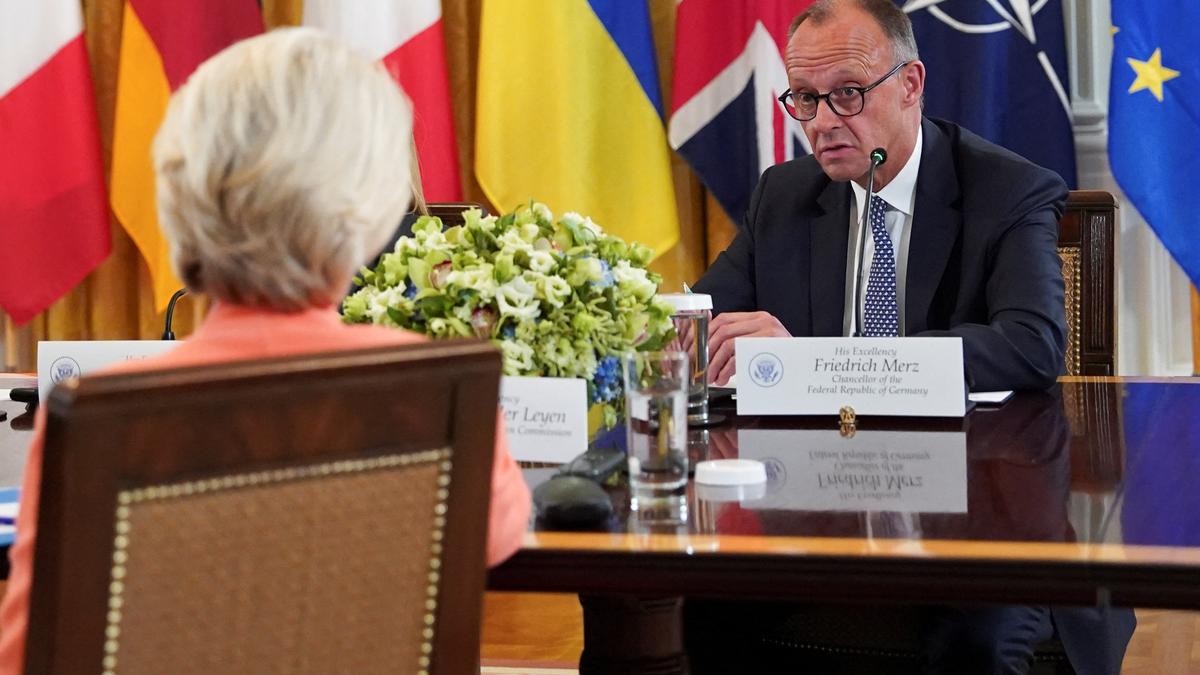
**BERLIN (August 20, 2025)** – A growing humanitarian crisis in Gaza and mounting international concern have prompted Germany to adopt a more critical stance towards Israel, marking a significant shift in its historically close relationship. German Chancellor Friedrich Merz announced earlier this month that Germany would suspend arms sales to Israel for use in the Gaza Strip.
The move comes as the death toll in Gaza has surpassed 62,000 and reports have emerged of hundreds of Palestinians killed while seeking humanitarian aid at sites controlled by the Israeli military. International organizations like Human Rights Watch have condemned these incidents as potential war crimes.
“What the Israeli Army is doing in the Gaza Strip, I no longer understand the goal…To harm the civilian population in such a way can no longer be justified as a fight against terrorism,” Chancellor Merz stated in May, signaling the changing tone.
While Germany has been involved in airdropping humanitarian aid into Gaza with Jordan, experts like Dr. Muriel Asseburg of the German Institute for International and Security Affairs (SWP) call these measures “more of a symbolic measure than one to alleviate the situation.”
The shift in German policy reflects a broader trend among Western nations, with France, the U.K., and Canada considering recognition of a Palestinian state at the UN. However, Germany’s decision is particularly noteworthy given its historical responsibility towards Israel following the Holocaust.
According to the Deutschlandtrend survey, a significant percentage of Germans feel that Israel’s military response has gone too far and want their government to put more pressure on Israel.
While Germany has reiterated its commitment to a two-state solution, Prime Minister Benjamin Netanyahu remains firmly opposed.
Chancellor Merz has faced criticism from within his own party, with some accusing him of breaking with decades of foreign policy continuity. However, analysts believe the decision to limit weapon sales will stand, reflecting the severity of the situation.
“The extreme right-wing government in Israel makes it very difficult for Germany to maintain close relations and convincingly balance what is called the historical responsibility towards Israel on the one hand and Germany’s commitment to international law, multi-lateralism and human rights,” said Ms. Asseburg
Experts agree that the Israeli government isn’t paying attention to international pressure.
As international pressure mounts, the question remains whether it will be enough to influence Israeli policy and alleviate the suffering in Gaza.
 First Piper