
Sun Aug 10 00:30:00 UTC 2025: **FOR IMMEDIATE RELEASE**
**New Study Assesses Long-Term Impact of Fukushima Wastewater Release on Pacific Ocean**
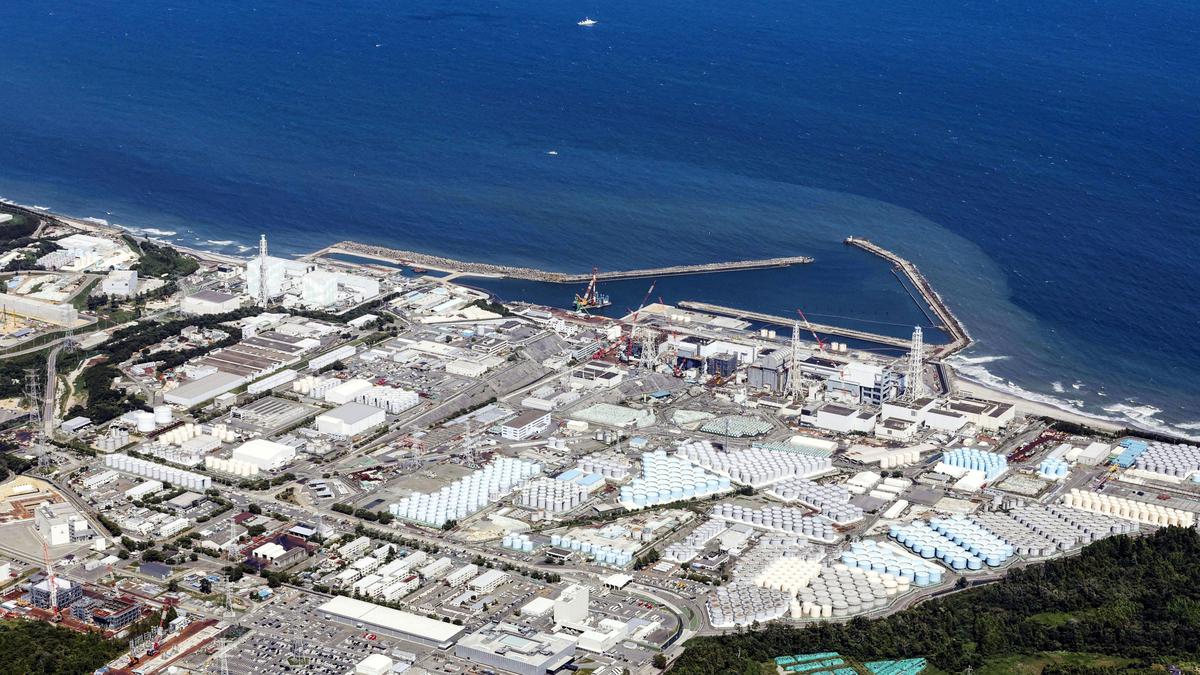
**Chennai, India – August 10, 2025** – A new study published in the November 2025 edition of *Marine Pollution Bulletin* provides a comprehensive analysis of the long-term impact of the Fukushima Daiichi Nuclear Power Plant’s release of treated radioactive wastewater into the Pacific Ocean. Researchers from the University of Tokyo and Fukushima University utilized advanced ocean circulation modeling to track the potential movement of tritium, a radioactive isotope of hydrogen, over the next several decades.
The study, which combined accurate estimates of tritium release with the COCO 4.9 ocean model, considered various scenarios including present-day conditions, a strong warming pathway (SSP5-8.5), and the influence of mesoscale eddies. The team ‘injected’ tritium into the model for both the 2011-2019 accident period and the planned 2023-2051 discharge period.
The findings indicate that tritium levels in the open Pacific Ocean are expected to remain below current detection limits, with the exception of areas immediately adjacent to the plant during the initial accident spike. The routine discharge is projected to result in peak concentrations of only 0.002 Bq/L, significantly lower than natural background radiation levels (25x).
While warmer ocean conditions might slightly accelerate the eastward flow of the Kuroshio Current, potentially shortening the time for tritium to reach the mid-Pacific and Asian subtropical coasts by approximately three years, modeled tritium concentrations remained far below detectable thresholds. Even the mesoscale eddy simulation, which showed tritium reaching western North America or the South China Sea sooner than other models, showed levels of radiation far below concerning levels.
The research emphasizes that due to the slow release rate and the relatively short half-life of tritium (around 12 years), the radiation attributable to the Fukushima discharge is significantly lower than that from natural and historical sources. Model projections through 2099, even under extreme warming scenarios or worst-case eddy transport assumptions, showed that any radiation remained undetectable.
This study provides a valuable, data-driven perspective on the long-term environmental impact of the Fukushima wastewater release, reassuringly suggesting that it will pose a minimal risk to the broader Pacific Ocean. This news article from The Hindu, India, analyzes global matters from the Indian viewpoint.
**Contact:**
[Insert Contact Information Here]
 First Piper