
Sun Aug 03 13:20:50 UTC 2025: ## The Hindu: Farmers in Karnataka Cling to Urea Despite Push for Alternatives
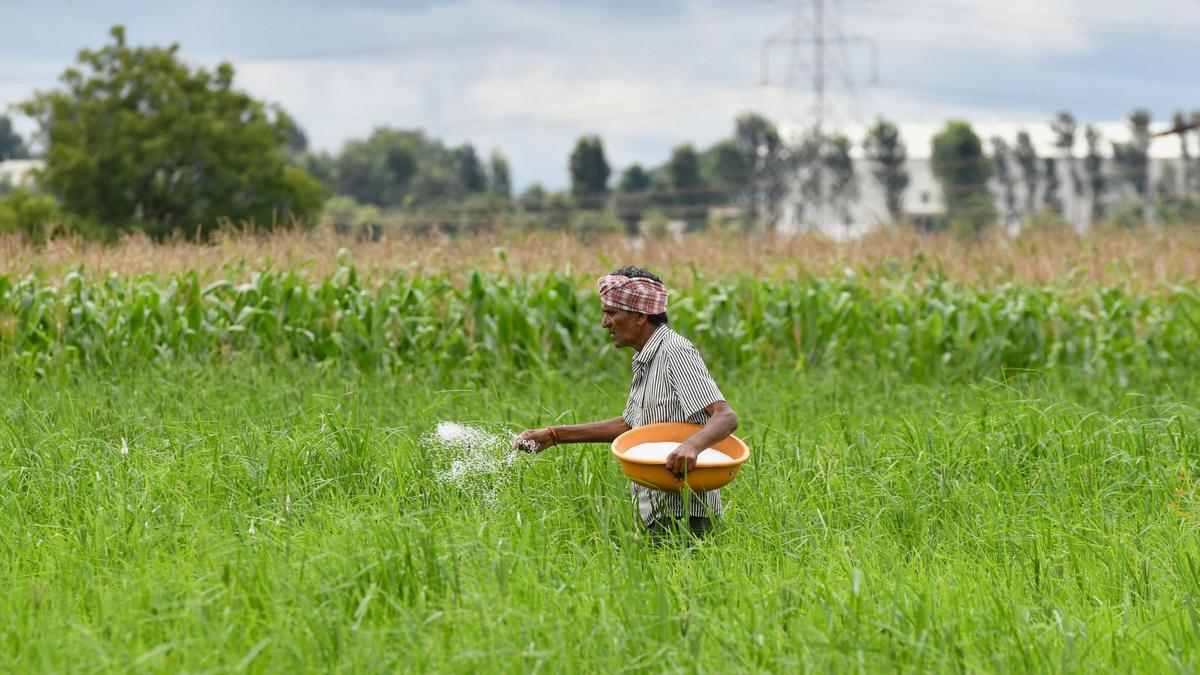
**HUBBALLI/BELAGAVI/KALABURAGI, August 3, 2025** – Despite expert recommendations to reduce urea usage, many farmers in Karnataka continue to rely heavily on the supplement, citing its effectiveness in reviving crops damaged by increasingly frequent floods. While nano urea is promoted as a more efficient alternative, concerns about its efficacy persist among some farmers.
Sharanabasappa Mamshetti, district president of the Karnataka Prantha Raitha Sangha (KPRS), explains that urea acts as a “miracle” for crops like cotton, bananas, and chillies that suffer damage from prolonged submersion in floodwaters. He argues that it’s a quick solution to revitalize weakened plants.
However, experts like Vithal Benagi, former director of extension at the University of Agricultural Sciences, Dharwad, point to inadequate extension work as a contributing factor. He argues that understaffed Krishi Vigyan Kendras (KVKs) and weak university extension departments are failing to conduct sufficient awareness programs on balanced nutrient management and alternative fertilizers. Similar concerns are echoed regarding the agriculture department’s lack of extension services.
Raju Teggelli, head of the Krishi Vigyan Kendra in Kalaburagi, acknowledges the difficulty in changing established agricultural practices. “We have been consistently working to educate farmers on the importance of balanced nutrient management. But old practices die hard,” he said.
Despite the challenges, some farmers are successfully transitioning away from urea. Prakash and Anuradha Kulkarni, certified organic farmers from Belagavi district, have cultivated a variety of crops without urea for over 14 years. By producing their own organic inputs, they have reduced costs, increased profits, and achieved a greater sense of independence. “We decided to switch to organic. It took a lot of time and effort, but I no longer depend on the market or the government for inputs like fertilizers or pesticides. I prepare all my inputs on my farm. It has reduced my cost and increased profits. Importantly, the independence it has given me is invaluable,” Mr. Kulkarni said.
The situation highlights the complexities of promoting sustainable agricultural practices, balancing immediate needs with long-term environmental concerns. Further investment in agricultural extension and demonstrations of successful alternative practices are crucial to encourage wider adoption.
 First Piper