
Fri Jul 18 01:52:00 UTC 2025: **Summary:**
The Arkavati River, once a primary source of drinking water for Bengaluru, is now heavily polluted due to industrial waste, untreated sewage, and changes in land use. Local residents can no longer use the water, and studies confirm the presence of dangerous contaminants exceeding national and international standards. The Karnataka government has formed a committee to rejuvenate the river through a public-private partnership, but experts caution that true restoration will require significant changes in groundwater use, waste management, and a more comprehensive approach to water quality monitoring and ecosystem protection. The cleanup effort is further complicated by the pollution entering the Arkavati from other sources, such as the Vrishabhavati River.
**News Article:**
**Bengaluru’s Lifeline Dries Up: Can the Arkavati River Be Saved?**
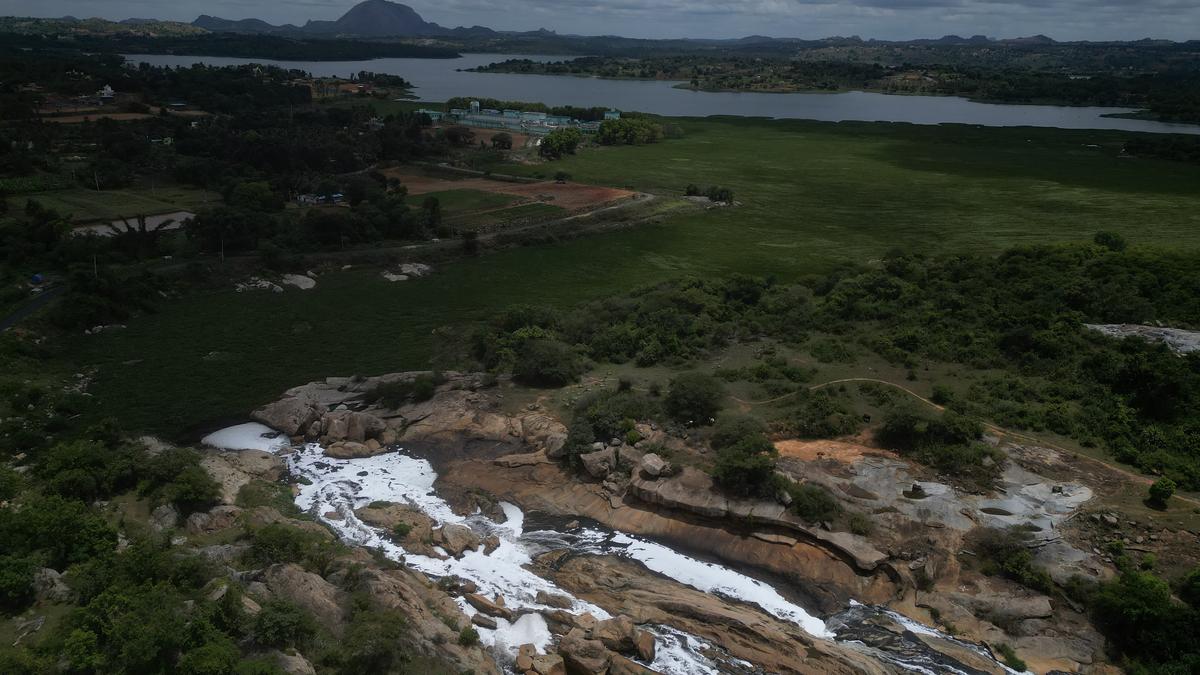
**Bengaluru, July 18, 2025** – The Arkavati River, a vital water source for Bengaluru for over six decades, is now a shadow of its former self, choked by pollution and neglect. Once a pristine river used for drinking and daily needs, residents report the water is now black, foul-smelling, and unusable. Scientific testing confirms the presence of dangerous contaminants exceeding safe levels, posing a threat to both the environment and public health.
The Karnataka government has announced a plan to rejuvenate the Arkavati through a public-private partnership, aiming to restore the river’s health over its 53km stretch from Nandi Hills to the Thippagondanahalli (T.G. Halli) reservoir. The plan envisions integrating water from the Yettinahole project.
However, experts warn that the path to rejuvenation is fraught with challenges. Decades of unchecked industrial growth, wastewater discharge, and unsustainable water management practices, including excessive groundwater pumping and eucalyptus cultivation, have severely impacted the river’s flow and water quality. Some fear that simply adding water from another source may not address the underlying issues of pollution and ecosystem degradation.
“Rejuvenation for whom?” asks Sharachchandra Lele, Distinguished Fellow in Environmental Policy and Governance, Centre for Environment and Development, Ashoka Trust for Research in Ecology and the Environment. “Do we want the Arkavati to be a ‘boating place’ or a ‘scenic riverside’ for urban folks, or a source of water and cultural value for agricultural households?”
Compounding the problem is the entry of pollutants from other sources, such as the Vrishabhavati River, which carries urban waste into the Arkavati. Experts emphasize the need for a holistic approach that addresses all sources of pollution and protects the river’s entire ecosystem.
While some remain optimistic that the Arkavati can be restored, others caution that it will require a fundamental shift in water management practices, stricter enforcement of environmental regulations, and a commitment to long-term sustainability to revive Bengaluru’s dying lifeline.
 First Piper