
Thu Jul 17 09:36:25 UTC 2025: ## News Article Summary:
**Headline: Ancient Copper Plate Unearths Earliest Kakatiya Dynasty Roots**
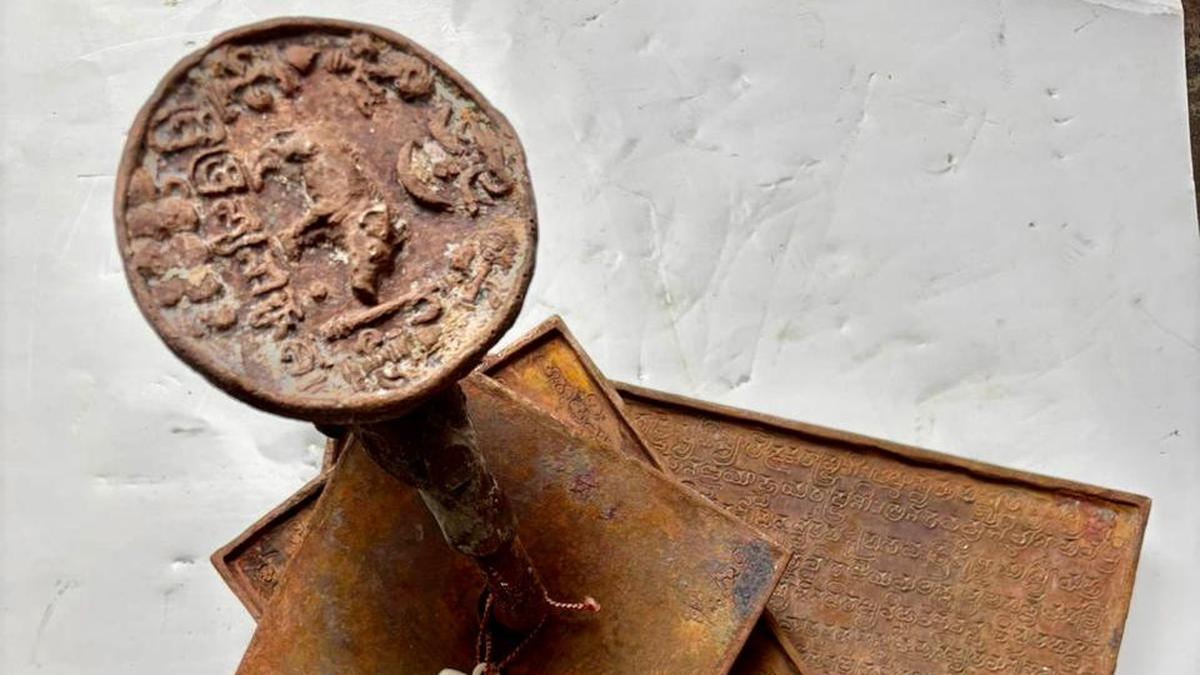
**Hyderabad, India -** A significant archaeological find in Kodad, Telangana, has revealed new details about the early history of the Kakatiya dynasty. A three-leaf copper plate inscription, discovered in a graveyard and now preserved by the Department of Heritage, provides the earliest recorded genealogy of the dynasty, which ruled Southern India from 1000 to 1323 A.D.
The inscription, dating back to 918 CE, sheds light on the Kakatiyas’ origins as feudatories under the Eastern Chalukyas (also known as Vengi Chalukyas). According to Dr. K. Munirathnam Reddy of the Archaeological Survey of India (ASI), the plate details a land grant to the family of a Kakatiya ancestor who aided Chalukya King Vikramaditya II in a succession battle.
Written in Sanskrit using Telugu script, the inscription chronicles the lineage from Kubja Vishṇuvardhana to Vikramaditya II, and identifies key figures like Samanta Vetti, Gunda I, Erra, and Gunda II. It also recounts the capture and brief rule of the kingdom by Talapa.
The copper plate reveals that King Vikramaditya II, upon his coronation, bestowed the village of Kovuṛu upon Lokamamba, the wife of Gunda II, who bravely fought alongside him to reclaim the throne from Talapa. The inscription bears the Chalukya royal seal and was discovered with the facilitation of Suryapet district collector, Tejas Nandlal Pawar.
This discovery promises to reshape our understanding of the Kakatiya dynasty’s early history and their relationship with the Eastern Chalukyas.
 First Piper