
Sat Jul 12 18:30:00 UTC 2025: **Summary:**
This article from The Hindu looks back at NASA’s Galileo mission to Jupiter, particularly the atmospheric probe. Launched in 1989, Galileo used Venus and Earth flybys to gain momentum before reaching Jupiter in 1995. The probe, released months before arrival, entered Jupiter’s atmosphere at extreme speeds and temperatures, transmitting data for 58 minutes before failing under intense pressure. The data revealed an intense radiation belt, high winds, some organic compounds, and less water and lightning than expected. The Galileo spacecraft went on to orbit Jupiter for eight years, providing data on Europa’s potential ocean, Io’s volcanoes, and Ganymede’s magnetic field. The mission was deliberately ended in 2003 by plunging Galileo into Jupiter to avoid contaminating Europa.
**News Article:**
**Galileo Probe’s Daring Dive Still Inspires 30 Years Later**
*The Hindu, July 13, 2025* – Thirty years ago, humanity received a brief but groundbreaking glimpse into the heart of Jupiter thanks to NASA’s Galileo atmospheric probe. Part of the ambitious Galileo mission, the probe braved unimaginable conditions to transmit crucial data about the gas giant’s atmosphere.
Launched in 1989, the Galileo spacecraft embarked on a VEEGA trajectory, using flybys of Venus and Earth to slingshot its way to Jupiter. Along the way, it achieved several milestones, including the first flyby of an asteroid and the discovery of a moon orbiting an asteroid.
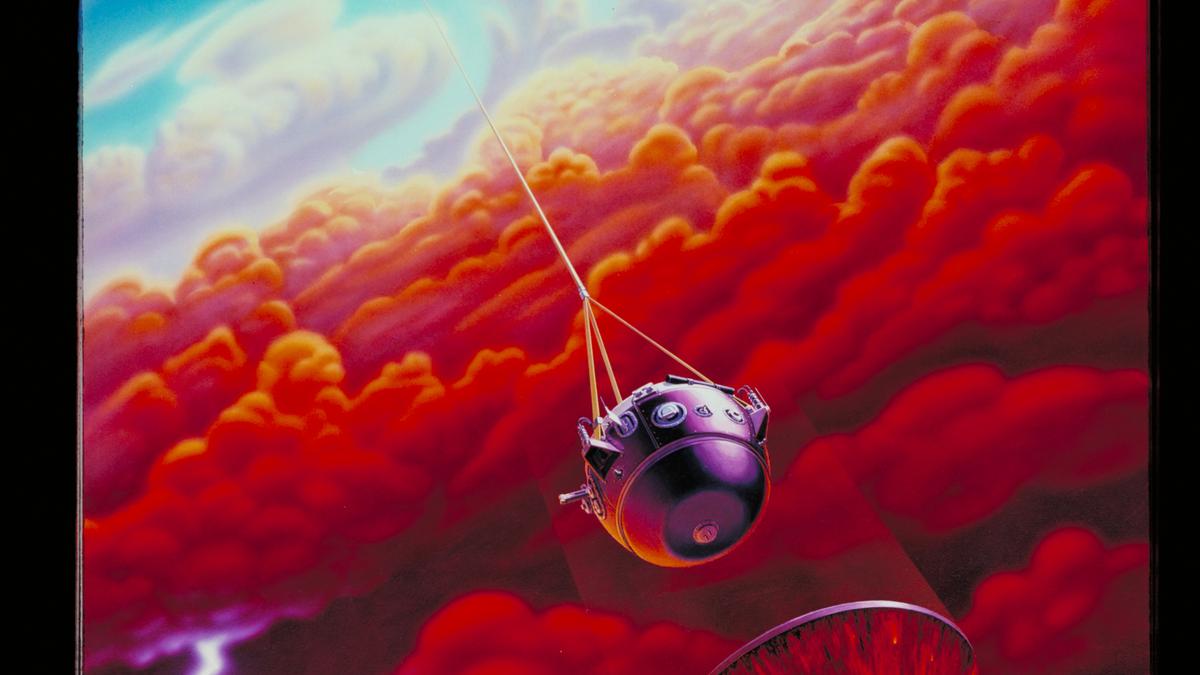
In 1995, the Galileo probe separated from the main spacecraft and plunged into Jupiter’s atmosphere. For a mere 58 minutes, it transmitted data as it endured extreme deceleration, temperatures exceeding 16,000 degrees Celsius, and crushing pressures. The data revealed surprising insights into Jupiter’s atmosphere, including an intense radiation belt and lower than expected levels of water vapor and lightning.
The Galileo spacecraft continued to orbit Jupiter until 2003, making significant discoveries about its moons. It found evidence of a possible ocean beneath Europa’s icy surface, observed volcanic activity on Io, and detected the first magnetic field around a satellite, Ganymede.
To protect the potential for life on Europa, the Galileo mission was deliberately terminated by plunging the spacecraft into Jupiter’s atmosphere, preventing any potential contamination. Galileo’s legacy continues to inspire scientists and inform our understanding of the solar system.
 First Piper