
Sat Jul 12 02:30:00 UTC 2025: **News Article:**
**IISc Researchers Discover Cellular ‘Traffic Light’ System for DNA Repair, Potential Cancer Treatment Implications**
**Bangalore, July 12, 2025** – In a groundbreaking study, researchers at the Indian Institute of Science (IISc), in collaboration with Institut Curie in Paris, have uncovered a previously unknown mechanism that regulates DNA repair within cells. The discovery reveals how cells prevent both insufficient and excessive DNA repair, a critical process for survival when DNA is damaged by factors like ultraviolet light or chemical exposure.
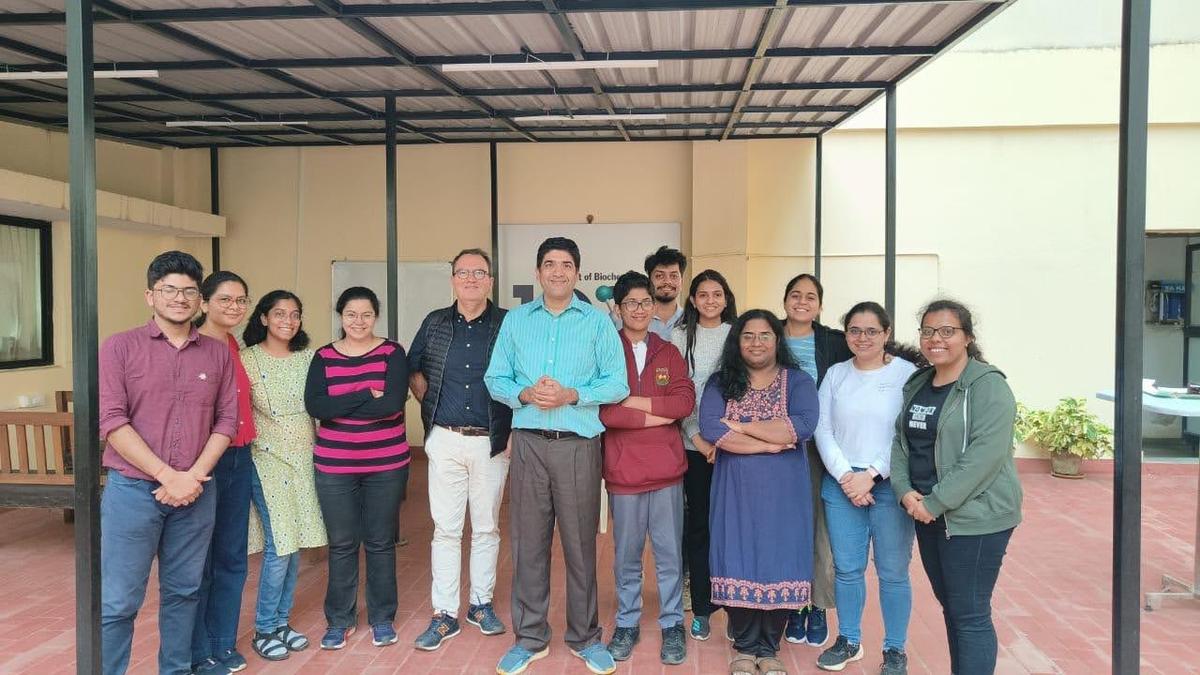
Led by IISc Associate Professor Purusharth I. Rajyaguru, the research team demonstrated that cells temporarily slow down the translation of messenger RNA (mRNA) for specific DNA repair genes. This is achieved by two “guardian” proteins, Scd6 in yeast and LSM14A in humans, which act like traffic lights, halting the mRNA until the DNA damage is resolved.
The study, published in EMBO Reports, used baker’s yeast and human skin cells to observe the formation of RNA granules containing these proteins. When DNA was damaged, these granules formed, effectively capturing the mRNA for the Srs2 enzyme (in yeast), which unwinds DNA, and reducing its production. This controlled reduction in Srs2 prevented over-production of the enzyme, which could be harmful. Similarly, in human cells, LSM14A formed granules and regulated the production of the RTEL1 and LIG4 enzymes.
“It is a smart, evolutionarily conserved strategy that helps cells survive,” said Dr. Rajyaguru. He explained that this mechanism prevents both dangerous under-repair and wasteful over-repair of DNA.
The team’s findings also suggest a potential new avenue for cancer treatment. Dr. Rajyaguru noted, “Interfering with RNA granule dynamics might be a way to disrupt stress adaptation in cancer cells, making them more vulnerable to chemotherapy.” His laboratory is currently exploring this possibility, as well as investigating the role of this mechanism in neurodegenerative diseases.
This research provides a crucial insight into the complex cellular processes that maintain genomic stability and holds significant promise for developing new therapies to combat cancer and other diseases.
 First Piper