
Fri Jul 04 06:59:43 UTC 2025: **Summary:**
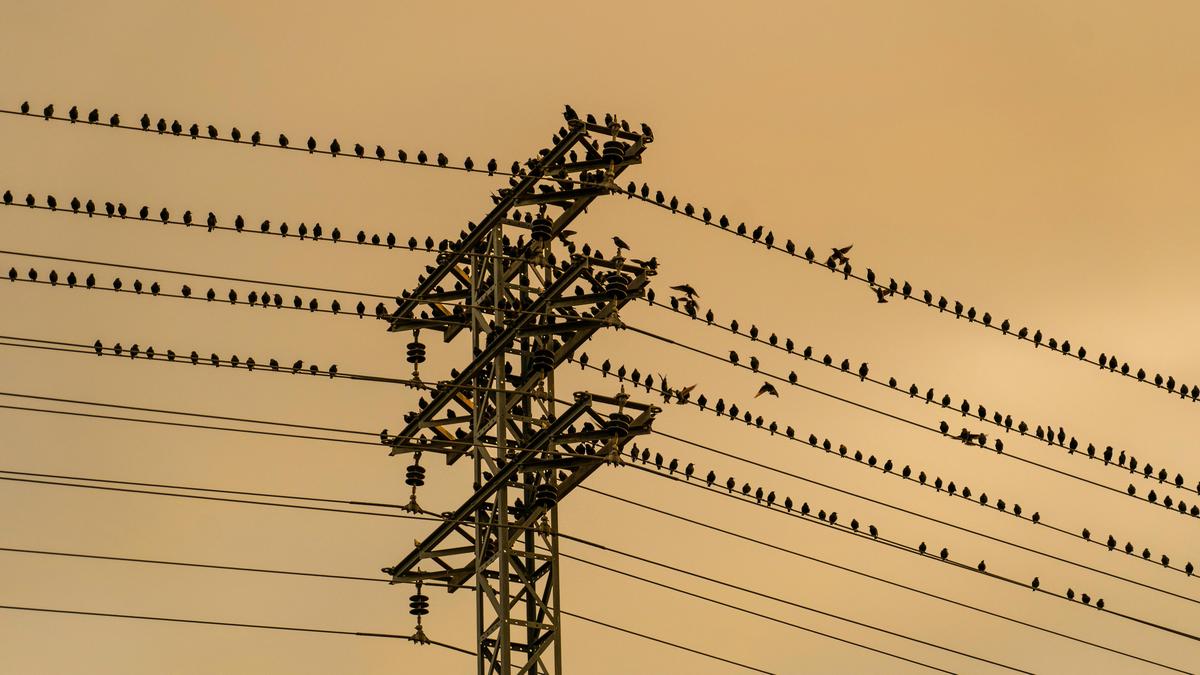
The article explains why birds can sit safely on power lines without being electrocuted. It does this by explaining basic electrical principles: electricity flows through a complete path from high to low voltage (or ground). When a bird sits on a single wire, its entire body is at the same voltage, so there’s no voltage difference and no current flows through it. Humans, being typically grounded, create a path for electricity if they touch a wire. Birds get shocked when they touch two points at once, creating a similar path. Power lines are spaced apart to prevent this from happening.
**News Article:**
**Birds on Power Lines: Understanding the Science Behind Their Electrocution Immunity**
*The Hindu, July 4, 2025* – Many have wondered how birds can perch comfortably on high-voltage power lines without suffering electric shock. A recent article published today by *The Hindu* sheds light on the physics behind this seemingly miraculous feat.
The article explains that electricity follows the path of least resistance, flowing from high voltage to low voltage or ground. When a bird sits on a single wire, its entire body is at the same voltage. This eliminates any voltage difference across the bird’s body, meaning there’s no incentive for electricity to flow through it. The bird effectively becomes part of the wire.
However, the situation changes drastically if a bird touches two points simultaneously, creating a complete circuit for the electricity to travel through its body. This is the same reason humans can be easily shocked near power lines, as they are typically grounded and provide a direct path for electricity to flow to the earth.
Power companies space the wires apart and elevate them to minimize the chances of both birds and humans coming into contact with multiple wires at once, thus reducing the risk of electrocution.
The article concludes with a reminder that linemen, while performing their duties, must wear specialized gear and follow strict safety protocols, as humans do not have the same natural protection as birds. This explainer clarifies the science for readers of all ages, making it accessible to a general audience, including science students and nature enthusiasts.
 First Piper