
Thu Jul 03 19:49:49 UTC 2025: **Kolhapuri Chappals Face Cultural Appropriation and Market Challenges Despite GI Tag**
**Kolhapur, Maharashtra – July 4, 2025** – The traditional Kolhapuri chappal, a handcrafted leather sandal with a Geographical Indication (GI) tag protecting its authenticity, is facing a complex set of challenges including cultural appropriation, dwindling artisan numbers, and competition from inauthentic imitations.
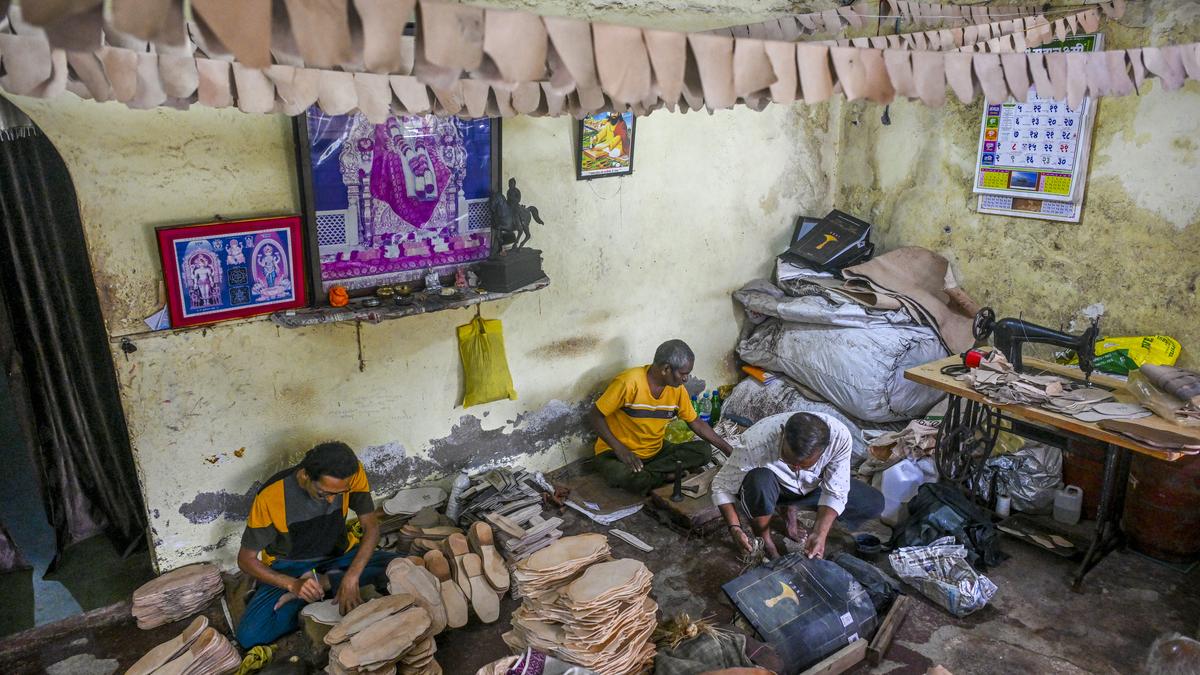
The process of creating authentic Kolhapuri chappals is a laborious one, taking 21 days and involving vegetable-tanned leather sourced from specific regions of Maharashtra and Karnataka. Tanners like Shantaram Narayan Sonavane, from the Dhor community, meticulously process buffalo hide using traditional methods passed down through generations. He laments the disappearance of tanneries in his area as his son is not interested in this job because of low money and not being treated with dignity. The process involves soaking the hides in natural ingredients like myrobalan fruits and babul tree bark which tanners and artisans believe this has health benefits for the wearers.
The recent controversy surrounding Italian luxury brand Prada’s “leather sandals,” which bore a striking resemblance to Kolhapuri chappals, has brought the issue of cultural appropriation to the forefront. While Prada has since acknowledged the traditions involved in making the chappals, the incident highlighted the lack of recognition and benefit to the artisans who create the original product.
Artisans are struggling to compete with cheaper, mass-produced imitations. They say Kolhapuri chappals are losing their market, with people’s lack of knowledge on what the original product is and that the demand for Kolhapuri chappals went up, but the production was steady which is when traders from other States started copying the design and selling it as Kolhapuris. The GI tag, which requires the chappals to be made in specific districts using all-natural, hand-stitched methods, is intended to protect the authenticity of the craft.
Beyond the appropriation issue, the industry faces other significant problems. A shortage of skilled artisans, the high cost of traditional vegetable tanning, and the social stigma associated with the tanning profession are contributing to the decline of the craft. Younger generations are opting for desk jobs over the physically demanding and less lucrative work of tanning and chappal making.
The Maharashtra Chamber of Commerce, Industry and Agriculture (MACCIA) is advocating for a patent on the Kolhapuri chappal to better protect the artisans’ interests. It is hoping this will help the artisans, who have been the most exploited in the chain as there is not even a cluster for the Kolhapuri chappals in Kolhapur. MACCIA has begun the process and hopes the artisans will come together to form a collective. Prada has offered to hold a meeting with the local artisans and with industry representatives. The Social Justice Minister has called for a meeting next week “to take measures to address the issue”.
Some artisans, like Ashok Laxman Mane, are using social media to connect directly with customers and bypass middlemen. But many lack the resources and skills to adapt to the changing market. Shubham Satpute, who sells “authentic Kolhapuri chappals” in his studio has rees on Instagram explaining the nuances of Kolhapuri chappals went viral, garnering lakhs of views and new followers for his studio’s Instagram page. He feels that the art needs a lot more to flourish such as some international collaboration, so the artisans benefit. At present, only the middlemen and shopowners make money from margins and commissions and the artisans are still exploited and underpaid.
The future of the Kolhapuri chappal industry hangs in the balance. Efforts to promote ethical fashion practices, protect the GI tag, and support artisans are essential to preserve this traditional Indian craft.
 First Piper