
Fri Jul 04 02:37:37 UTC 2025: Okay, here’s a news article based on the provided text:
**FOR IMMEDIATE RELEASE**
**Coral Reefs Discovered Off Andhra Pradesh Coast, Rewriting India’s Marine Map**
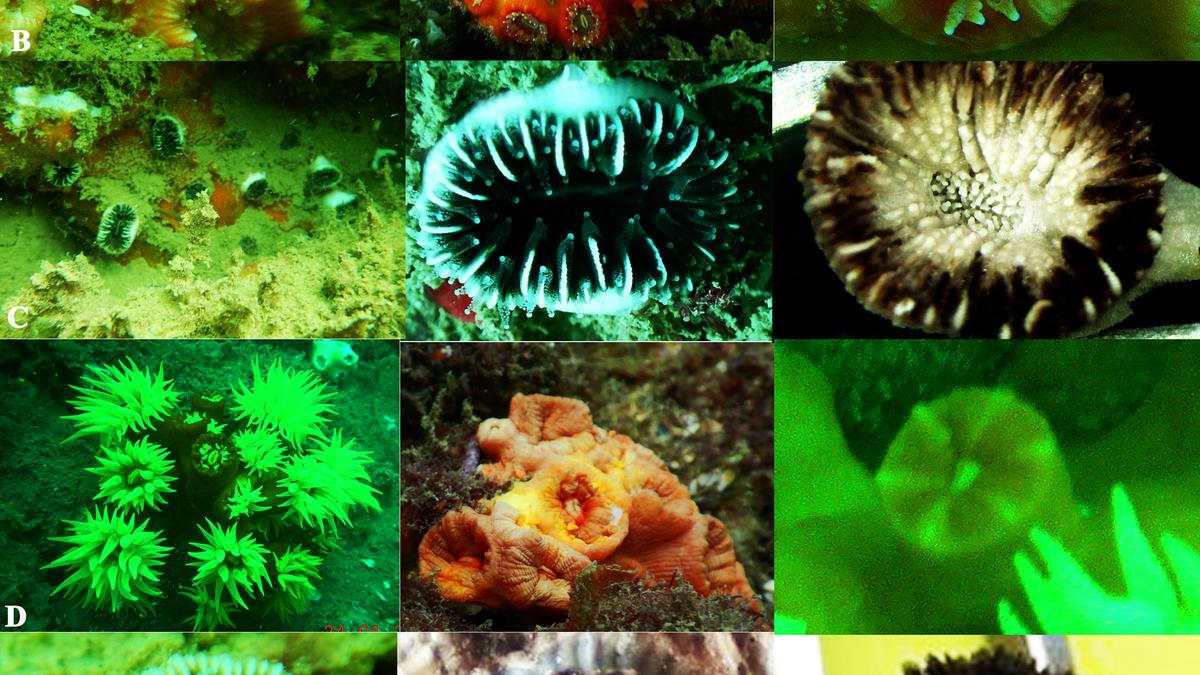
*Visakhapatnam, July 4, 2025* – In a groundbreaking discovery that promises to reshape marine conservation efforts in India, researchers have officially documented the presence of thriving coral communities along the Visakhapatnam coast of Andhra Pradesh. This marks the first time the coastline has been formally recognized for its coral presence in a peer-reviewed scientific journal.
The study, titled ‘Diversity and Distribution of Coral Community from Visakhapatnam Coast, Andhra Pradesh,’ was published in the Environmental Science Archives. It is a collaborative effort between scientists from the Zoological Survey of India (ZSI) and B. Balaram Naidu, a former naval submariner and founder of Livein Adventures.
Until now, known coral ecosystems in India were primarily located in the Gulf of Mannar, the Lakshadweep and Andaman-Nicobar archipelagos, and the Gulf of Kutch. The identification of live coral along the Andhra coast significantly extends the known range of these vital habitats.
The research team, led by ZSI scientists Joseph Stanley Yogesh Kumar, N Marimuthu, Tamal Mondal, Arya Sen, Pradip Panda and Chelladurai Raghunathan, identified the highest coral cover near Chintapalle Beach, with up to 23% live coverage observed in some areas. Scuba diving expeditions and underwater imaging were used to gather data across 15 sites between Pudimadaka and Chintapalle.
“This publication is a formal acknowledgment of Andhra Pradesh’s often-overlooked marine diversity,” said Balaram Naidu. “It validates what many of us along the coast have observed for years.”
The discovery is expected to have significant implications for marine conservation policy and biodiversity monitoring in the Bay of Bengal. Experts are urging a revision of current conservation frameworks for India’s eastern coastline, which has historically received less attention than western and island territories. The shallow nature of these newly documented coral habitats makes them vulnerable to coastal activity, pollution, and rising sea temperatures.
Researchers emphasize the need for consistent monitoring, protective regulations, and public engagement to safeguard these delicate ecosystems. They also hope that this discovery will lead to increased funding, policy scrutiny, and educational outreach initiatives, particularly within local fishing and coastal communities.
While this study provides the first published scientific confirmation of coral presence, further research is needed to fully understand the biodiversity supported by these formations. The research team anticipates that their findings, now available on the Environmental Science Archives website, will influence future environmental planning initiatives related to the Bay of Bengal’s marine corridor.
 First Piper