
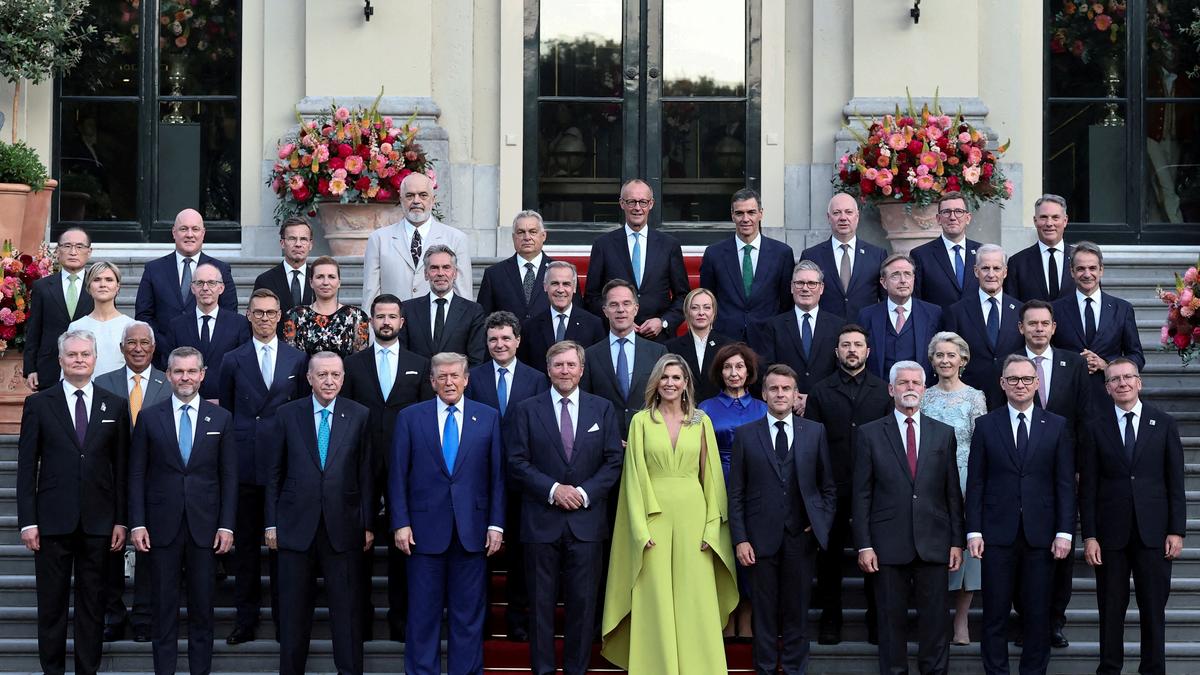
Wed Jun 25 13:59:03 UTC 2025: **Summary:**
NATO leaders, under pressure from U.S. President Donald Trump, have agreed to a significant increase in defense spending, aiming for 5% of GDP annually by 2035. While hailed as a “transformational” step and a show of unity against Russia, the agreement faces challenges. Spain has already stated it cannot meet the target, and other nations have expressed reservations due to economic constraints and the potential impact of Trump’s trade policies. Despite these hurdles, proponents argue the increased spending is vital for collective security and a “more balanced NATO,” potentially returning defense expenditure to Cold War levels. The agreement also encompasses broader defense-related spending and includes a review mechanism in 2029.
**News Article:**
**NATO Agrees to Massive Defense Spending Hike Amid Trump Pressure, Internal Divisions**
**The Hague, June 25, 2025** – In a move hailed as “historic” by some and “unreasonable” by others, NATO leaders have committed to a significant increase in defense spending, targeting 5% of GDP annually by 2035. The agreement, reached during a summit in The Hague, comes after persistent pressure from U.S. President Donald Trump, who has repeatedly questioned the commitment of some allies to burden-sharing.
The 32-nation alliance aims to bolster its collective defense against potential threats, particularly from Russia. The agreement mandates an initial “core defense spending” of 3.5% of GDP, alongside an additional 1.5% earmarked for security-related expenditures such as infrastructure improvements and cyber defense.
However, the ambitious plan faces significant hurdles. Spain has already declared its inability to meet the 2035 target, and concerns have been raised by other nations struggling with economic challenges. Trump’s ongoing global tariff war could further complicate matters, making it more difficult for some allies to allocate additional funds to defense.
Despite these reservations, NATO Secretary-General Mark Rutte characterized the summit as “transformational,” emphasizing the necessity of increased spending given the current international security landscape.
“Given the threat from the Russians, given the international security situation, there is no alternative,” Rutte stated.
The agreement includes a review of spending progress in 2029, after the next U.S. presidential elections, allowing for a reassessment of the security threat posed by Russia.
While some leaders like Finnish President Alexander Stubb praised the move as “the birth of a new NATO, which means a more balanced NATO,” others, like Hungarian Prime Minister Viktor Orban, remain skeptical about the magnitude of the threat posed by Russia.
The increased spending is also seen as a response to the U.S.’s shifting security focus towards the Indo-Pacific and Middle East, potentially requiring European allies to fill any security gaps left by a drawdown of U.S. troops. The Pentagon is expected to announce its intentions regarding troop deployments in the coming months.
The agreement underscores the ongoing tensions and realignments within the NATO alliance as it navigates a complex geopolitical landscape. While the commitment to increased defense spending represents a significant step, its long-term success hinges on overcoming internal divisions and addressing economic challenges facing member states.
 First Piper