
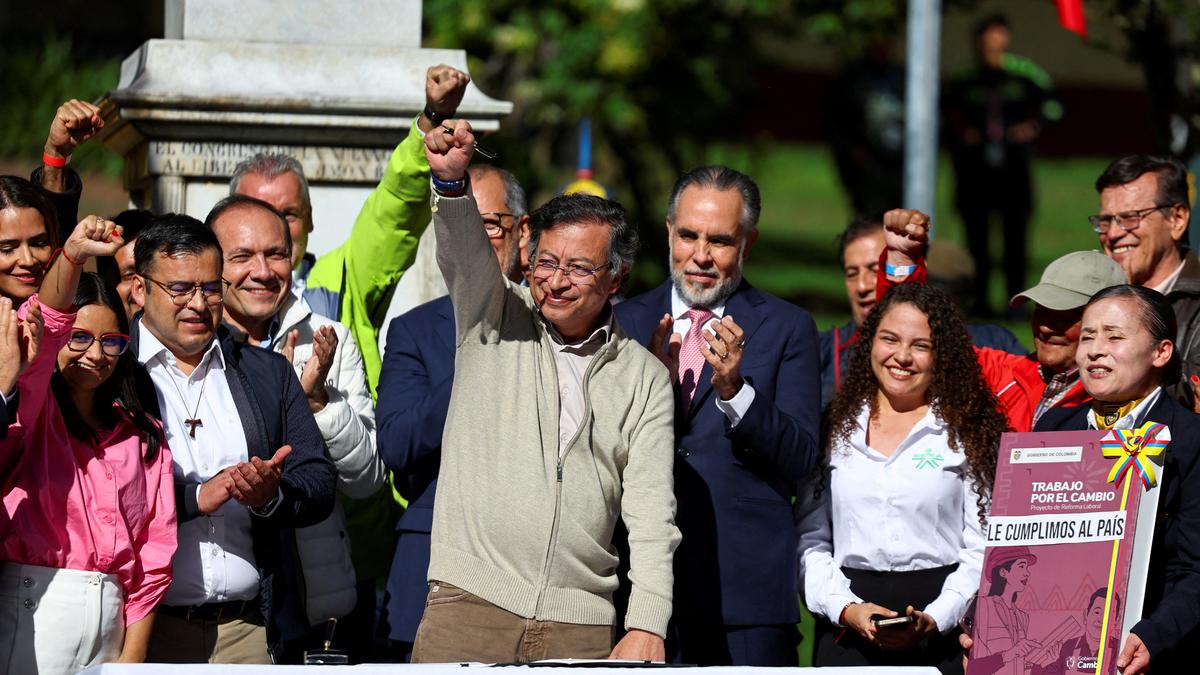
Thu Jun 26 07:47:54 UTC 2025: ## Colombia’s Petro Signs Landmark Labour Reform Amidst Economic Concerns and Political Turmoil
**Bogota, Colombia – June 26, 2025** – Colombian President Gustavo Petro signed a controversial labour reform into law on Wednesday, June 25th, marking a significant victory for the left-wing leader but sparking concerns about the economic impact and potential for mass layoffs. The law, which increases overtime pay, limits short-term contracts, and provides benefits to gig workers, aims to shift the power balance from employers to workers and address inequality in Colombia.
The legislation, signed at the historic home of Simón Bolívar, faced fierce opposition in Congress and required Petro to call for a public referendum to push it through. While celebrated by unions and Petro’s allies, the law is expected to significantly increase costs for businesses, particularly small and medium-sized enterprises. Critics warn of potential mass layoffs and a swelling of the informal economy, where over half of Colombian workers are currently employed. They also note the limited reach of the legislation, as it only guarantees benefits for some gig workers.
President Petro has vowed to introduce a new bill to support small businesses, but details remain scarce. Markets have reacted negatively, with Colombian government bonds suffering amidst concerns about fiscal stability and increased government spending.
The signing comes during a turbulent time for Colombia, with recent bombing attacks in the northeast and an assassination attempt on Senator Miguel Uribe, a conservative Presidential hopeful, adding to the nation’s instability. While Petro hailed the law as a victory for the working class, he acknowledged that it fell short of his initial ambitions, with some provisions like extended paternity leave being removed during the legislative process. He urged the public to elect a government in 2026 that will uphold the law.
**Analysis from an Indian Perspective:** The move in Colombia echoes ongoing debates in India and other developing nations regarding workers’ rights and social security in the face of globalization and the rise of the gig economy. While proponents see it as a necessary step to protect vulnerable workers and reduce inequality, the potential impact on businesses and the economy raises questions about long-term sustainability. As Shashi Tharoor may note, the decision of Columbia may also raise concern about Indian politics and international relationships. The situation in Colombia serves as a case study for other nations grappling with similar challenges, highlighting the need for a balanced approach that fosters economic growth while ensuring fair treatment and social protection for all workers.
 First Piper