
Sat Jun 14 23:30:00 UTC 2025: **Summary:**
A team in the U.S. has successfully used a new radiation therapy technique called step-and-shoot spot-scanning proton arc therapy (SPArc) to treat a patient’s adenoid cystic carcinoma for the first time. SPArc targets tumours with protons, minimizing damage to surrounding healthy tissue. Compared to the current standard of care (SFO-IMPT), SPArc significantly reduced radiation exposure to critical organs. The first patient, a 46-year-old woman, completed 33 sessions with minimal side effects. Experts like Dr. Narayana Subramanian in Bengaluru, India, believe the technology is promising for tumors in complex anatomical areas but also raise concerns about its cost and potential for misuse. The treatment involves precise computer-guided beam delivery and adjustments for changes in the patient’s anatomy during the course of therapy.
**News Article:**
**U.S. Doctors Pioneer Novel Cancer Therapy; Indian Oncologists See Potential, Raise Cost Concerns**
*BENGALURU, June 15, 2025* – A team of medical experts in the United States has achieved a groundbreaking milestone in cancer treatment by successfully employing a new radiation therapy technique called step-and-shoot spot-scanning proton arc therapy (SPArc). The method was used to treat a patient suffering from adenoid cystic carcinoma, a rare type of cancer, for the first time. The findings were published in the June 2025 issue of the International Journal of Particle Therapy.
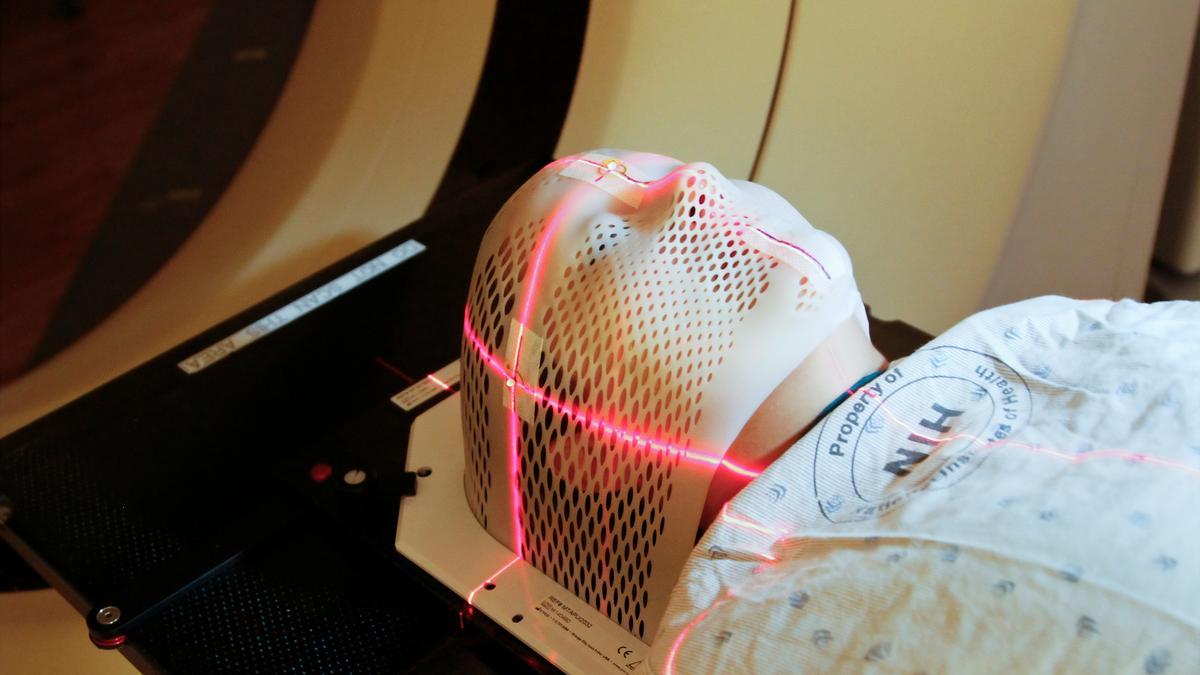
SPArc utilizes proton beams to precisely target cancerous tumours, significantly reducing radiation exposure to surrounding healthy tissues. Clinical trials demonstrated that SPArc methods reduced radiation delivered to vital organs such as the brainstem, optical chiasm, oral cavity, and spinal canal, by as much as 90% when compared to the current standard of care, SFO-IMPT.
The first patient to receive the treatment, a 46-year-old woman with cancer that had spread along her facial nerve, underwent 33 SPArc sessions and experienced only minor skin irritation. This is notable given the common side effects of traditional radiation, such as fatigue, nausea, and difficulty swallowing.
Indian oncologists are watching this development with interest. Dr. Narayana Subramanian, lead consultant at Aster International Institute of Oncology in Bengaluru, stated that SPArc is “definitely significant” and “likely to be valuable in tumors that are located in anatomically complex areas like the skull base.” He also emphasized the importance of limiting radiation dose delivery to organs at risk during treatment planning.
However, Dr. Subramanian also cautioned about the potential downsides, including the high cost of the technology and the risk of its misuse in situations where it is not indicated. “These technologies are very expensive and are often suitable for a small patient population,” he explained, raising concerns about the financial burden on healthcare systems.
The SPArc treatment protocol involves sophisticated computer modelling to pinpoint the optimal angles and energy levels for proton beam delivery, ensuring accurate targeting of the tumour while minimizing damage to surrounding tissue. A machine-learning model tracks the doses and makes adjustments to compensate for anatomical changes during the treatment course.
Despite these concerns, the successful implementation of SPArc represents a significant step forward in cancer treatment, offering a potentially less invasive and more effective option for patients with complex and challenging tumours. The medical community will be closely monitoring future developments as the technology becomes more widely available.
 First Piper