
Fri Jun 13 15:58:41 UTC 2025: **Karnataka Seeks Fairer Fiscal Devolution, Demands Increased Share of Union Taxes**
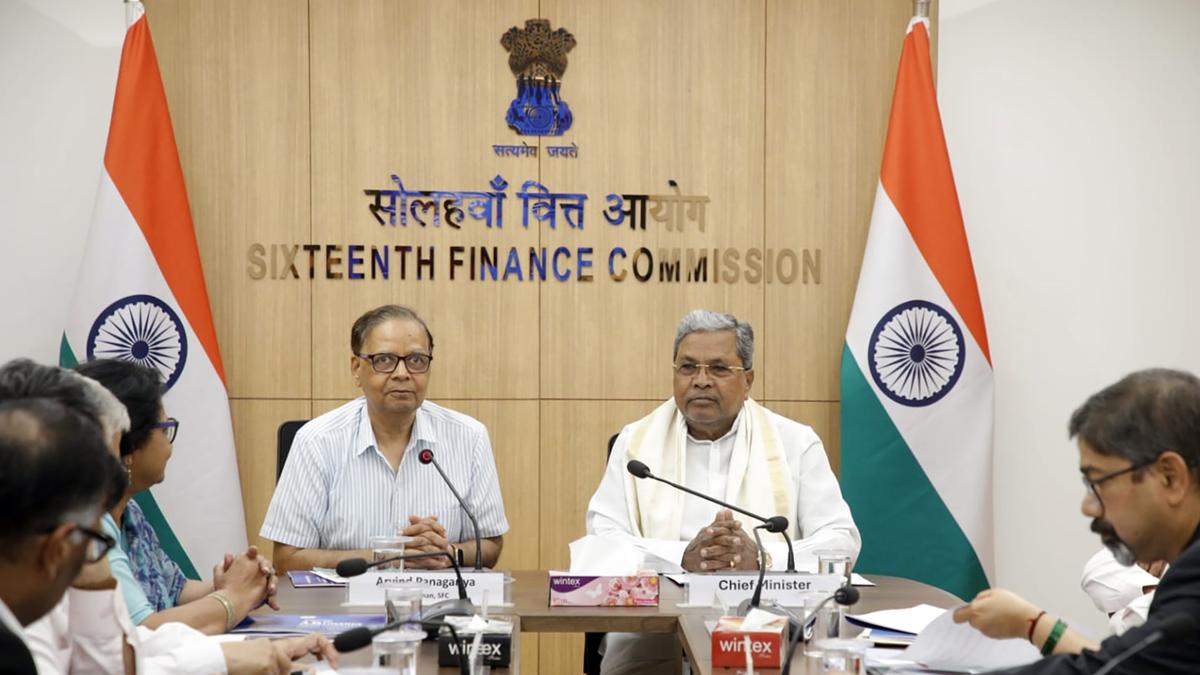
**NEW DELHI, June 13, 2025** – Karnataka Chief Minister Siddaramaiah met with the 16th Finance Commission (FC) on Friday, urging a significant overhaul of the fiscal devolution system to address what he described as a stark imbalance in the distribution of funds to the state.
Siddaramaiah called for increasing the share of taxes devolved to states (vertical devolution) to at least 50% and capping cess and surcharges at 5%. He emphasized that for every rupee Karnataka contributes to Union taxes, it receives only 15 paise in return. The Chief Minister pointed to the reduction in Karnataka’s share under the 15th FC, which has resulted in a cumulative loss of over ₹80,000 crore.
The state government is seeking support for a ₹1.15 lakh crore investment to bolster Bengaluru’s infrastructure, acknowledging its vital role in Karnataka’s economy. Additionally, the state is advocating for inclusion of Union non-tax revenues in the divisible pool.
Karnataka has also proposed a revised formula for sharing funds among states (horizontal devolution), recommending that each state retain approximately 60% of its contribution, with 40% allocated to less-developed states to ensure both growth and equity. To further balance the formula, Karnataka suggests reducing the weight of the income-distance criterion and increasing the weight given to a state’s economic contribution.
The Chief Minister said that Karnataka’s per capita devolution has dropped significantly, from 95% to 73% of the national average between the 14th and 15th Finance Commissions, despite the state’s increased GDP contribution.
Siddaramaiah stressed that Karnataka plays a pivotal role in India’s economic growth, contributing nearly 8.7% of the national GDP while comprising just 5% of the population. Karnataka ranks second in GST collections nationwide.
The FC’s award period commences on April 1, 2026. The state government hopes the commission will consider its recommendations to make the fiscal devolution system more growth-oriented, predictable, and fair.
 First Piper