
Mon Jun 02 10:12:19 UTC 2025: **Summary:**
Facing increased threats, particularly from Russia, the U.K. is shifting its focus to “war-fighting readiness,” according to Prime Minister Keir Starmer. The government has released a strategic review of its defense capabilities, outlining plans to build up to 12 attack submarines as part of the AUKUS alliance, invest in nuclear warheads and digital capabilities, and improve military housing. Starmer emphasized a “NATO-first” defense strategy and committed to increasing defense spending to 2.5% of GDP by 2027, aiming for 3% between 2029 and 2034. The shift involves a “defense dividend” with job creation in the sector, contrasting with previous welfare spending.
**News Article:**
**UK Pivots to “War-Fighting Readiness” Amid Rising Russian Threat**
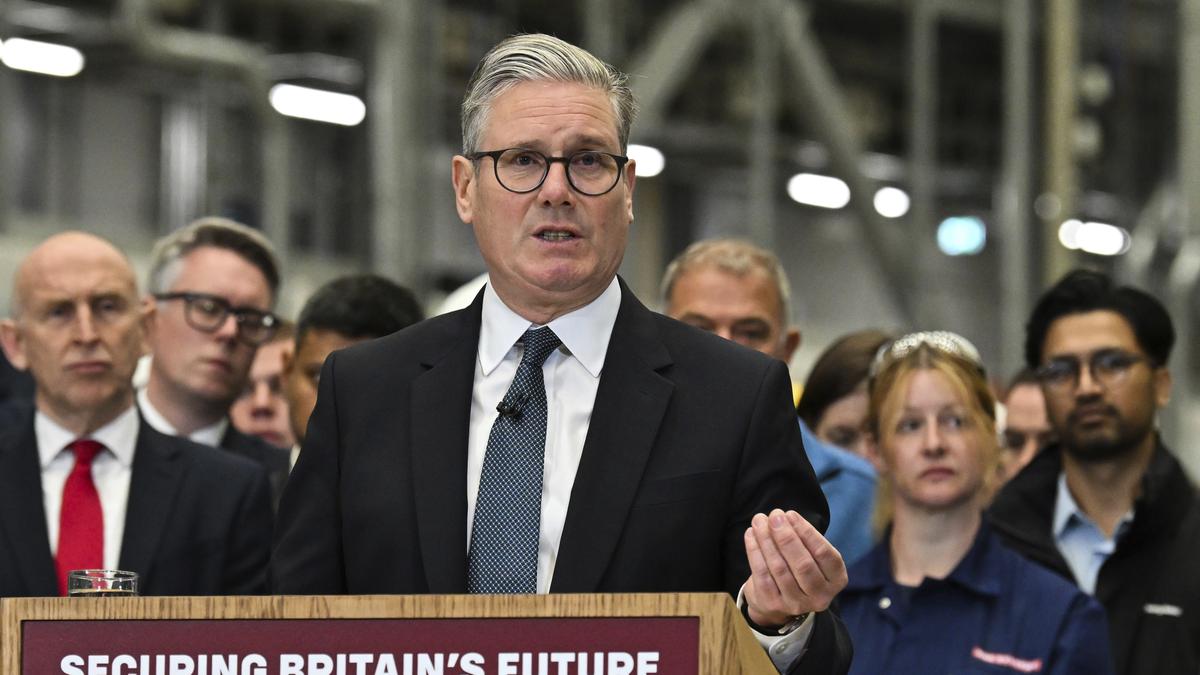
**LONDON (The Hindu) -** Citing escalating threats, particularly from Russia, British Prime Minister Keir Starmer announced a significant shift towards “war-fighting readiness” for the United Kingdom. Unveiling a strategic defense review at a BAE Systems shipyard in Glasgow, Starmer declared the U.K.’s armed forces will prioritize combat effectiveness amidst a perceived new era of heightened geopolitical instability.
The strategic review detailed plans to bolster the nation’s military might, including building up to 12 attack submarines through the AUKUS alliance (Australia, U.K., and U.S.), investing £15 billion in nuclear warheads, and allocating £1 billion to a new “CyberEM Command” to enhance digital capabilities. Housing improvements for military personnel are also planned.
“We are moving to war-fighting readiness as the central purpose of our armed forces,” Starmer stated, emphasizing the need to adapt to the evolving threat landscape. He underscored the U.K.’s commitment to NATO as a “fundamental source” of its strategic strength.
Since taking office in July 2024, Starmer’s Labour government has pledged to increase defense spending to 2.5% of GDP by 2027, with an ambition of reaching 3% between 2029 and 2034. While stopping short of committing to a specific date for the 3% target, Starmer emphasized a commitment to rapid innovation, aiming to make the U.K. the fastest innovator within NATO.
The government anticipates a “defense dividend” resulting from job creation in the defense sector, a shift from the post-Cold War “peace dividend” that saw increased welfare spending. The government has faced some criticism for welfare cuts, some of which it has had to partially reverse.
The announcement comes as NATO allies face increasing pressure from figures like former U.S. President Donald Trump to significantly increase their defense spending.
 First Piper