
Sat May 31 18:41:00 UTC 2025: **News Article:**
**Swedish Nobel Laureate The Svedberg Remembered for Pioneering Work in Colloid Chemistry and Ultracentrifugation**
_Uppsala, Sweden – June 1, 2025_ – The legacy of Theodor (The) Svedberg, the Swedish chemist awarded the 1926 Nobel Prize in Chemistry, continues to inspire scientists worldwide. Born in 1884, Svedberg’s early fascination with nature and science blossomed into a remarkable career centered on colloids and the development of the ultracentrifuge.
Svedberg’s early education fostered his independent exploration of physics and chemistry, even leading to his construction of a Marconi-transmitter and a Tesla-transformer. He earned advanced degrees from Uppsala University, where he later became a professor of physical chemistry.
His groundbreaking work focused on colloids, leading to his doctoral thesis on the subject, now considered a classic. He also provided experimental evidence supporting Einstein’s and Smoluchowski’s theories on Brownian motion, thus proving the physical existence of molecules. A key invention was the ultracentrifuge, which allowed the study of large molecules in solution, revealing crucial insights into the size and shape of proteins and contributing significantly to the rise of molecular biology. This invention was patented by Svedberg on June 1, 1909.
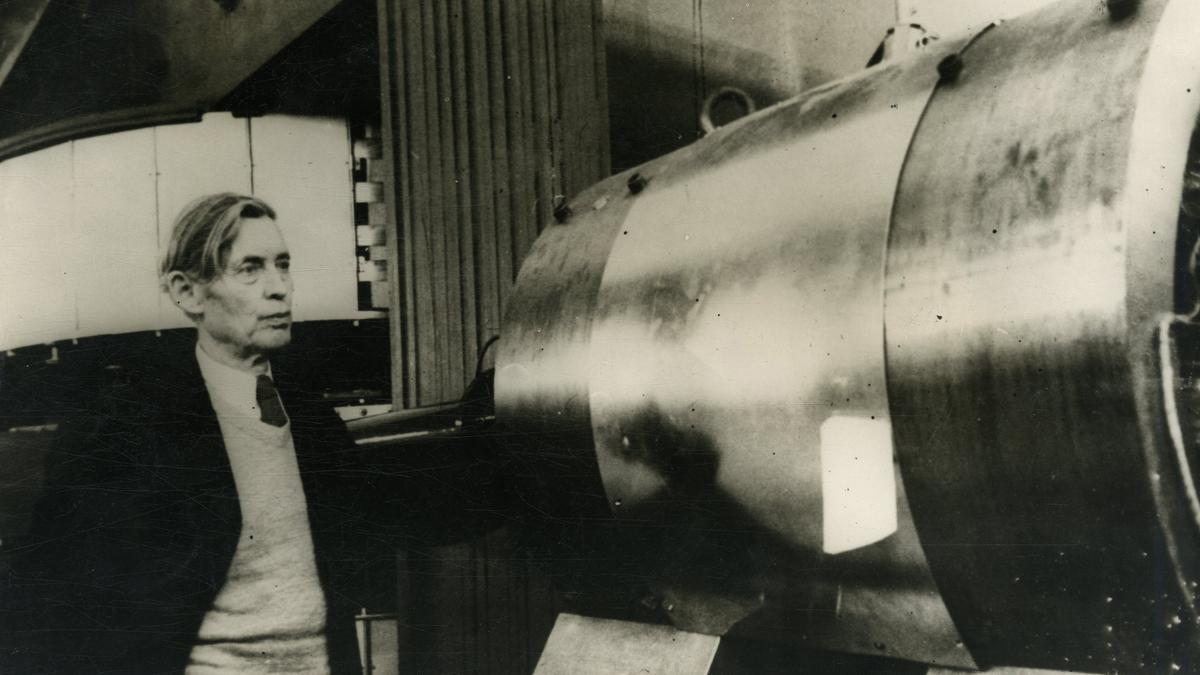
Later in his career, Svedberg shifted his focus to nuclear chemistry and radiation biology, improving the cyclotron. He also mentored Arne Tiselius, another Nobel laureate.
Notably, Svedberg had a connection to India, being elected an honorary fellow of the Indian Academy of Sciences in 1935, founded by C.V. Raman. While photographic evidence of a direct meeting between Svedberg and Raman remains inconclusive, their association through the Academy highlights Svedberg’s international recognition and potential collaborative scientific relationships.
The Gustaf Werner Institute for Nuclear Chemistry at the University was renamed The Svedberg Laboratory in 1986, as a memorial. The laboratory was shut down in 2016. The contributions made by Svedberg during his lifetime have helped lead to a greater understanding of modern science.
 First Piper