
Thu May 29 15:23:02 UTC 2025: **Summary:**
This news article from *The Hindu* reports on unusually high wind speeds in Kerala, India, since the monsoon’s onset on May 24th. Scientists are drawing parallels to the wind patterns observed just before the devastating 2018 floods. The speed of the monsoon low-level jet is significantly higher than normal, pumping more moisture from the Arabian Sea. While global climate factors are neutral, conditions similar to La Niña are present, and atmospheric conditions favor increased rainfall. Additionally, there is an increase in micro-scale whirlwinds, which may be related to local climate changes.
**News Article:**
**Kerala on Alert as Unusually Strong Winds Echo Pre-Flood Conditions**
*Thiruvananthapuram, May 29, 2025* – Kerala is experiencing unusually high wind speeds since the onset of the monsoon, raising concerns about potential flooding, according to a report in *The Hindu*. Scientists at the Cusat’s Advanced Centre for Atmospheric Radar Research (ACARR) have noted a striking resemblance to the wind patterns observed in 2018, just before the devastating August floods.
On Thursday, the monsoon low-level jet speed measured 20 m/s (approximately 72 kmph) at a height of 2 km. This is significantly higher than the typical climatological normal of 10-15 m/s for Kerala. “The higher speed of westerly winds will normally pump a large quantity of moisture from the Arabian Sea to the land,” explains Ajil Kottayil, a scientist at ACARR. “Further, the orographic lifting of clouds, including their depth and extent, would be higher than normal during such situations, leading to intense spells of rain over the land.”
Automatic weather stations across the state have also recorded strong gusty winds, with Palakkad reporting the highest at 68.5 kmph. Other regions, including Wayanad, Idukki, and Thiruvananthapuram, have also experienced winds exceeding 50 kmph.
IMD Director Neetha K. Gopal stated that the wind’s speed and gustiness are notably higher than usual during the monsoon season. While global factors like ENSO and the Indian Ocean Dipole are currently neutral, conditions similar to La Niña are present.
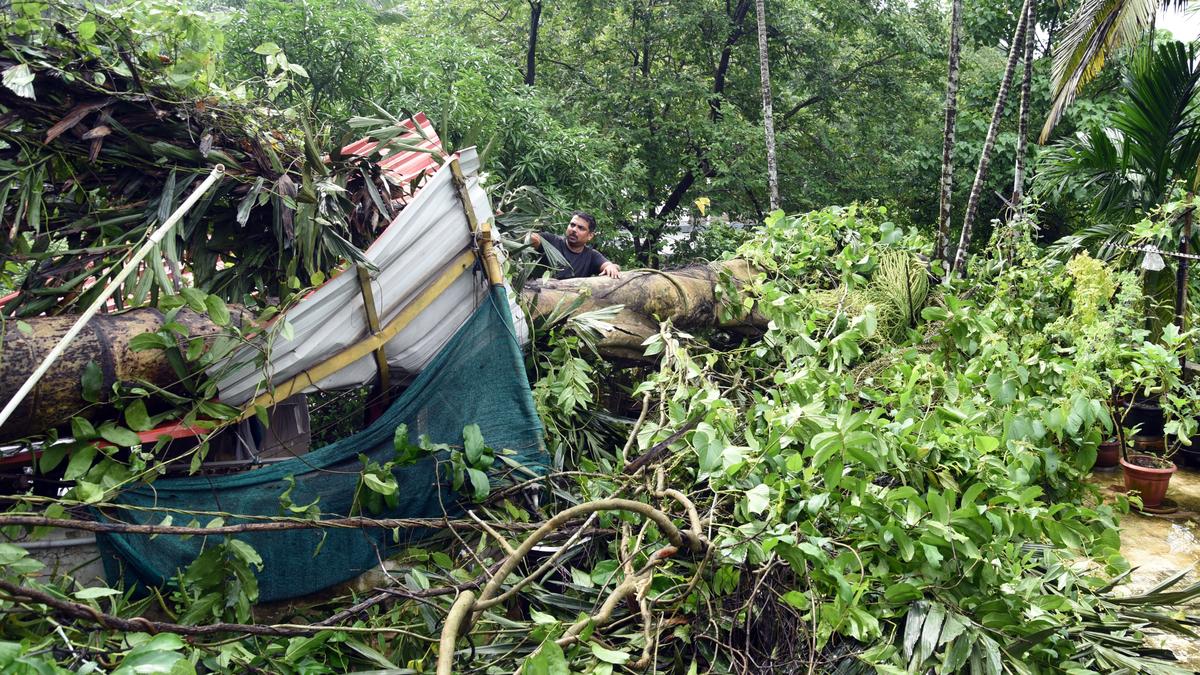
Adding to the concerns, an increase in the frequency and intensity of short-lived micro-scale whirlwinds has been reported, causing property damage. Experts suggest that these whirlwinds may be linked to local climate changes, including decreased monsoon rainfall and increased temperatures.
 First Piper