
Tue May 27 08:33:37 UTC 2025: **Summary:**
The Karnataka government is challenging a Supreme Court order to release ₹3,000 crore in Transferable Development Rights (TDR) certificates to the heirs of the Mysuru royal family for land acquired for road widening in Bengaluru. The state argues that the order, pertaining to 15 acres of Bangalore Palace grounds, contradicts the Bangalore Palace (Acquisition and Transfer) Act, 1996, which fixed a much lower compensation amount for the larger 472-acre property. The case has been referred to the Chief Justice of India to determine if it should be heard by a larger bench.
**News Article:**
**Karnataka Challenges Supreme Court Order on Bangalore Palace Land Compensation**
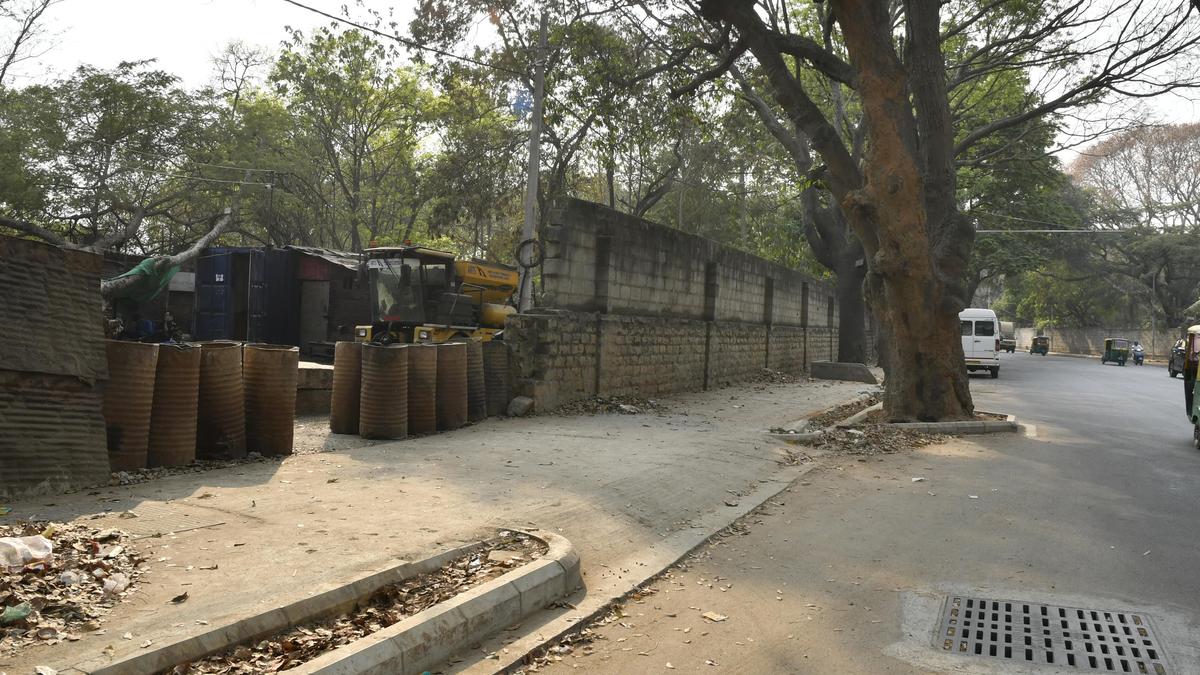
**NEW DELHI – May 27, 2025** – A dispute over the compensation for land acquired for road widening in Bengaluru has escalated to the Supreme Court. The Karnataka government is contesting a recent Supreme Court directive ordering the release of ₹3,000 crore in Transferable Development Rights (TDR) certificates to the legal heirs of the former Mysuru royal family. The land in question, approximately 15 acres of the Bangalore Palace grounds, was acquired to facilitate the widening of Ballari and Jayamahal roads.
Senior advocate Kapil Sibal, representing the State of Karnataka, argued that the order contradicts the Bangalore Palace (Acquisition and Transfer) Act of 1996, which had previously established a significantly lower compensation amount for the entire 472-acre property. Sibal questioned the validity of applying a 2004 amendment to the Karnataka Town and Country Planning Act retrospectively to an acquisition dating back to 1996.
During the hearing, Justices Surya Kant and Dipankar Datta echoed concerns previously raised by Chief Justice of India BR Gavai regarding the potential for a Division Bench to overrule a decision made by another similar bench.
Senior advocates Mukul Rohatgi and T. Harish Kumar called the state’s application an abuse of law. The Supreme Court has now referred the matter to the Chief Justice of India to decide whether the application warrants review by a larger, three-judge bench. The outcome could have significant financial implications for the state government and set a precedent for land acquisition compensation disputes.
 First Piper