
Fri May 23 01:30:00 UTC 2025: **Summary:**
The article discusses the growing threat of Antimicrobial Resistance (AMR) in India, highlighting its impact on patient outcomes and the healthcare system. AMR is driven by the misuse and overuse of antibiotics in humans, livestock, and agriculture. A case study illustrates the devastating consequences of AMR, while statistics reveal its significant contribution to deaths globally and in India. The article emphasizes the importance of responsible antibiotic use, public awareness, and regulatory measures. There is also a communication gap between medical professionals and patient families. It highlights the development of a new Indian antibiotic, Nafithromycin, as a positive step but stresses the need for a comprehensive approach, including addressing healthcare system gaps, promoting antibiotic stewardship, and fostering innovation and research.
**News Article:**
**India Battles Rising Tide of Antimicrobial Resistance, New Drug Offers Hope**
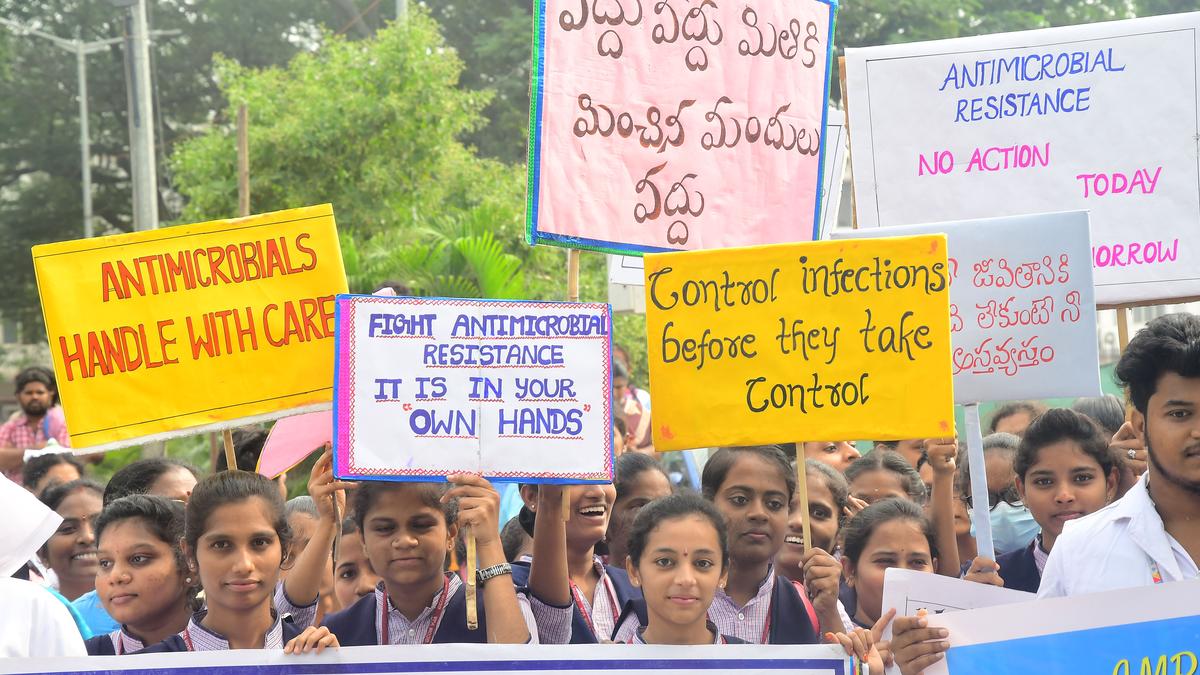
**Hyderabad, May 23, 2025** – Antimicrobial Resistance (AMR) is posing a significant threat to public health in India, contributing to nearly 300,000 deaths in 2019 alone. Driven by the misuse and overuse of antibiotics across various sectors, including human healthcare, livestock, agriculture, and aquaculture, AMR is rendering life-saving drugs ineffective.
A stark example is the case of Viswanathan, who succumbed to AMR after a physiotherapy treatment led to infections that resisted multiple antibiotics, eventually damaging his kidneys. His son, Vysakh, highlighted the challenges faced by families, including diagnostic delays and a lack of communication within the healthcare system.
According to a study published in The Lancet, 1.91 million people could die directly from AMR and 8.22 million deaths associated with AMR could occur globally in 2050.
In a positive development, Mumbai-based pharmaceutical company Wockhardt, with support from the Biotechnology Industry Research Assistance Council (BIRAC), has launched Nafithromycin (‘Miqnaf’), India’s first indigenously-developed antibiotic in its class, to treat Community-Acquired Bacterial Pneumonia (CABP). The once-a-day, three-day treatment boasts a 97% success rate.
However, experts warn that innovation alone is not enough. Addressing the gaps in India’s healthcare system, promoting responsible antibiotic use, and strengthening regulatory frameworks are crucial. The World Health Organization (WHO) has declared AMR as one of the top 10 global health threats.
While Nafithromycin represents a significant step forward, it also underscores the urgent need for increased research, development, and investment in new antibiotics. The Indian government is working to combat AMR, with national action plan established in 2017. However, public awareness remains low. It is not uncommon for people to take antibiotics for a viral fever which is not only ineffective but adds to resistance.
Experts stress that education, innovation, and regulation must progress in parallel to effectively curb AMR. Furthermore, newer drug formulations is losing efficacy due to extensive, irrational, and uncontrolled use. “Combating AMR is not just a scientific or medical challenge, it is a collective responsibility that requires coordinated action across sectors, as well as sustained investment and empowered communities,” said Dr. Mestrovic.
Accessibility and affordability are other important factors in the development of new antibiotics.
 First Piper