
Sun May 18 01:27:35 UTC 2025: **Summary:**
India’s space agency, ISRO, experienced a setback in its 101st mission, the PSLV-C61/EOS-09, on May 18, 2025. The launch vehicle suffered a glitch in its third stage, preventing the successful deployment of the EOS-09 Earth observation satellite into its intended orbit. The failure occurred despite normal performance in the first two stages, marking a rare anomaly for the usually reliable PSLV. Investigations are underway to determine the root cause of the issue, which involved a drop in chamber pressure in the third-stage motor. This failure follows a previous issue with the NVS-02 satellite’s orbit-raising operations, highlighting recent challenges for ISRO. The EOS-09 satellite was intended to provide all-weather remote sensing data for various Earth observation applications.
**News Article:**
**ISRO Mission Fails Due to Technical Glitch, Earth Observation Satellite Lost**
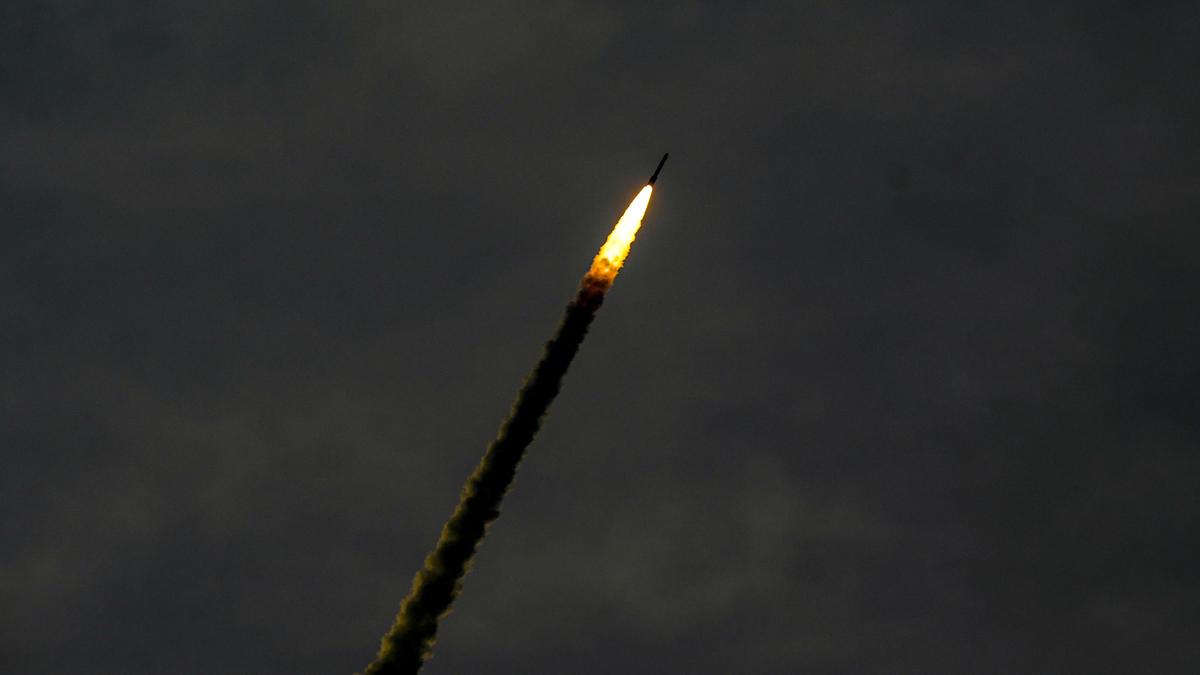
**Bengaluru, May 19, 2025** – The Indian Space Research Organisation (ISRO) experienced a major setback on Sunday after its 101st mission, the PSLV-C61/EOS-09, failed due to a technical malfunction during the third stage of the launch. The Polar Satellite Launch Vehicle (PSLV), carrying the Earth observation satellite EOS-09, lifted off from the Satish Dhawan Space Centre in Sriharikota at 5:59 a.m. but was unable to place the satellite into its intended Sun Synchronous Polar Orbit (SSPO).
“The PSLV is a four-stage vehicle, and second-stage performance was quite normal. The third stage’s motor started perfectly, but during its functioning, we observed an anomaly, and the mission could not be accomplished,” said ISRO Chairman V. Narayanan shortly after the launch. He later confirmed that a fall in chamber pressure within the third-stage motor was the cause.
The EOS-09 satellite, weighing 1,696.24 kg, was designed to provide continuous and reliable remote sensing data for operational applications, utilizing a Synthetic Aperture Radar (SAR) payload to capture images in all weather conditions.
Former ISRO Chairman S. Somanath acknowledged the difficulties encountered during the development of the third-stage solid motor. “I am aware of the formidable challenges we faced during the development of the third-stage solid motor — an endeavour marked by multiple failures. It is indeed unusual to witness such anomalies resurfacing at this stage. Nevertheless, I have complete confidence that the team will identify the root cause both swiftly and effectively.”
This failure is a rare occurrence for the PSLV, which had only experienced two prior unsuccessful missions since its inception in 1993. ISRO is currently investigating the cause of the glitch and assures the public that it will thoroughly analyze the data to prevent future incidents. The setback follows a recent issue with the NVS-02 satellite’s orbit-raising operations, raising concerns about the agency’s recent performance.
 First Piper