
Sun May 18 01:27:35 UTC 2025: **Summary:**
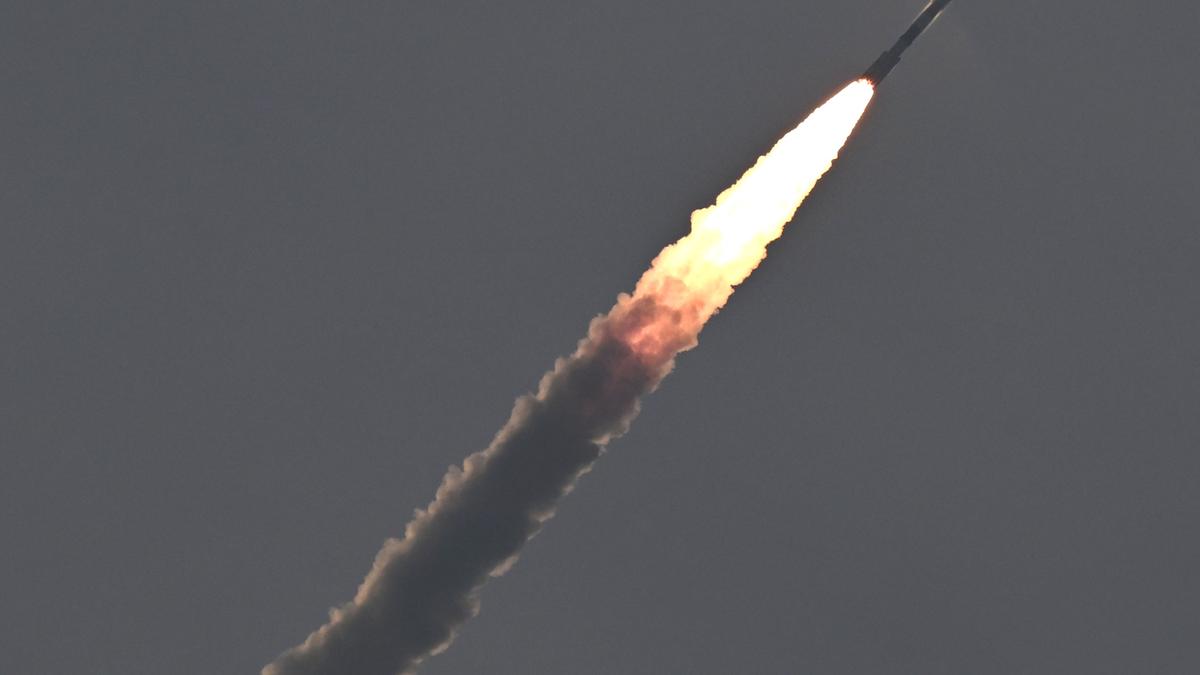
India’s ISRO’s PSLV-C61 mission carrying the EOS-09 Earth observation satellite failed due to an anomaly in the third stage of the launch vehicle. The launch took place from Sriharikota on May 18, 2025. While the first two stages performed normally, the third stage malfunctioned, preventing the satellite from reaching its intended orbit. The EOS-09 was designed to provide remote sensing data for various applications and had a mission life of five years.
**News Article:**
**ISRO’s PSLV-C61 Mission Fails Due to Third Stage Anomaly**
**Bengaluru, May 18, 2025:** The Indian Space Research Organisation (ISRO) experienced a setback today as its PSLV-C61 mission, carrying the EOS-09 Earth observation satellite, failed to reach its intended orbit due to an anomaly in the third stage of the launch vehicle.
The launch took place at 5:59 a.m. from the Satish Dhawan Space Centre in Sriharikota. ISRO Chairman V. Narayanan announced shortly after liftoff that the mission could not be accomplished due to the observed issue.
“Today from Sriharikota the PSLV-C61/EOS-09 mission was targeted,” Narayanan stated. “The PSLV is a four-stage vehicle, and the second stage performance was quite normal. The third stage motor started perfectly, but during the functioning of the third stage, we are seeing an observation, and the mission could not be accomplished. After analysis, we shall come back.”
The PSLV-C61 performed normally until the second stage, but the malfunction during the third stage ultimately led to the mission’s failure.
The EOS-09 satellite was a repeat of the EOS-04, designed to provide continuous remote sensing data for operational applications in various sectors and improve observation frequency. The satellite weighed 1696.24 Kgs and carried a Synthetic Aperture Radar (SAR) payload. The intended mission life for the satellite was five years.
This was the 63rd flight of the Polar Satellite Launch Vehicle (PSLV) and the 27th using the PSLV-XL configuration. ISRO has stated that a thorough analysis will be conducted to determine the cause of the third stage anomaly.
 First Piper