
Tue May 06 03:38:57 UTC 2025: ## Jeju Island’s Diving Women Show Unique Genetic Adaptations
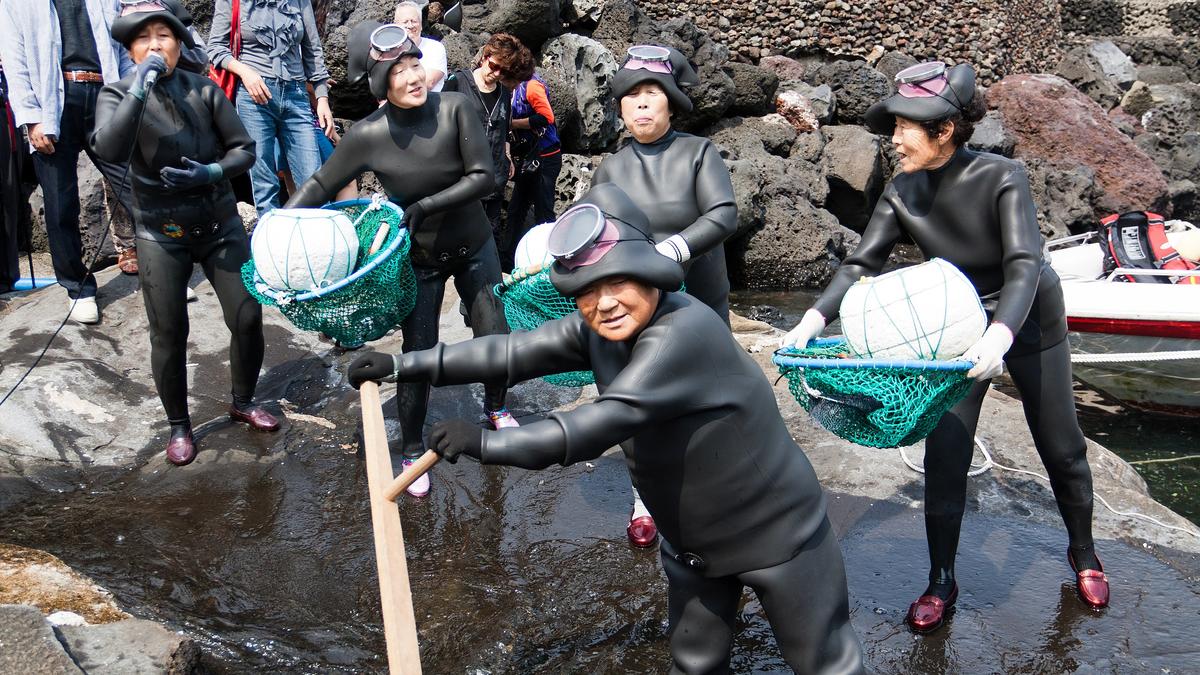
**Seoul, South Korea –** A new study published in *Cell Reports* reveals remarkable genetic and physiological adaptations in the Haenyeo, a group of women from Jeju Island, South Korea, renowned for their free-diving skills. These women routinely dive up to 10 meters deep for up to seven hours daily to collect shellfish.
Researchers compared 91 women – Haenyeo divers, non-diving Jeju women, and non-diving Seoul women – finding significant differences. Haenyeo divers exhibited a stronger diving reflex, characterized by bradycardia (slowed heart rate) during simulated dives. While spleen size, initially thought to be a key adaptation, proved to be a regional rather than genetic factor.
However, the study uncovered a key genetic adaptation. Haenyeo and Jeju control groups showed higher diastolic blood pressure than their Seoul counterparts, a potential adaptation enhancing blood flow to the brain during dives. Genome sequencing revealed that Jeju residents, both Haenyeo and non-Haenyeo, are genetically distinct from mainland Koreans, diverging approximately 5,000-7,000 years ago.
A specific gene variant, rs66930627, was found to be more prevalent in Jeju residents and linked to lower diastolic blood pressure, potentially reducing pregnancy-related hypertension risks, a significant finding considering the Haenyeo often dive while pregnant. This variant also correlated with changes in genes involved in immune modulation and hypertension.
Study co-author Melissa Ilardo highlighted the significance of these findings, stating that the Haenyeo’s diving practices, particularly during pregnancy, have influenced the genetic makeup of the entire island population. The research provides compelling evidence of the interplay between human adaptation and environmental pressures, showcasing the remarkable resilience and unique genetic heritage of the Haenyeo community.
 First Piper