
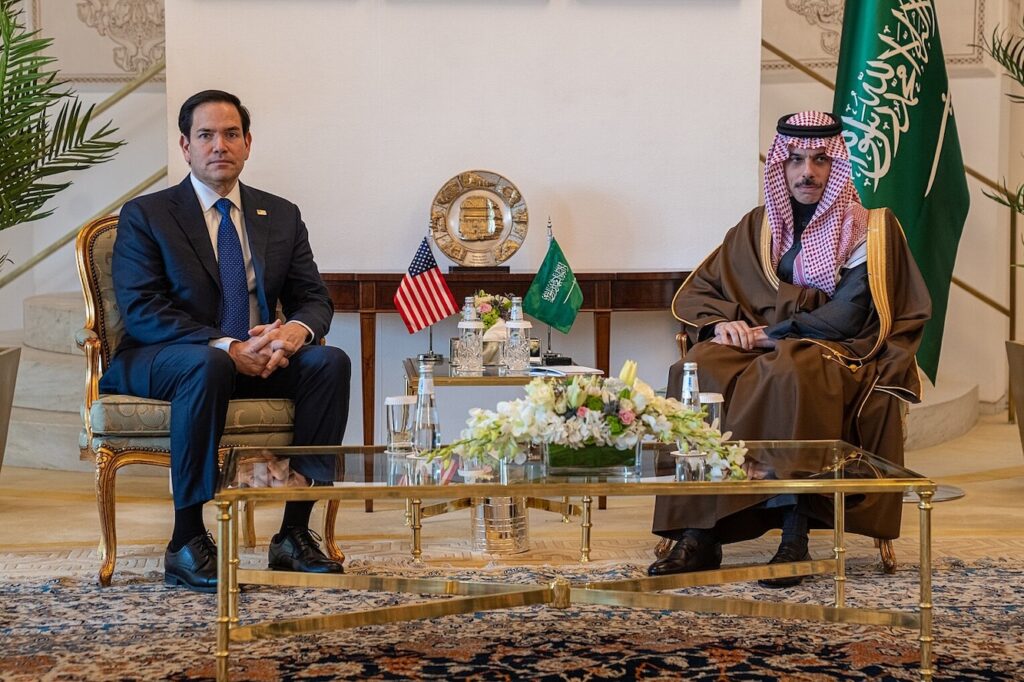
Fri May 02 12:00:00 UTC 2025: ## US-Brokered Israeli-Saudi Peace Deal Deemed Unrealistic Amidst Shifting Regional Dynamics
**Washington, D.C.** – A long-sought Israeli-Saudi peace deal, once touted as achievable through a US-led “mega-deal,” is now considered highly improbable, according to a recent analysis by H.A. Hellyer, PhD, a leading expert in geopolitics and security. Hellyer argues that the changing regional landscape, particularly the thawing relationship between Iran and Saudi Arabia, has rendered the previous conditions for such a deal obsolete.
The proposed mega-deal hinged on three pillars: a US-Saudi defense treaty, a US-assisted Saudi civil nuclear program, and Israeli concessions towards a Palestinian peace. However, Saudi Arabia’s growing rapprochement with Iran, culminating in high-level visits between Saudi and Iranian officials, significantly undermines the need for a US security guarantee against Iranian aggression. Reports indicate Saudi Arabia would not permit US military operations against Iran from its territory and prefers engagement over escalation with Tehran, even supporting ongoing US-Iran nuclear negotiations.
Further, Saudi Arabia has reportedly abandoned the pursuit of a comprehensive US defense treaty, citing difficulties in securing Congressional approval and a diminished perception of the long-term reliability of US security guarantees. While a large arms package is reportedly forthcoming, it’s unrelated to Israeli normalization. Similarly, the Saudi nuclear program is proceeding independently, without linkage to any Israeli concessions.
The final element, Israeli-Palestinian peace, remains an insurmountable obstacle. The current Israeli government, the most right-wing in the nation’s history, has shown no willingness to make significant concessions, particularly given recent events in Gaza. Saudi Arabia’s position, initially more flexible, has reverted to its prior demand for a Palestinian state as a precondition for normalization—a condition Israel is unlikely to meet. The analysis highlights that pursuing normalization with Israel under current circumstances would be politically damaging for Saudi Arabia given the Israeli government’s actions and global perception of its handling of the Palestinian issue.
Hellyer concludes that the focus on a Saudi-Israeli peace deal is misplaced. He urges Washington to redirect its efforts, acknowledging that significant changes in Israeli policy regarding Palestine, Iran, and Syria would be necessary to make such a deal feasible – changes deemed unlikely in the near future.
 First Piper