
Thu May 01 09:29:21 UTC 2025: ## India Plays Key Role in Completion of ITER’s Main Magnet System
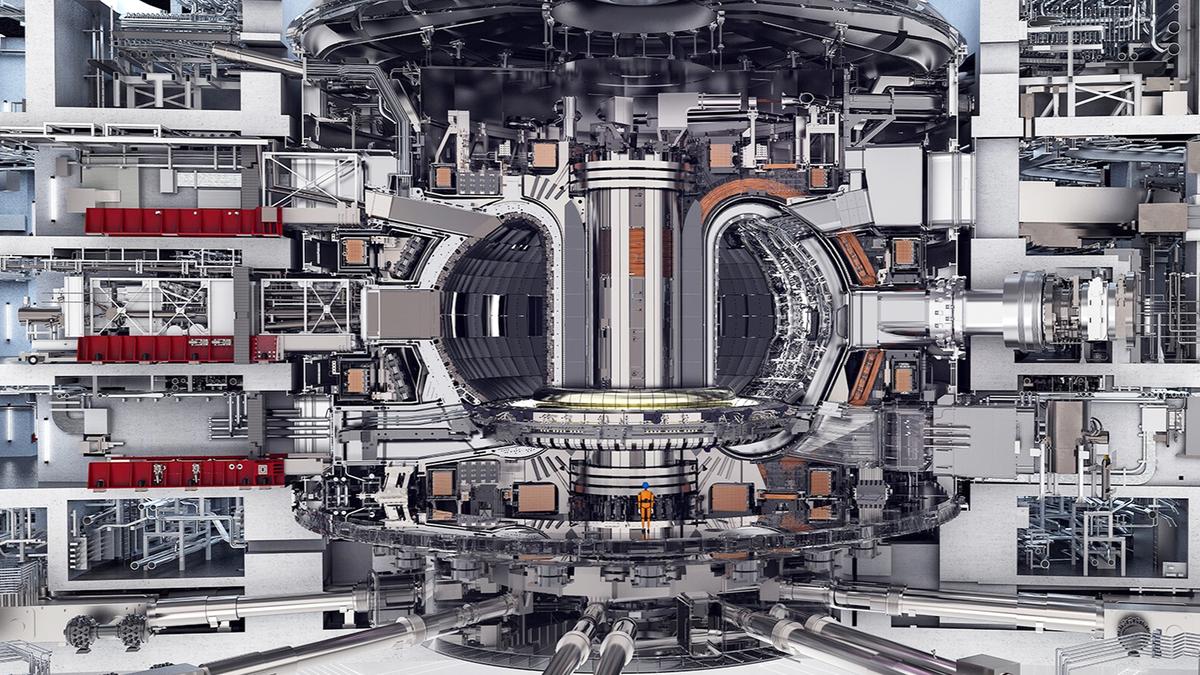
**New Delhi, May 1, 2025** – A major milestone has been reached in the construction of ITER (International Thermonuclear Experimental Reactor), the world’s largest nuclear fusion project. Scientists have completed the main magnet system, a crucial component for achieving controlled fusion reactions. India played a significant role in this achievement, contributing vital infrastructure including the massive cryostat, cryolines, and key parts of the heating systems.
The completed magnet system, powerful enough to lift an aircraft carrier, will control the super-hot plasma within the reactor, aiming to produce 500 megawatts of energy from a 50-megawatt input—a self-sustaining state known as “burning plasma.” This would demonstrate the viability of fusion as a safe, carbon-free energy source.
India’s contributions to ITER extend beyond the magnet system. The country designed and manufactured the 30-meter tall and wide cryostat housing the entire Tokamak reactor, and also built the cryolines responsible for cooling the magnets to minus 269 degrees Celsius. Additionally, India provided the reactor’s in-wall shielding and components of the heating systems.
ITER, a collaborative effort involving over 30 countries, aims to prove that fusion energy can be produced at an industrial scale. While ITER itself will not generate electricity, the data collected will be crucial for developing future commercial fusion power plants. The project’s director-general, Pietro Barabaschi, lauded the international cooperation as a beacon of hope in addressing climate change and energy security.
The successful completion of the magnet system, along with the recent ahead-of-schedule insertion of the first vacuum vessel module, signifies considerable progress in this complex engineering undertaking. Private sector involvement is also increasing, with ITER actively sharing knowledge and research data to accelerate innovation. Europe bears the largest share of construction costs (45%), while the other six members, including India, each contribute about 9%, with all members gaining full access to research results and patents.
 First Piper