
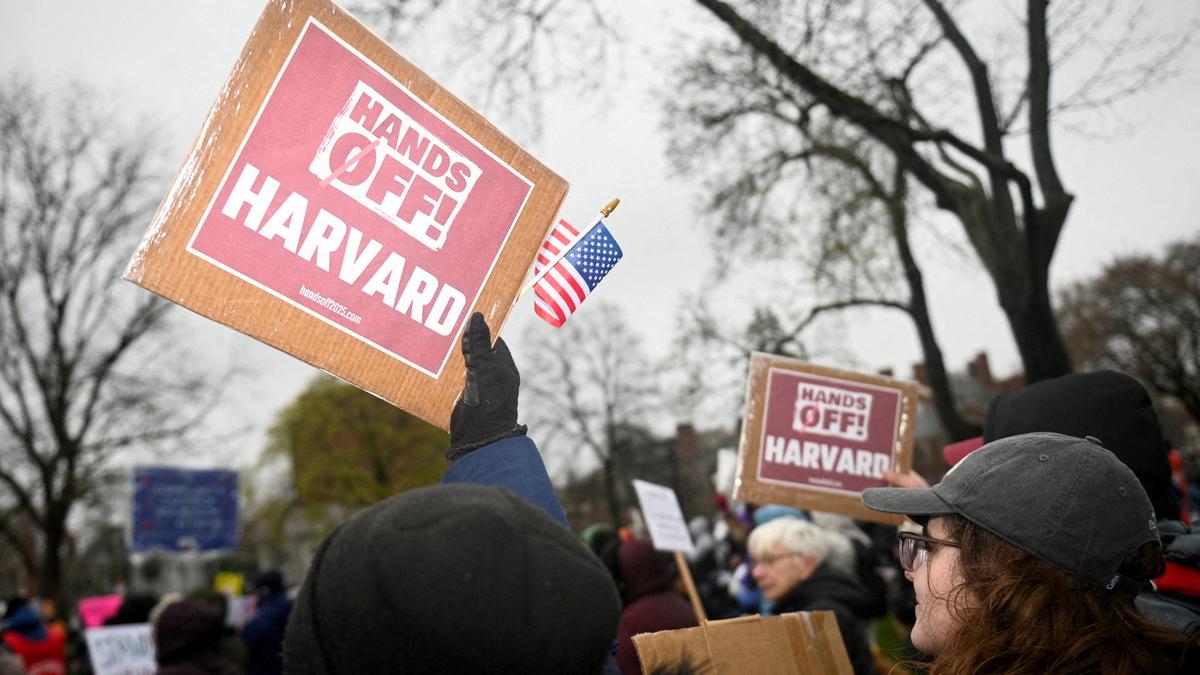
Wed Apr 30 01:30:00 UTC 2025: ## US Government Crackdown on Universities Sparks Academic Freedom Concerns
**Washington D.C., April 30, 2025** – The Trump administration’s aggressive targeting of US universities under the guise of combating anti-Semitism is raising serious concerns about academic freedom and institutional autonomy. A letter sent by the Department of Education’s Office for Civil Rights to nearly 60 universities, demanding sweeping changes, reveals demands that extend far beyond addressing alleged anti-Semitic incidents.
The investigation, framed as a Title VI violation probe, includes stipulations such as mandatory forensic audits of foreign funding, disclosure of all immigration, hiring, and admissions data, and an audit of student bodies, faculty, and leadership for “viewpoint diversity.” Furthermore, universities are required to commission external audits of programs deemed to fuel anti-Semitism or reflect “ideological capture,” and to immediately dismantle all diversity, equity, and inclusion (DEI) initiatives.
While the administration cites a significant rise in anti-Semitic incidents – a 344% increase over five years, according to the Anti-Defamation League (ADL) – data suggests a complex picture. A majority (64%) of anti-Israel incidents on campuses in 2023-24, which often overlap with anti-Semitism, involved protests. The demands, particularly the dismantling of DEI programs and the extensive data requests, are leading many to question the administration’s true motives.
The impact is significant. More than half of the targeted universities are R1 Doctoral institutions, known for their high research activity and inclusive enrollment policies, including a higher proportion of international students. Data indicates that academic freedom and exchange in the US have declined substantially since the 2000s, with institutional autonomy reaching its lowest point in 2024.
Critics argue that the administration’s actions represent an overreach, potentially chilling academic freedom and jeopardizing the autonomy of higher education institutions. The situation underscores a broader debate about the balance between addressing legitimate concerns about discrimination and protecting the principles of academic freedom and institutional independence.
 First Piper