
Tue Apr 29 00:00:00 UTC 2025: ## City Noise Impacts Spider Web Construction, Study Reveals
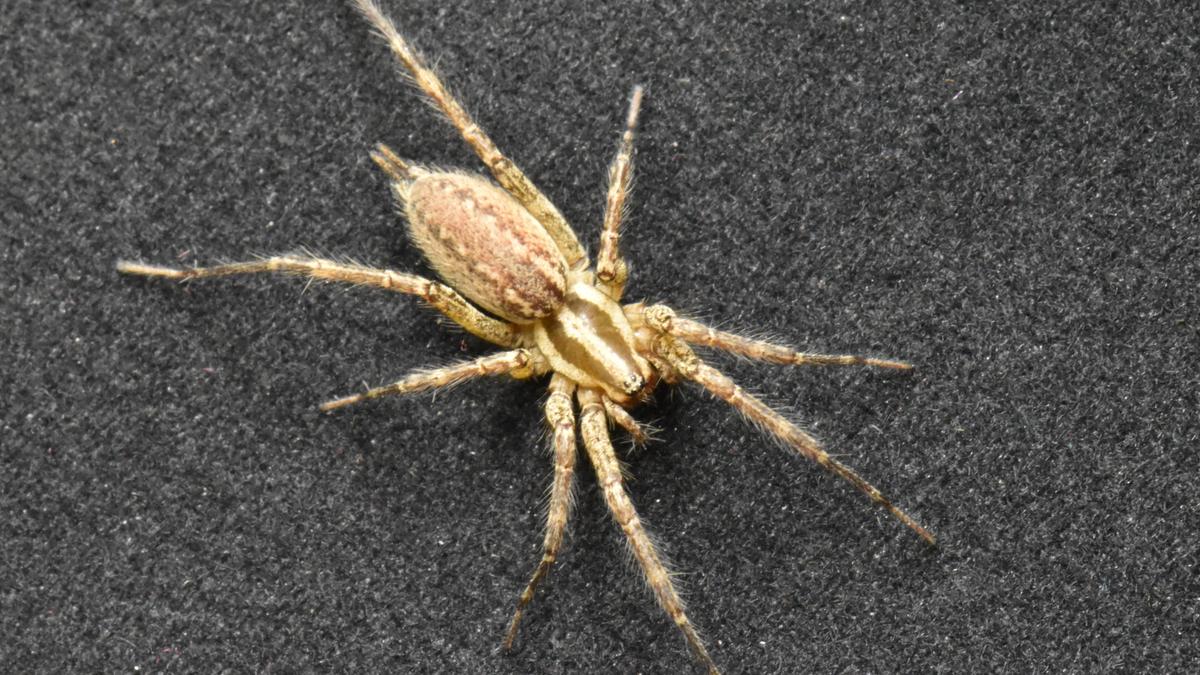
**České Budějovice, Czechia –** A new study published in *Current Biology* reveals that urban noise pollution significantly affects how spiders build their webs. Researchers from the University of Nebraska-Lincoln found that *Agelenopsis pennsylvanica* spiders living in noisy city environments construct webs that filter out loud ambient vibrations, unlike their rural counterparts whose webs amplify biologically relevant vibrations.
Lead author Brandi Pessman discovered that these funnel-weaving spiders, which use web vibrations to detect prey, adapt their web construction based on their surroundings. City spiders exposed to loud white noise built webs that dampened a broader range of frequencies at short distances, while rural spiders built webs that retained energy within a narrower frequency range at longer distances.
This finding highlights the impact of urbanization on wildlife. While the study focuses on one spider species, experts like Shannon Olsson, a researcher in urban ecology, emphasize the broader implications. Olsson notes that while more research is needed to determine if these changes are adaptive and impact prey capture, the study undeniably demonstrates that urbanization alters how spiders build their homes and acquire food. She further highlights the often-overlooked impact of noise pollution compared to other environmental concerns like carbon emissions, advocating for more attention to its effects on wildlife.
The research resonates particularly in India, where noise pollution in urban centers is a significant issue. The study underscores the need for a broader understanding of the multifaceted consequences of human activity on the environment, emphasizing the interconnectedness of all living beings. The researchers conclude that the simple act of sweeping away a cobweb should prompt reflection on the intricate engineering and adaptability of the natural world, highlighting the necessity for continued research and conservation efforts.
 First Piper