
Sat Apr 19 20:38:54 UTC 2025: ## Possible Signs of Life Detected on Distant Exoplanet K2-18b, But Scientists Remain Cautious
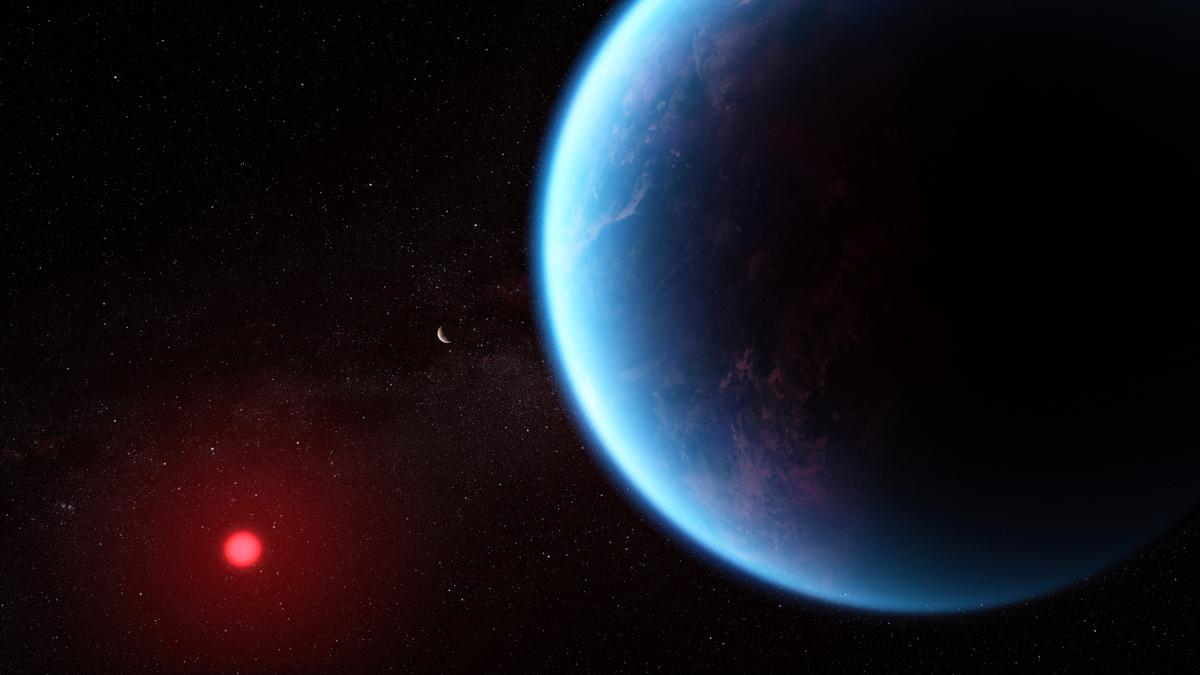
**Bengaluru, India (April 20, 2025)** – An international team of researchers has reported the possible detection of dimethyl sulfide (DMS) or dimethyl disulfide (DMDS) in the atmosphere of exoplanet K2-18b, sparking cautious excitement about the potential for life beyond Earth. Located 124 lightyears away in the constellation Leo, K2-18b is roughly nine times more massive than Earth and possesses a hydrogen-rich atmosphere.
The findings, published April 17th, build upon previous observations by the Hubble and James Webb Space Telescopes (JWST), which detected water vapor, carbon dioxide, and methane in the planet’s atmosphere. The presence of DMS is particularly intriguing as it is a byproduct of biological processes on Earth, primarily produced by phytoplankton and bacteria in oceans.
However, scientists emphasize the preliminary nature of the findings. The JWST data indicates the presence of either DMS or DMDS, but the instruments cannot distinguish between the two. Furthermore, past claims of potential biomarkers on other exoplanets have been retracted upon further analysis. Abiotic sources of DMS, such as volcanic activity or comets, have also been identified.
Several studies have offered alternative explanations for the observed atmospheric composition, suggesting K2-18b could be a gas-rich mini-Neptune rather than a potentially habitable “Hycean” world. One recent reanalysis of JWST data even failed to find statistically significant evidence for carbon dioxide or DMS.
The scientific community remains highly cautious, pointing to past false alarms related to other exoplanets and even Venus. While the possibility of life on K2-18b remains intriguing, further research and more conclusive data are required before definitive conclusions can be drawn. The quest to confirm the existence of extraterrestrial life continues.
 First Piper