
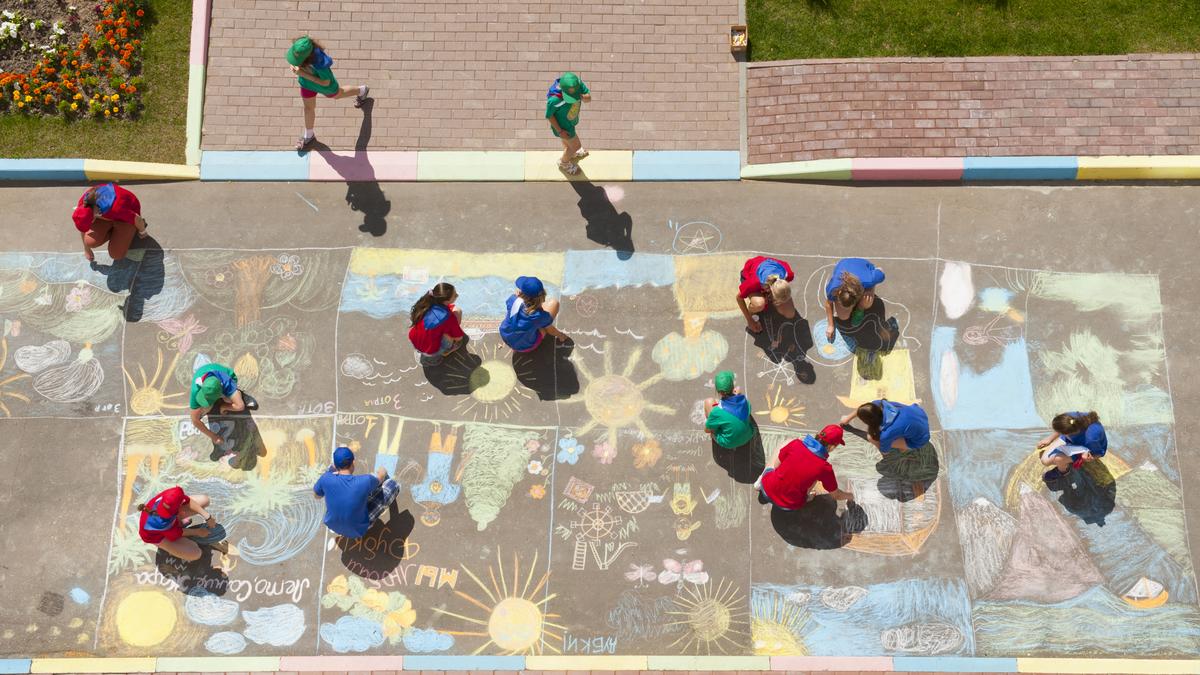
Sat Apr 19 00:25:00 UTC 2025: ## Cities Must Prioritize Child-Friendly Design for Inclusive Urban Development
**Bangalore, India (April 19, 2025)** – A new report emphasizes the urgent need for global cities to prioritize child-friendly urban design, arguing that current planning often overlooks the specific needs of children. The report highlights that children are not merely passive inhabitants of urban spaces, but active participants whose development is profoundly shaped by their environment.
The report cites UNICEF studies demonstrating the numerous benefits of child-centric urban planning, including improved public health, stronger social bonds, and a higher overall quality of life for all residents. Examples like Sydney’s Darling Quarter, with its large central playground integrated into a commercial area, are cited as models for creating engaging and inclusive urban landscapes.
Key strategies for creating child-friendly cities include prioritizing walkability and universal accessibility; creating safe play spaces like New York City’s Play Streets initiative; designing imaginative and themed play areas in public spaces; and creating family-friendly infrastructure with comfortable seating and accessible amenities, exemplified by Chicago’s Maggie Daley Park.
The report also advocates for integrating play-centric design into city centers, utilizing mixed-use districts that combine business, housing, and recreational opportunities. Examples such as Copenhagen’s street-level trampolines and Mumbai’s One Green Mile project, transforming underutilized spaces into vibrant community hubs, are showcased.
The report concludes that a child-friendly city is not just aesthetically pleasing but also fosters inclusive, sustainable, and resilient urban development. By centering children’s needs in urban planning, cities can create joyful, engaging environments that benefit all residents and shape the well-being of future generations. The authors urge a shift from traditional playground-centric approaches to a more holistic design philosophy that considers children’s physical, intellectual, and social development within the broader urban context.
 First Piper