
Tue Apr 15 00:00:00 UTC 2025: ## Scientists Create First Miniaturized Lasers Directly on Silicon Wafers
**Bangalore, India – April 15, 2025** – A groundbreaking advancement in silicon photonics has been achieved by scientists from the US and Europe. For the first time, researchers have successfully fabricated miniaturized lasers directly onto silicon wafers, paving the way for faster, more energy-efficient computing. The findings, published in *Nature*, represent a significant leap forward in integrating light sources with silicon chips.
Current silicon chips rely on electrons to process information. However, photons (light particles) offer advantages in terms of speed, data capacity, and lower energy consumption. The major challenge has been integrating a light source – a laser – directly onto the chip. Previous methods involved attaching separate lasers, resulting in slower and more expensive devices.
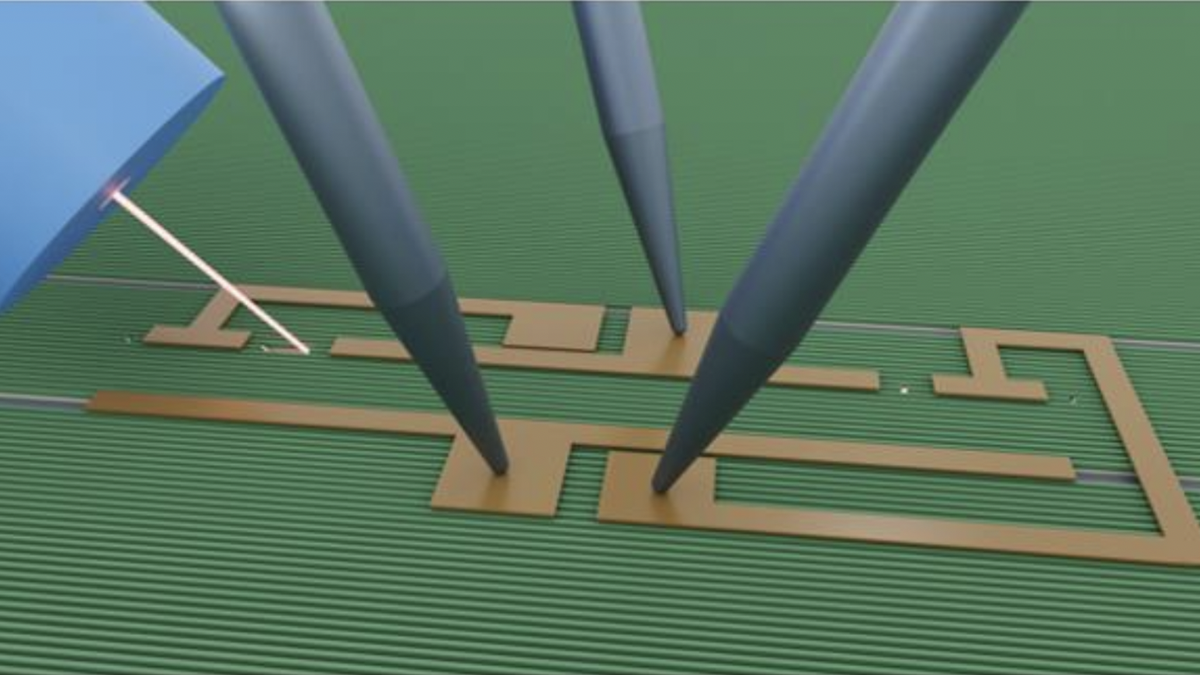
This new research overcomes this hurdle by growing the laser directly on the silicon wafer using a scalable process compatible with existing CMOS manufacturing lines. The researchers created nanometer-sized ridges in a standard 300-mm silicon wafer, using silicon dioxide as an insulator to trap defects and enable the growth of a defect-free gallium arsenide laser. The resulting laser operates at a wavelength ideal for short-range chip-to-chip communication, consuming minimal power (5 mA threshold current) and maintaining continuous operation for 500 hours at room temperature.
The researchers successfully embedded 300 functional lasers on a single wafer, highlighting the scalability and cost-effectiveness of the technique. This innovation is expected to significantly improve computing performance and reduce energy consumption in data centers. While the current operational temperature limit is 55°C, further research aims to increase this, potentially reaching the levels demonstrated in other optical silicon chip research. This development marks a significant step towards the widespread adoption of silicon photonics in various technological applications.
 First Piper