
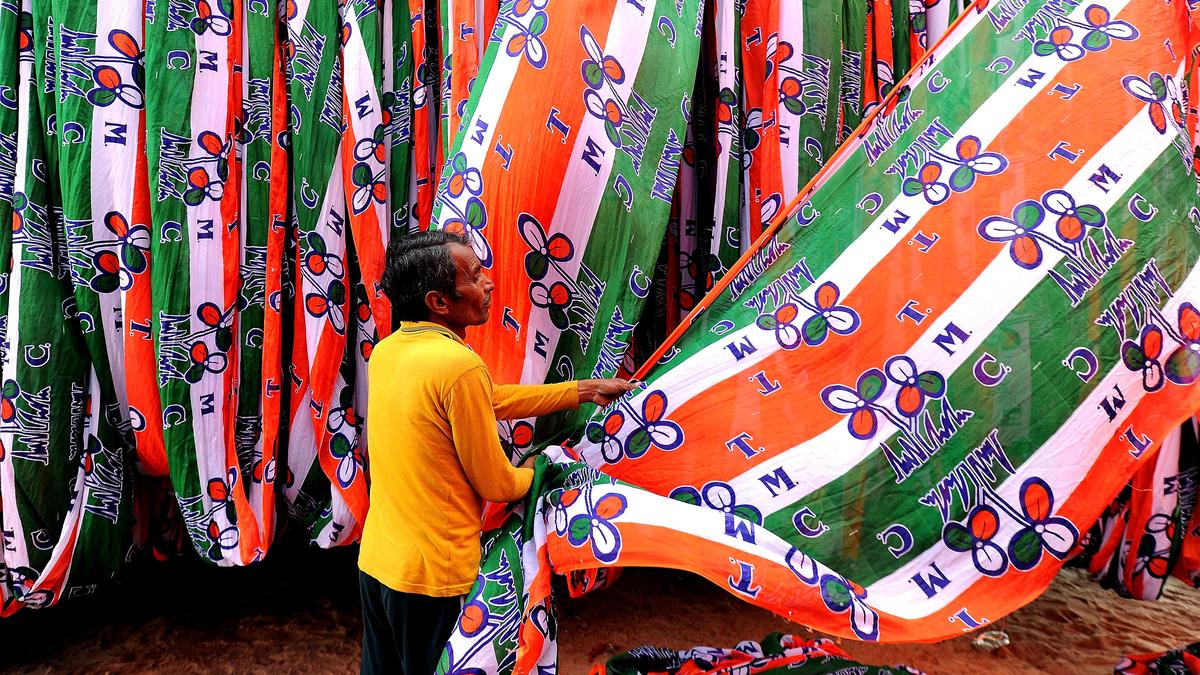
Thu Apr 17 03:00:00 UTC 2025: ## New Study Reveals the Shifting Sands of West Bengal Politics Under Trinamool Congress Rule
**Kolkata, April 17, 2025** – A new study published in *Studies in Indian Politics* sheds light on the evolving political landscape of West Bengal since the Trinamool Congress (TMC) came to power in 2011. The research, “The Roots of a Populist Regime: Examining the Trinamool Congress in West Bengal,” delves into the party’s organizational structure, support base, and policy implications.
The authors challenge existing explanations for the TMC’s success, arguing that factors beyond mere populism and welfare schemes are at play. Their analysis focuses on the changing socio-economic profile of TMC candidates and the allocation of state budget funds.
Data from the Association of Democratic Reforms (ADR) reveals a significant shift in the TMC’s candidate base. While the representation of lower castes and Scheduled Castes/Scheduled Tribes (SC/ST) increased, so did the number of candidates from Hindu Non-Brahmin Forward castes and those identifying as “businessmen” or “social and political workers.” This suggests a growing influence of a new commercial class, distinct from the traditional middle class associated with the previous Left Front regime.
Concurrently, the study analyzes West Bengal’s state budgets from 2016-2021. While a significant portion of revenue expenditure is allocated to social welfare programs, a substantial amount of capital expenditure is directed towards sectors like transport and rural development. The authors suggest this prioritization indirectly benefits sectors such as real estate, trade, and tourism—industries often dominated by the emerging non-corporate commercial elite.
The researchers conclude that the TMC’s enduring power stems from a dual strategy: providing marginal benefits to the poor while simultaneously fostering the interests of this new, economically powerful class. This nuanced approach, they argue, effectively consolidates both political and economic power within the state. The study highlights the complex interplay between welfare policies, patronage networks, and the evolving socio-economic dynamics shaping West Bengal’s political landscape.
 First Piper