
Wed Apr 16 05:59:33 UTC 2025: ## India Rejects Religion-Based UN Reform Proposals
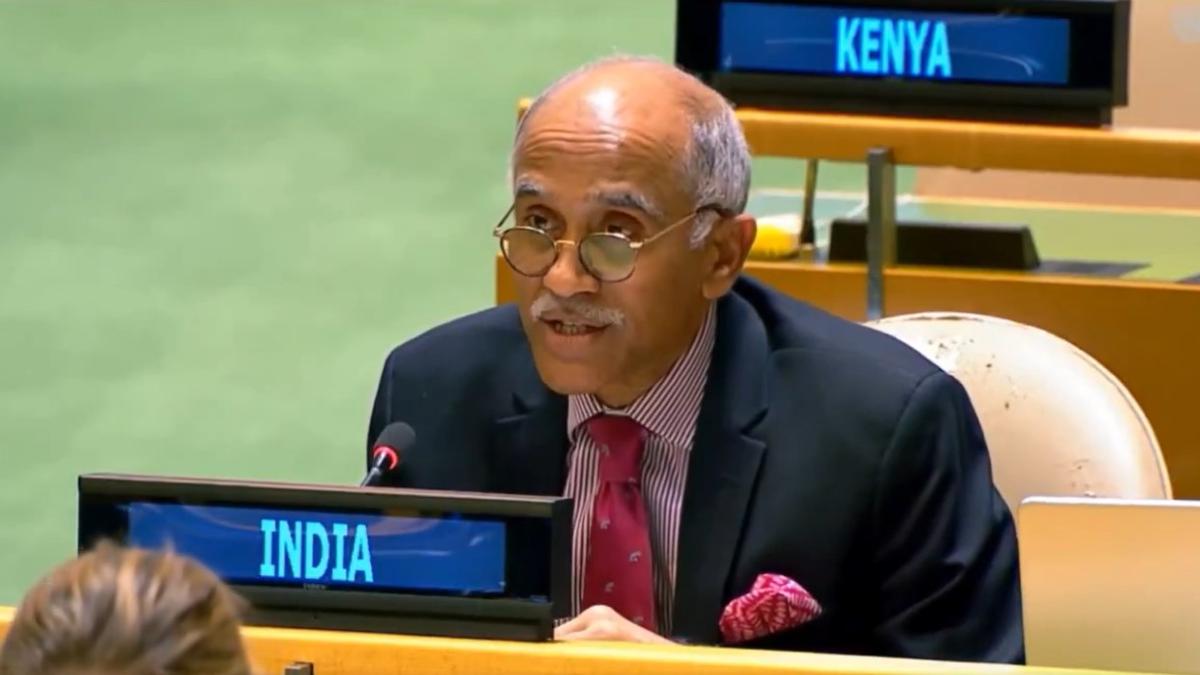
**New York, April 16, 2025** – India has strongly criticized attempts to incorporate religion and faith as criteria for representation in a reformed UN Security Council (UNSC), arguing that this contradicts the established principle of regional representation. This statement was made by India’s Permanent Representative to the UN, Ambassador P. Harish, at an Inter-Governmental Negotiations (IGN) meeting on UNSC reform.
Ambassador Harish asserted that opposition to text-based negotiations is a tactic to hinder genuine reform. He countered arguments about the inefficiency of an expanded council, stating that a reformed body with proper mechanisms would be highly effective. He further emphasized that a comprehensive reform must include expansion in both permanent and non-permanent member categories, warning that focusing solely on non-permanent seats would only perpetuate the status quo.
This position was echoed by the G4 nations (Brazil, Germany, Japan, and India), who presented their proposed model for a 25 or 26-member council with 11 permanent and 14 or 15 non-permanent members. The G4 stressed that the current UN structure is outdated and requires a revision to reflect contemporary geopolitical realities. They advocated for text-based negotiations with clear timelines to achieve meaningful reform. The G4 also asserted that the decision on new permanent members should be made democratically by the General Assembly.
Conversely, the Uniting for Consensus (UfC) group proposed expanding only the non-permanent seats, while the Arab group reiterated its demand for an Arab permanent member with veto power. France, however, voiced its support for India’s bid for a permanent seat, along with similar support for Brazil, Germany, and Japan, and two additional African states. The debate highlights the significant challenges in reaching a consensus on UNSC reform.
 First Piper