
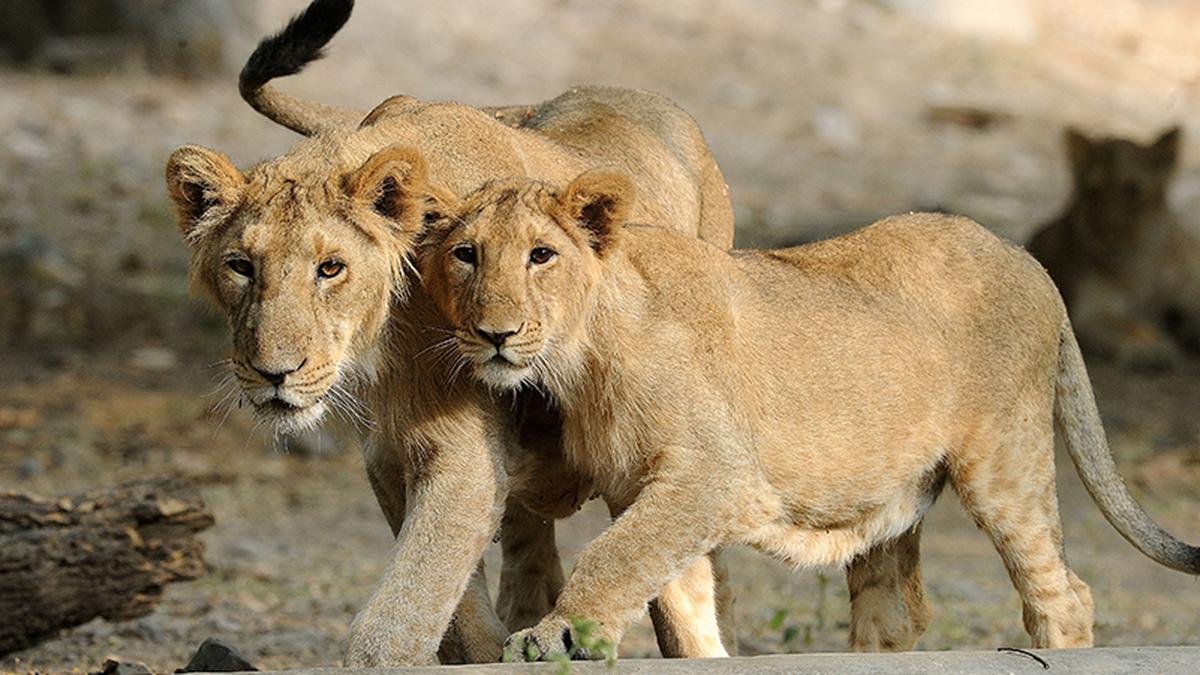
Tue Apr 15 00:38:00 UTC 2025: ## Asiatic Lion Conservation Crisis Deepens Amidst Cheetah Introduction Controversy
**Junagadh, Gujarat, April 15, 2025** – The International Union for Conservation of Nature (IUCN) has classified the Asiatic lion as “Largely Depleted,” highlighting a severe conservation crisis for the species. This assessment, coupled with its “Vulnerable” status on the IUCN Red List, underscores the urgent need for action.
Wildlife biologist Ravi Chellam, CEO of Metastring Foundation, expressed deep concern over the situation. He argues that the introduction of African cheetahs to Kuno National Park, in defiance of a 2013 Supreme Court order mandating the relocation of Asiatic lions to the same park, has further jeopardized the lions’ future.
The IUCN’s Green Status assessment reveals that human impact has severely fragmented lion habitats, leading to population declines and local extinctions across their historical range. Chellam points out that lions play a crucial ecological role, and their decline will have cascading effects on the entire ecosystem.
A recent taxonomic reclassification of lions, dividing them into *Panthera leo leo* and *Panthera leo melanochaita*, does not affect conservation efforts, Chellam clarifies. However, the limited space within the Gir forest, where the approximately 700 remaining Asiatic lions reside, is driving some lions into human-populated areas. While human-animal conflict remains relatively low, this dispersal poses a significant long-term threat.
Chellam has long advocated for a second home for the Asiatic lions to mitigate the risks of their single-population vulnerability. He criticizes the government for introducing African cheetahs to Kuno instead of complying with the Supreme Court’s order, calling it a “sleight of hand.” He cites significant differences in the ecological needs of lions and cheetahs, arguing that India lacks the necessary habitat to support a viable cheetah population.
Chellam is also highly critical of the upcoming lion population estimate, describing the process as lacking transparency and scientific rigor. He dismisses the designation of the Barda Wildlife Sanctuary as a second home for lions due to its insufficient size and proximity to Gir, again highlighting the continued disregard for the Supreme Court’s order. He further denounces the multi-billion rupee “Project Lion,” believing it to be a distraction that could lead to ecological damage and displacement of local communities.
Chellam concludes by emphasizing the critical need for immediate action to relocate Asiatic lions to Kuno National Park in accordance with the Supreme Court’s ruling, asserting that this is paramount for the long-term survival of the species.
 First Piper