
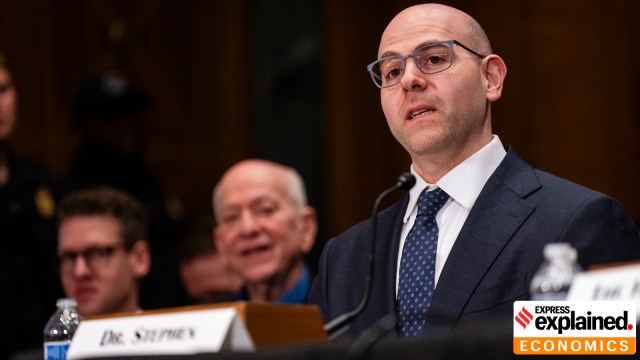
Thu Apr 10 13:10:00 UTC 2025: ## Trump’s Economic Adviser Defends Controversial Tariffs as Necessary for Global Rebalancing
**Washington D.C.** – Stephen Miran, Chairman of President Trump’s Council of Economic Advisers (CEA), has staunchly defended the administration’s controversial policy of imposing reciprocal tariffs, arguing they are a necessary tool to rebalance the global trading system. Miran, a Harvard-trained economist, contends that the current system unfairly burdens the US economy.
Miran’s defense comes amidst escalating trade tensions, particularly with China, and significant market volatility triggered by the recent announcement of a 50% tariff increase on Chinese goods, bringing the cumulative tariff to 104%. Critics widely condemn these tariffs as harmful, but Miran disagrees.
In a 2024 essay, Miran outlined his argument, highlighting the US’s persistent current account and merchandise trade deficits, reaching record levels in 2024. He attributes these deficits not to excessive imports, but to the overvalued dollar’s role as the world’s reserve currency. This, he argues, forces the US to export treasuries to meet global demand, hurting its manufacturing sector.
Miran views the US’s provision of reserve assets and military defense as “global public goods,” but insists that the burden-sharing is inequitable. He sees the tariffs as a means to leverage better terms from trading partners, arguing that access to the US market is a privilege, not a right. This mirrors President Trump’s rhetoric about other countries “ripping off” the US.
Miran proposes several ways for other countries to alleviate this burden: accepting higher tariffs to fund global public goods; eliminating unfair trading practices; increasing defense spending and procurement from the US; investing in US factories; or directly contributing financially to the US Treasury.
While acknowledging potential negative side effects such as market volatility, Miran maintains that unilateral tariff actions offer greater flexibility and negotiating leverage compared to slower, multilateral solutions. The Trump administration is expected to continue its aggressive tariff strategy in the coming weeks.
 First Piper