
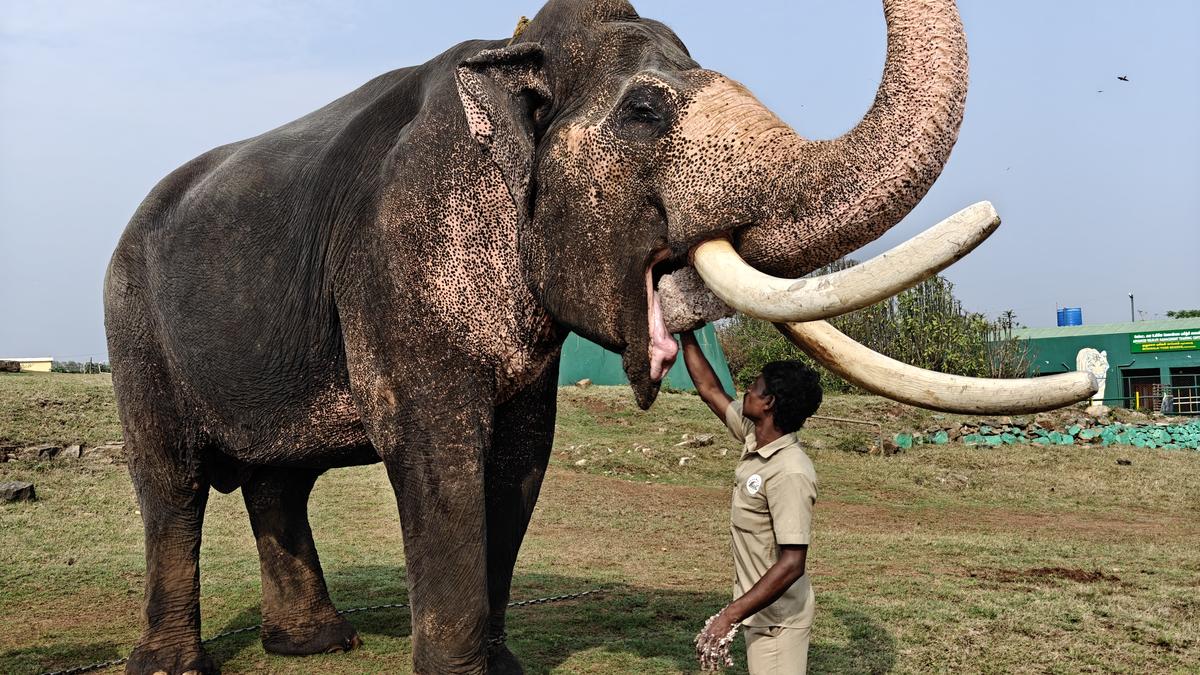
Wed Apr 09 11:21:31 UTC 2025: ## Ancient Elephant Camp in Mudumalai Offers Glimpse into Harmonious Human-Elephant Coexistence
**COIMBATORE, INDIA (April 9, 2025)** – The Theppakadu Elephant Camp in Mudumalai Tiger Reserve, one of Asia’s oldest, offers a unique model of elephant rehabilitation and human-animal coexistence. Established in the 1920s, the camp initially served to train elephants for logging during British rule. Today, it focuses on rehabilitating elephants captured due to human-wildlife conflict or injury.
Unlike other camps, Theppakadu employs a cruelty-free training method, eschewing traditional tools. Local tribal communities, the Kaatunaickers, Kurumbas, and Malasars, have served as caretakers for generations, fostering a deep bond between humans and elephants.
The camp’s daily routine is meticulously structured. Elephants receive a specially formulated diet twice daily, consisting of giant food blocks made from horse-gram, ragi, rice, and a mineral mix. This carefully calculated diet, adjusted based on each elephant’s age and condition, compensates for the reduced grazing time due to their camp activities. The feeding process itself strengthens the bond between mahouts and elephants, and provides a valuable opportunity for the veterinarian to monitor their health and behavior.
Beyond nutrition, the camp prioritizes the elephants’ well-being through daily bathing rituals and training sessions that emphasize positive reinforcement and gentle commands. The elephants, some with troubled pasts (including those who had previously caused harm to humans), are now thriving under the camp’s care.
The camp also plays a crucial role in mitigating human-elephant conflict. The trained elephants serve as “kumkis,” helping to guide wild elephants away from human settlements. The camp’s successful rehabilitation and harmonious coexistence model serves as an inspiring example for conservation efforts worldwide.
 First Piper