
Wed Apr 02 00:00:00 UTC 2025: ## Painted Lady Butterflies: A Single, Interbreeding Population Defies Migration Expectations
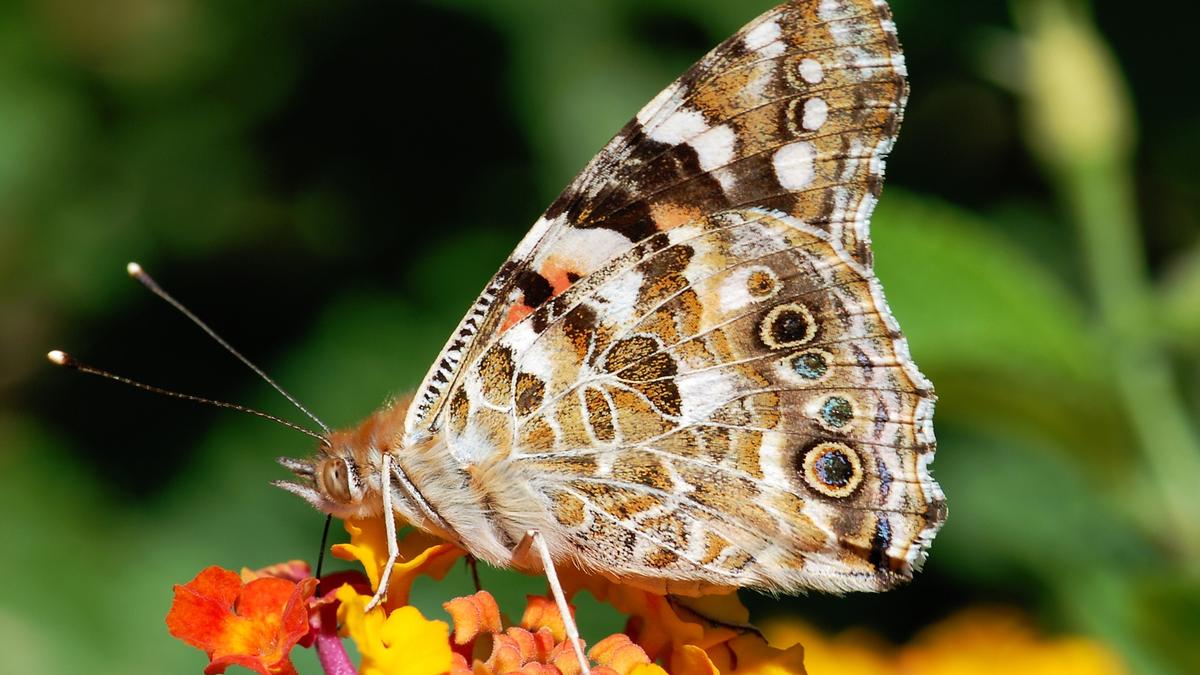
**Vienna, Austria – April 2, 2025** – A new study published in *PNAS Nexus* challenges existing understanding of insect migration. Researchers led by Daria Shipilina of the Institute of Science and Technology Austria have found that the painted lady butterfly (Vanessa cardui), known for its impressive migratory feats across continents, doesn’t exhibit distinct genetic groups for short- and long-distance migration.
Unlike birds, where genetic variations often correlate with migratory behavior, the painted lady’s migration distance appears primarily determined by environmental factors. The butterflies, which undertake a multi-generational journey spanning thousands of kilometers across Europe and Africa, constitute a single, interbreeding population.
The research team, involving scientists from across Europe and Africa, utilized advanced tracking technology and isotopic analysis of butterfly wings. By analyzing stable isotopes of hydrogen and strontium, absorbed from food and water during larval stages, they successfully traced the butterflies’ origins. This revealed that even individuals covering distances up to 4,000 km didn’t show significant wing wear or genetic divergence from those traveling shorter distances.
The findings overturn previous assumptions linking wing wear to migration distance and highlight the remarkable adaptability of the painted lady butterfly. Its ability to thrive in diverse climates and its unique multi-generational migratory strategy contribute to its remarkable resilience.
Future research will focus on comparing genetic diversity in populations from more distant regions, investigating the effects of varying environmental conditions, and contrasting the genetic basis of migration in butterflies with that of birds. This research, Dr. Shipilina suggests, promises to advance the understanding of insect migration patterns and their potential responses to climate change.
 First Piper