
Sun Apr 06 13:40:53 UTC 2025: ## Former Law Minister Urges Supreme Court Reform Amidst Judicial Appointments Debate
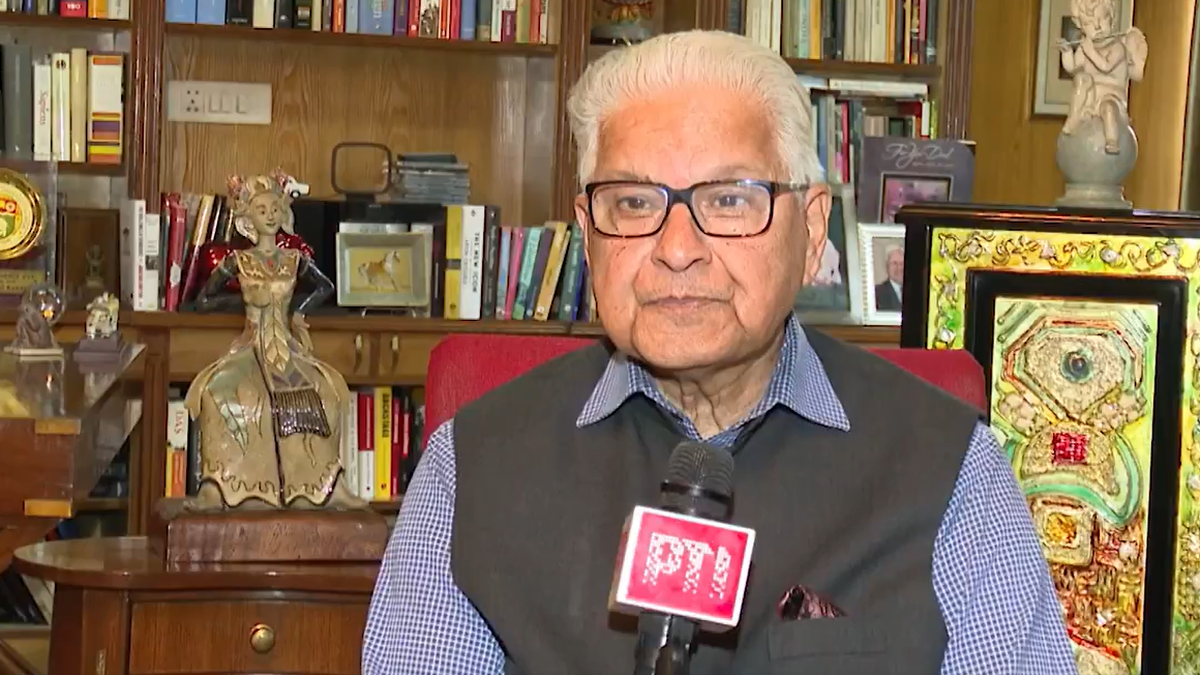
**New Delhi, April 6, 2025** – Former Union Law Minister Ashwani Kumar has called for a significant overhaul of India’s judicial system, advocating for a replacement of the collegium system for judicial appointments and the establishment of a robust internal mechanism to address allegations against judges. His comments follow a recent incident involving the recovery of cash from a High Court judge’s residence.
In an exclusive interview with PTI, Kumar argued that the time is ripe to revisit the National Judicial Appointments Commission (NJAC), a proposal previously struck down by the Supreme Court. He believes public opinion is shifting in favor of an alternative appointment process, potentially similar to the NJAC, but improved to address concerns about judicial independence. Kumar maintained that the government has the right to propose a revised constitutional amendment for judicial appointments that would withstand judicial scrutiny.
He criticized the Supreme Court’s decision to invalidate the NJAC, arguing that the court’s reasoning was flawed and ignored the overwhelming parliamentary support for the amendment. He contended that the concern over government influence on judicial appointments is an overextension of the doctrine of judicial independence, pointing to instances where government-appointed judges have proven highly capable.
Kumar also expressed concern over the increasing tendency of the Supreme Court to adjudicate on politically charged matters, arguing that this undermines the judiciary’s role and shifts the burden of political decision-making away from the elected representatives and the public. He stressed that the judiciary’s power of judicial review should primarily protect fundamental rights, not nullify the will of the people expressed through Parliament.
Regarding the recent cash recovery incident, Kumar acknowledged its negative impact on the judiciary’s institutional integrity but cautioned against using it to seize control of judicial appointments. He urged the Supreme Court to improve its internal processes to protect judges from frivolous charges while ensuring an effective mechanism to address legitimate concerns. He emphasized the need for a fairer, more balanced in-house system to handle allegations against judges.
 First Piper