
Tue Apr 01 17:06:18 UTC 2025: ## Tamil Nadu Launches Ambitious Hornbill Conservation Plan
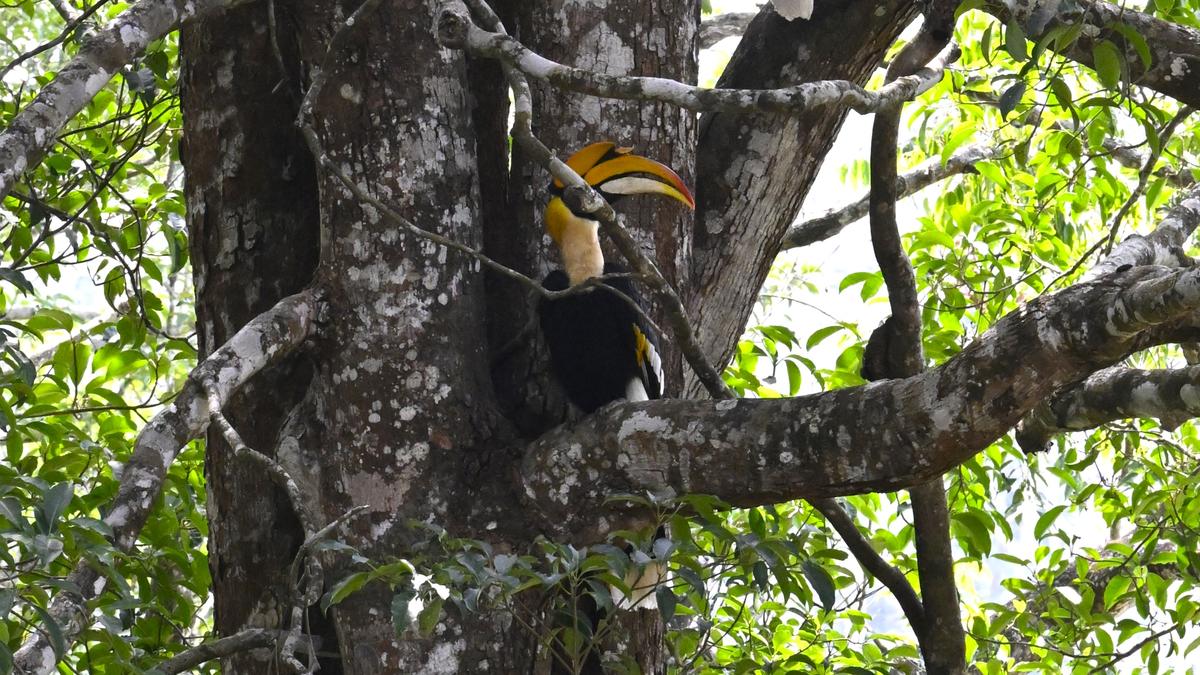
**COIMBATORE, Tamil Nadu, April 1, 2025** – The Tamil Nadu government is spearheading a major initiative to protect its four hornbill species, crucial to the state’s ecological balance. A new Centre of Excellence for Hornbill Conservation will be established in the Anamalai Tiger Reserve (ATR), aiming to bolster the population of these “feathered foresters.”
The initiative addresses the vulnerability of the Great Hornbill and Malabar Grey Hornbill, both listed as “vulnerable” by the IUCN Red List, and the “near threatened” Malabar Pied Hornbill. While the Indian Grey Hornbill is currently of “least concern,” the comprehensive plan seeks to proactively secure all four species.
The plan includes identifying and protecting nesting trees, both within and outside protected areas, and developing guidelines for their safeguarding. Crucial to the project is a comprehensive population estimation, currently lacking for the state’s hornbill population. This is a significant step, building upon the success of Project Nilgiri Tahr, which provided a detailed population count for that species.
Key areas for conservation have already been identified, including the ATR for Great and Malabar Grey Hornbills, the Athikkadavu-Pilloor-Bhavanisagar Valley for Malabar Pied Hornbills, and Sathyamangalam’s drier forests for Indian Grey Hornbills. The plan also emphasizes ecological restoration, focusing on planting and protecting key food and nesting trees like *Dipterocarpus indicus*, *Cryptocarya anamalayana*, and *Myristica malabarica*, many of which are endangered themselves.
Experts highlight the importance of large trees with cavities, which hornbills use repeatedly for nesting. The plan recognizes the role of private landowners in protecting these vital nesting sites and proposes a “Hornbill Protector” designation to acknowledge and incentivize their conservation efforts. The involvement of local tribal communities, particularly the Kadars, who have a history of monitoring hornbills, is also integral to the project’s success. The intricate nesting behavior of the hornbills, including the female’s self-seclusion for the duration of egg incubation, further emphasizes the need for comprehensive protection measures. The government’s ambitious initiative aims to secure a thriving future for these important birds and the ecosystems they support.
 First Piper