
Mon Mar 31 05:12:37 UTC 2025: **Headline: Ancient Egyptian Pharaoh’s Tomb Unearthed in Abydos**
**Dateline: Abydos, Egypt – March 31, 2025**
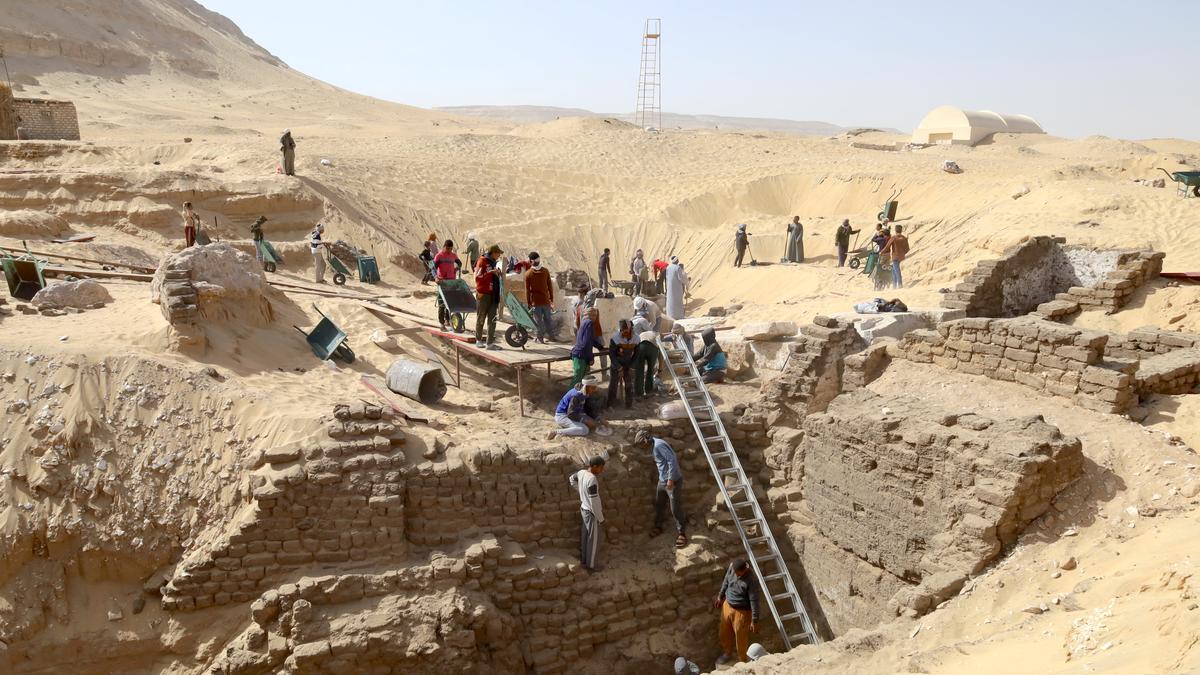
Archaeologists have announced the discovery of a large, 3,600-year-old limestone burial chamber belonging to an unidentified ancient Egyptian pharaoh near Abydos. The tomb, located seven meters underground in the Anubis Mountain necropolis, was unearthed by a joint team from the University of Pennsylvania Museum and Egyptian archaeologists. This marks the second royal tomb discovered in Egypt this year.
While the tomb was found to have been extensively plundered, remnants of hieroglyphic inscriptions and painted scenes depicting the goddesses Isis and Nephthys were still visible at the entrance. Though the pharaoh’s name has been lost to time, Professor Josef Wegner of the University of Pennsylvania suggests possible candidates based on the era, including Senaiib and Paentjeni.
The tomb’s architecture reveals connections to both earlier Middle Kingdom and later Second Intermediate Period royal tombs. It’s considered the largest and earliest known of the Abydos Dynasty, a series of kings who ruled part of Upper Egypt during a fragmented period of Egyptian history (1640-1540 BC) known as the Second Intermediate Period. This era saw multiple rival kingdoms vying for power, including the Abydos Dynasty and the Hyksos in the Nile Delta. The tomb’s discovery offers valuable insights into this complex and less understood phase of Egyptian history.
The newly discovered tomb is situated within the larger tomb complex of Neferhotep I. Professor Wegner’s team previously uncovered the tomb of another Abydos Dynasty ruler, Seneb-Kay, in 2014, suggesting the possibility of further discoveries in the area. The ongoing excavation work continues to shed light on the political, social, and technological transformations of ancient Egypt.
 First Piper