
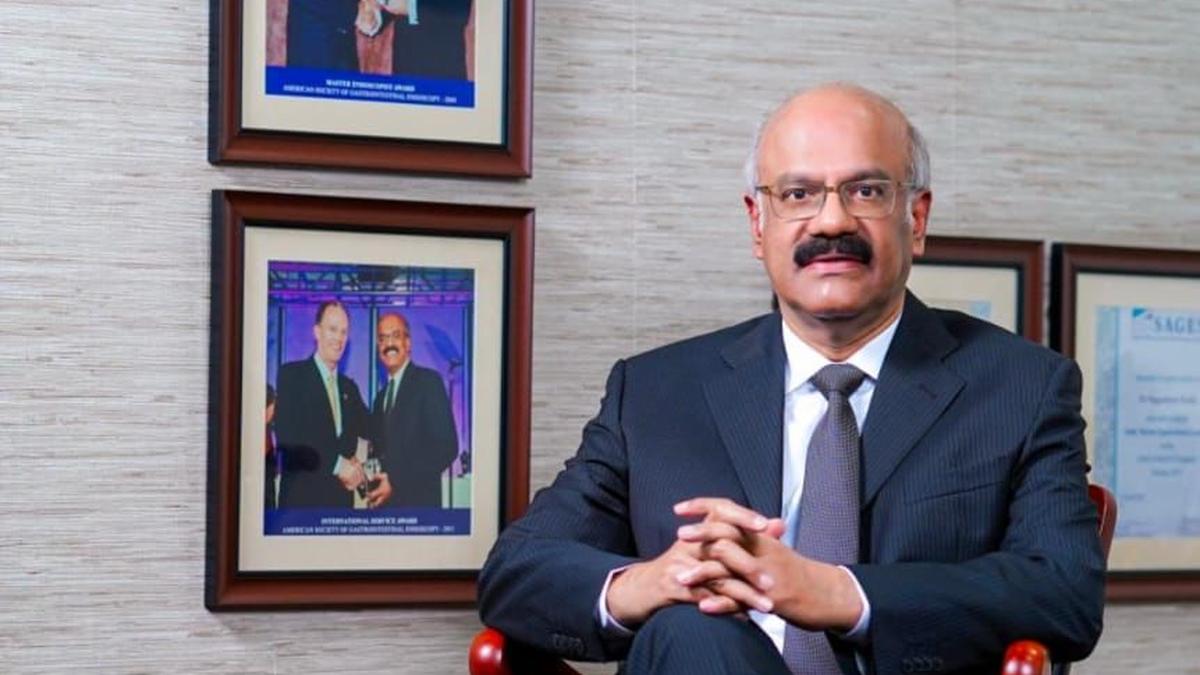
Sat Mar 29 07:33:58 UTC 2025: ## Hyderabad Gastroenterologist Dr. D. Nageshwar Reddy Awarded Padma Vibhushan
**Hyderabad, Telangana, March 29, 2025** – Dr. D. Nageshwar Reddy, chairman of the Asian Institute of Gastroenterology (AIG) in Hyderabad, will receive India’s second-highest civilian award, the Padma Vibhushan, next month. The award recognizes his groundbreaking contributions to gastroenterology and his leadership in revolutionizing digestive healthcare through advancements in endoscopy and minimally invasive procedures.
Dr. Reddy, already a recipient of the Padma Shri (2002) and Padma Bhushan (2016), expressed that this latest honor elevates the significance of gastroenterology as a medical specialty. He highlighted AIG’s crucial role during the COVID-19 pandemic, citing the creation of India’s first COVID-19 protocol book, distributed to over 100,000 doctors nationwide, and the establishment of a dedicated public education platform to combat misinformation.
Over the past decade, AIG has expanded from a gastroenterology-focused institution to a multi-specialty powerhouse with 500 consultants. Dr. Reddy discussed the challenges and rewards of this growth, including navigating financial complexities and incorporating cutting-edge technologies like AI into hospital operations. He cited their AI-powered iSAVE system, which predicts medical emergencies, and AI-driven improvements in hospital efficiency.
Dr. Reddy also shared insights into current health trends, including the growing focus on gut health, the reevaluation of dairy consumption, the importance of adult vaccinations, and the rising concern over magnesium deficiency. He emphasized the critical need for public awareness campaigns against processed food consumption, which he linked to the increasing prevalence of Inflammatory Bowel Disease and fatty liver disease in India. He announced a large-scale government-funded study to address this growing health crisis.
Finally, Dr. Reddy reflected on the importance of balancing technological advancements with empathy in medical training and highlighted societal issues such as shifting work ethics among young professionals, the need for women’s empowerment, and the importance of reducing societal polarization. He concluded by emphasizing that awards are secondary to the meaningful work performed, reiterating his commitment to improving healthcare in India and globally.
 First Piper