
Wed Mar 26 02:50:00 UTC 2025: ## Stunning Aurora Borealis and Australis Displays Light Up the Skies
**NEW YORK –** A geomagnetic storm, triggered by a coronal hole high-speed stream (CH HSS) from the sun, treated skywatchers to a spectacular display of the Northern Lights (aurora borealis) and Southern Lights (aurora australis) early this week. The event, predicted by the NOAA Space Weather Prediction Center (SWPC), reached moderate G2 storm levels, making the aurora visible in locations far south of typical viewing areas.
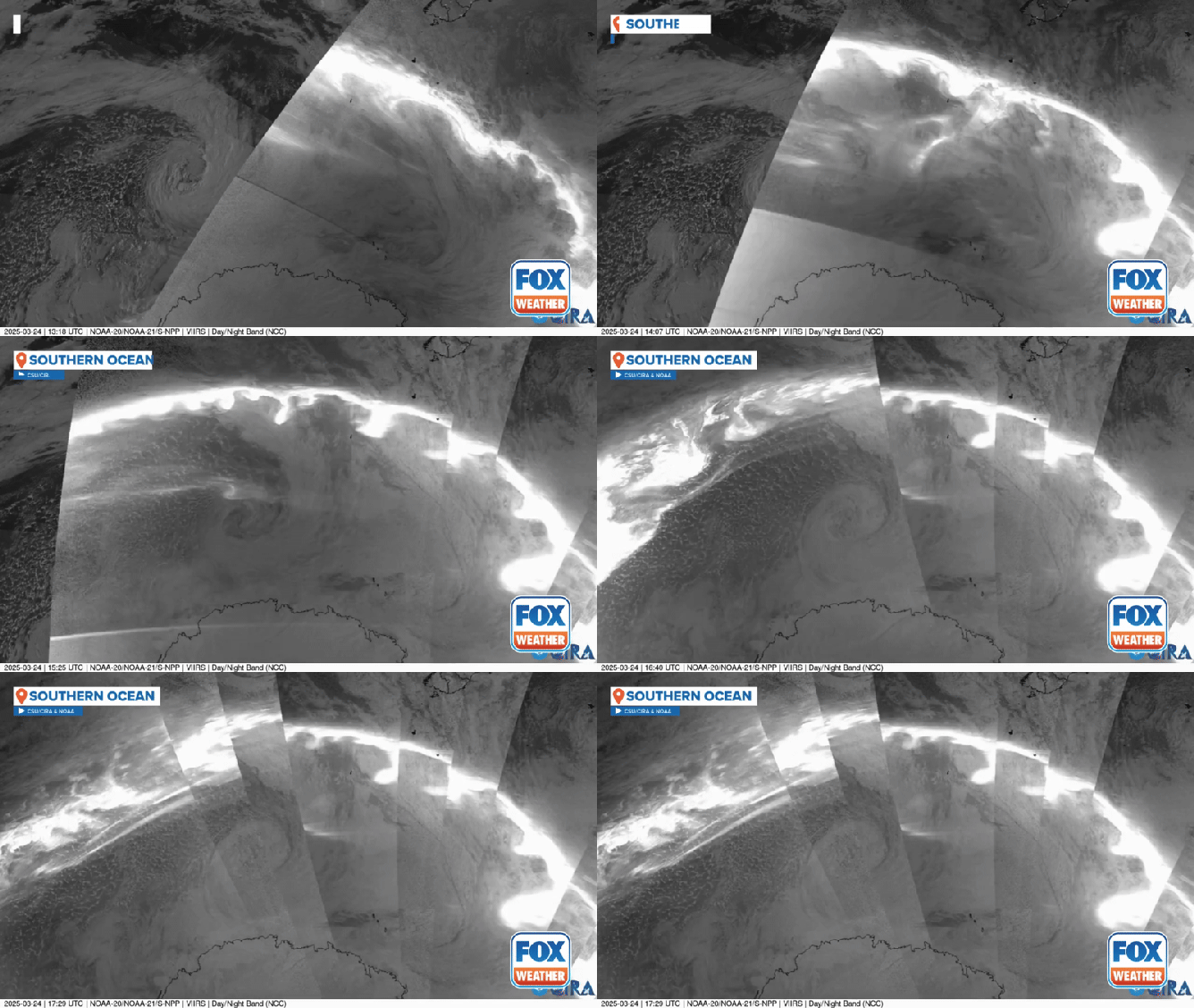
On Tuesday, vibrant auroras were reported across the northern U.S., with sightings as far south as Pennsylvania. Simultaneously, time-lapse satellite imagery captured the aurora australis dancing across the Southern Ocean between Antarctica and Australia. The SWPC forecasts peak viewing conditions late Tuesday night into Wednesday morning, with potential visibility from New York to Idaho.
The storm’s intensity is partly attributed to the recent spring equinox, a period when solar wind interactions with Earth’s magnetosphere often enhance aurora displays. This follows a strong G3 solar storm over the weekend, which also resulted in widespread aurora sightings.
The CH HSS, originating from a cooler, less dense region on the sun’s surface, sends charged particles into space. These particles interact with Earth’s atmosphere, causing oxygen and nitrogen molecules to emit light, creating the colorful auroral displays. The SWPC warns that the effects of this CH HSS could continue into Wednesday, and there’s a potential for recurring impacts in 27 days due to the sun’s rotation.
Clear skies are necessary for optimal viewing, and while cloud cover might hinder observation in some areas, particularly the Southwest and Texas, the FOX Forecast Center predicts favorable conditions for much of the country. The intensity of the aurora is measured by the Kp index; Tuesday’s peak is forecast at 5.67 out of 9, indicating moderate geomagnetic storming.
 First Piper